
Last updated September 10, 2026
Level 1 sweep and inspection to the NFPA 211 annual standard - flue, crown, cap, and flashing checked and photographed
Chimney sweep logs do not sweep chimneys. They loosen some creosote - which then falls where a brush and vacuum still have to collect it.
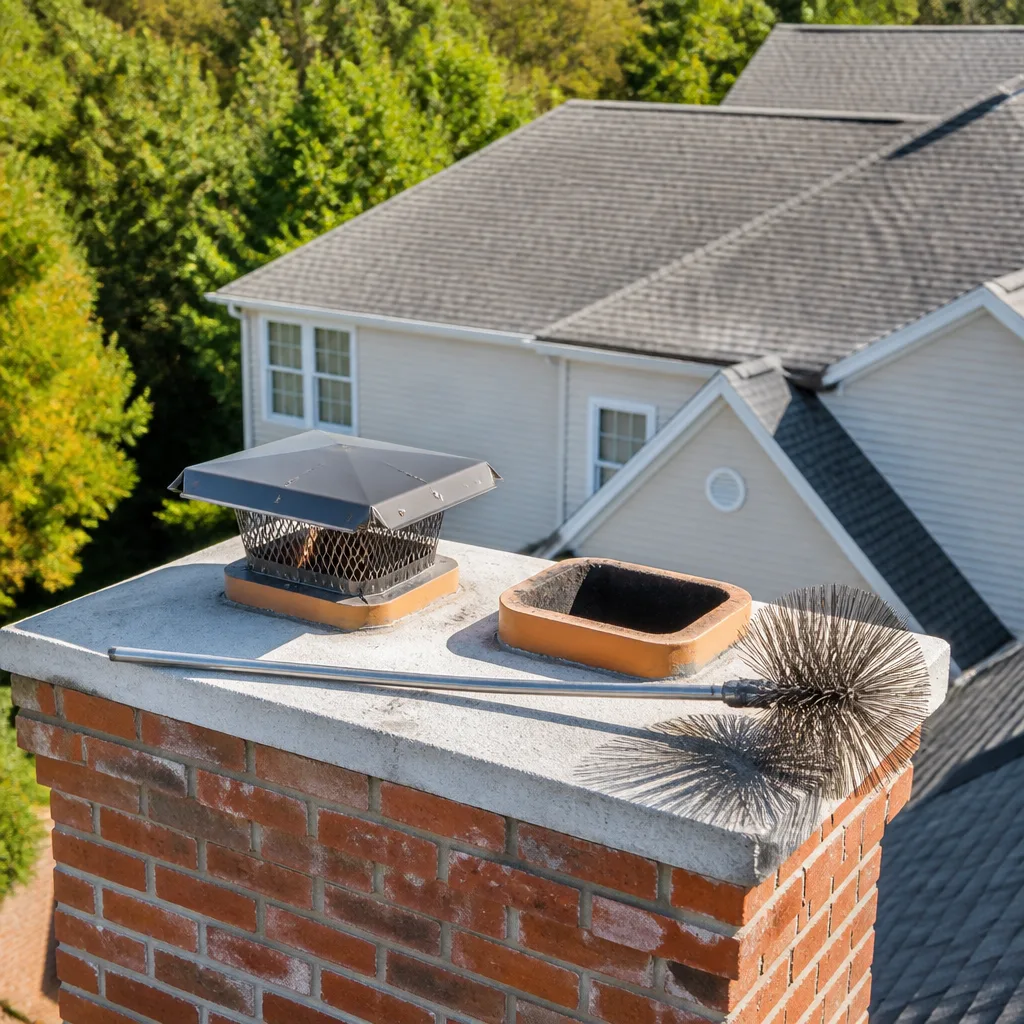
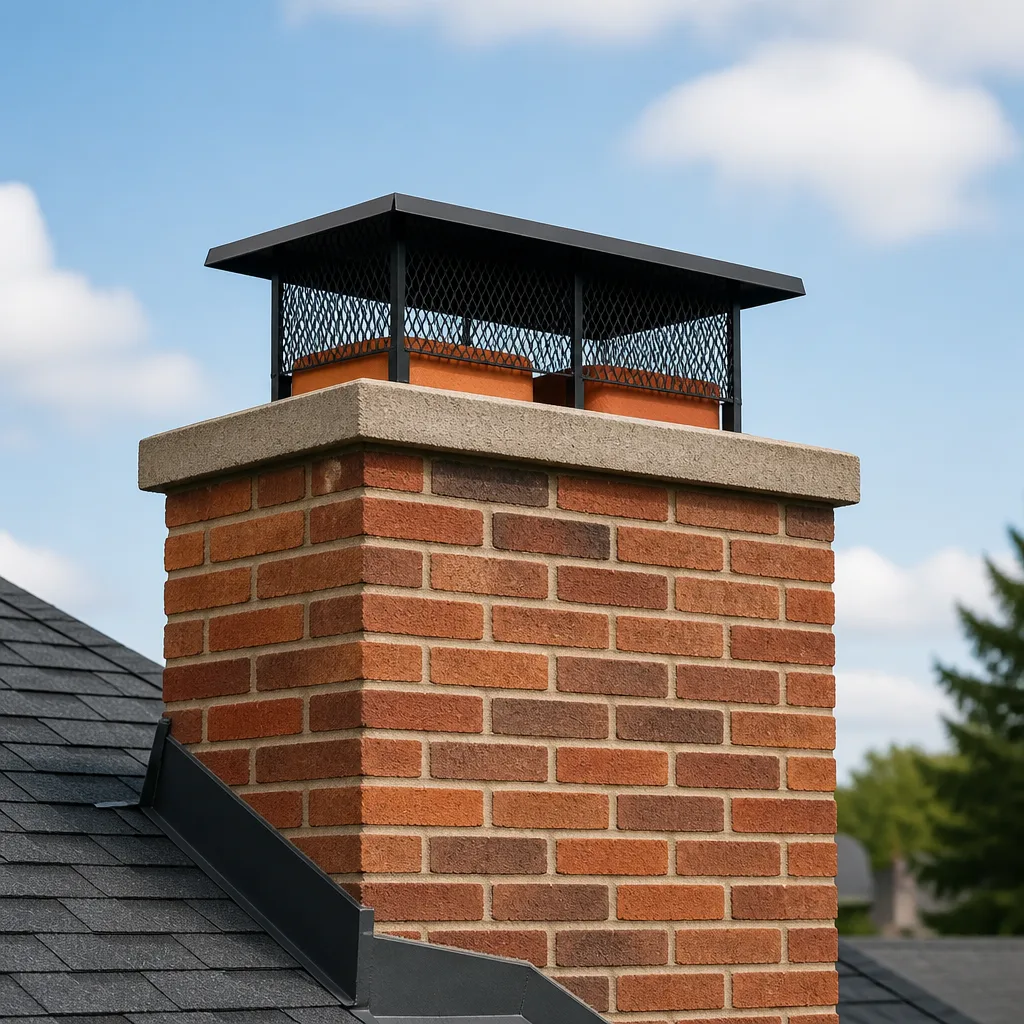
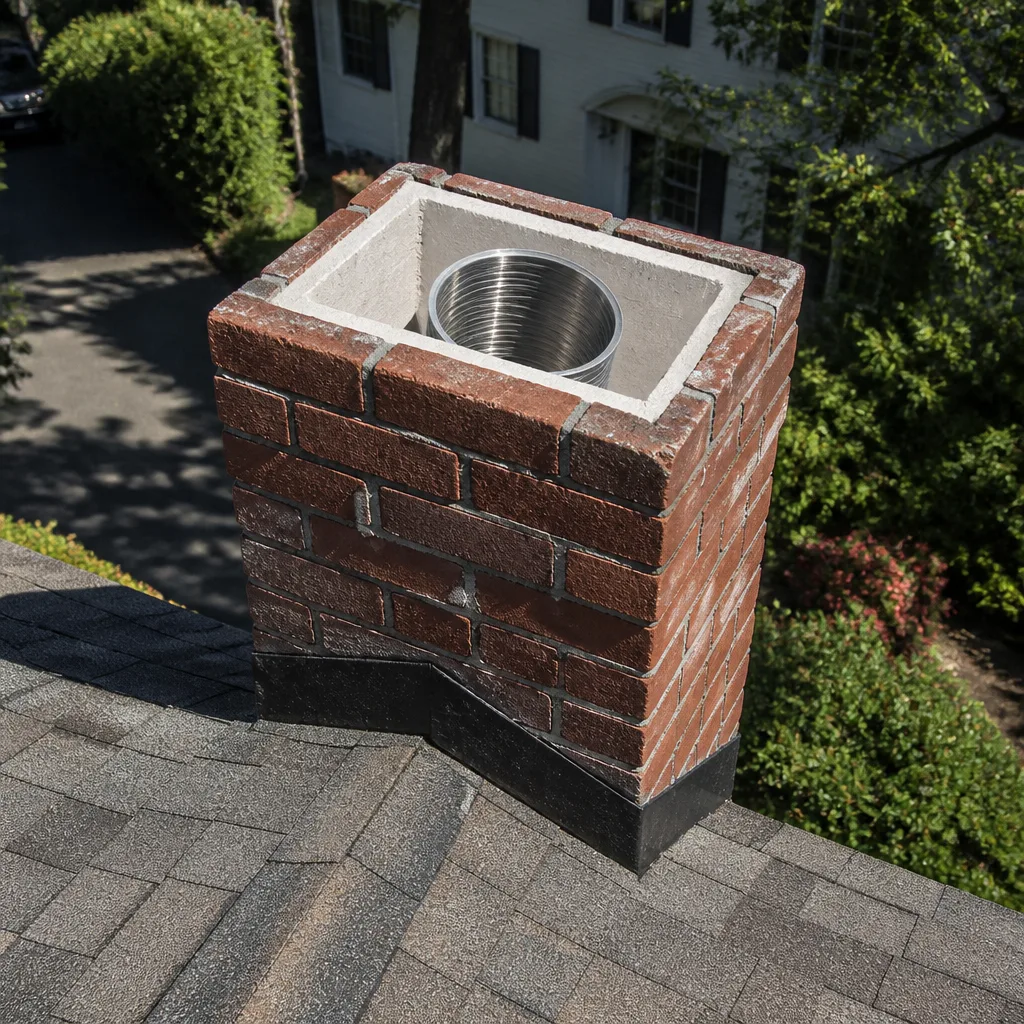
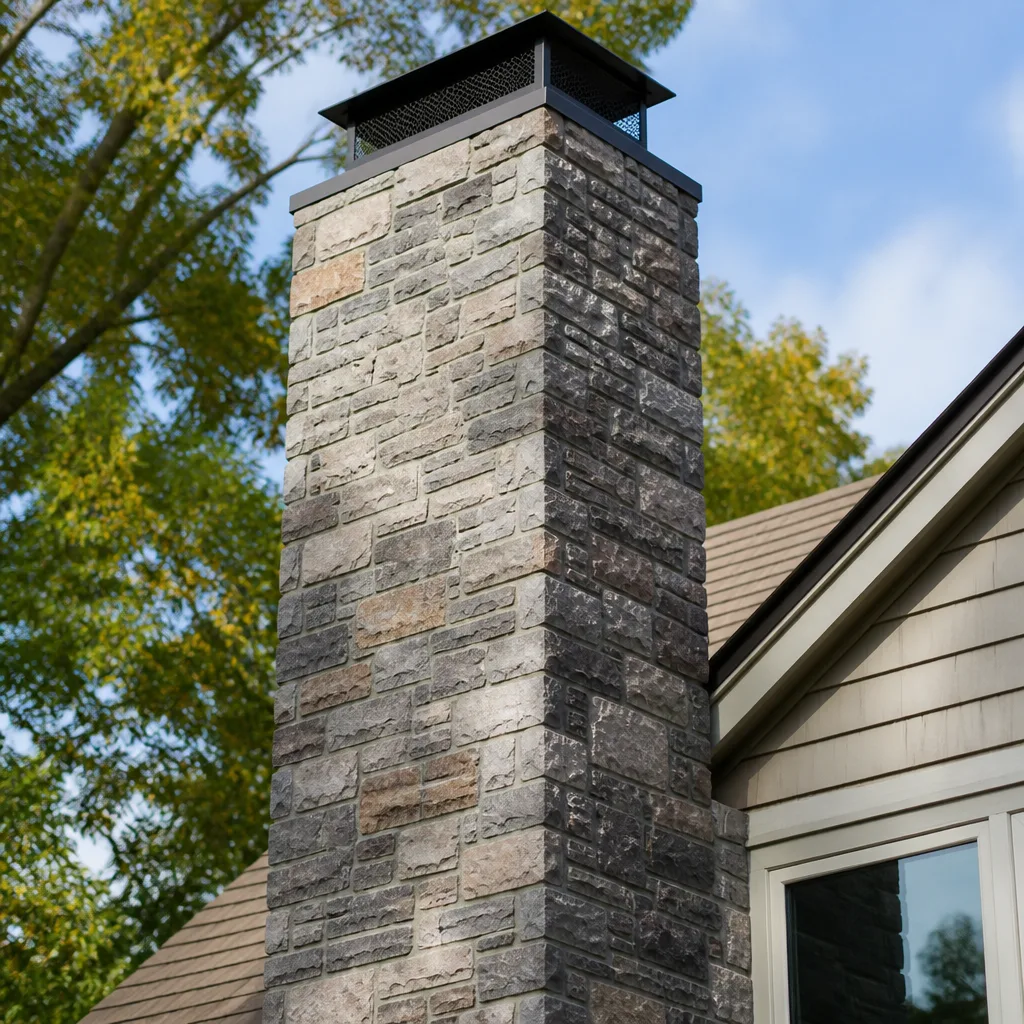
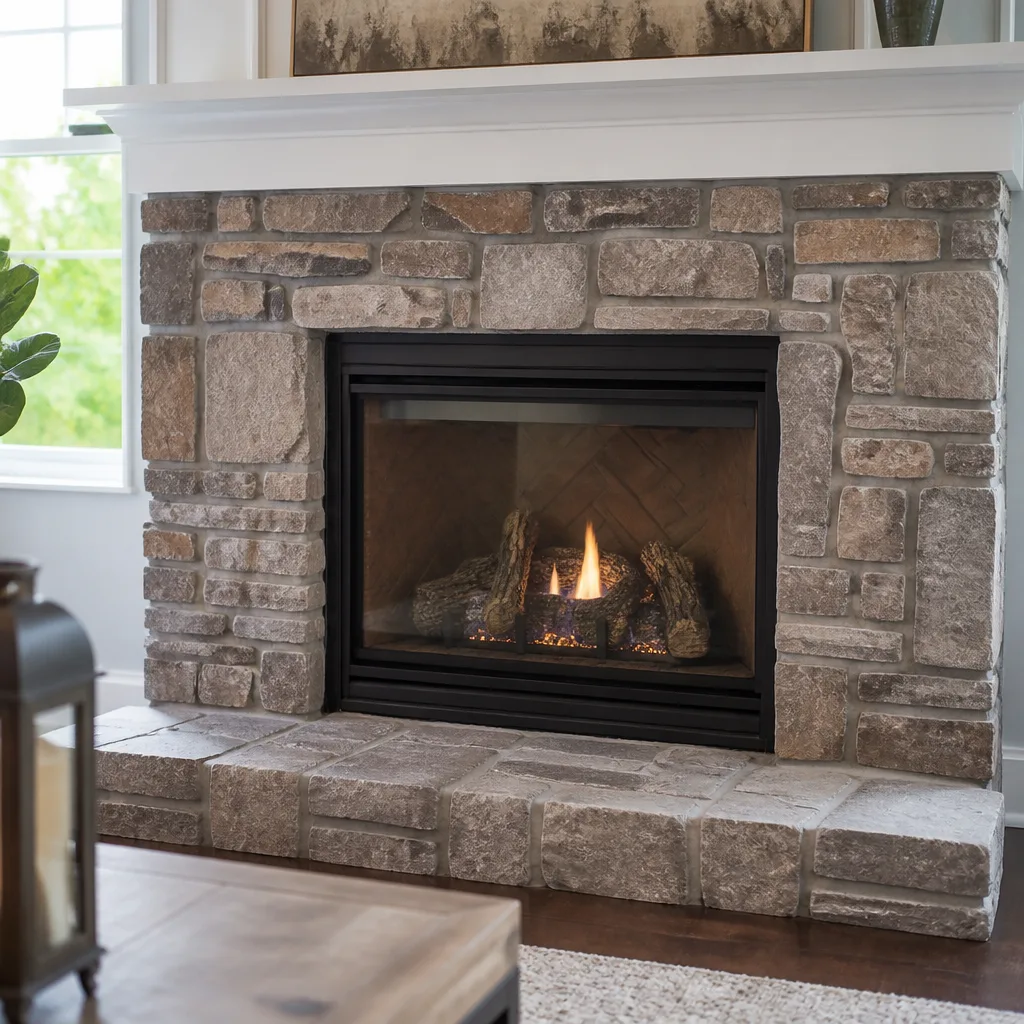
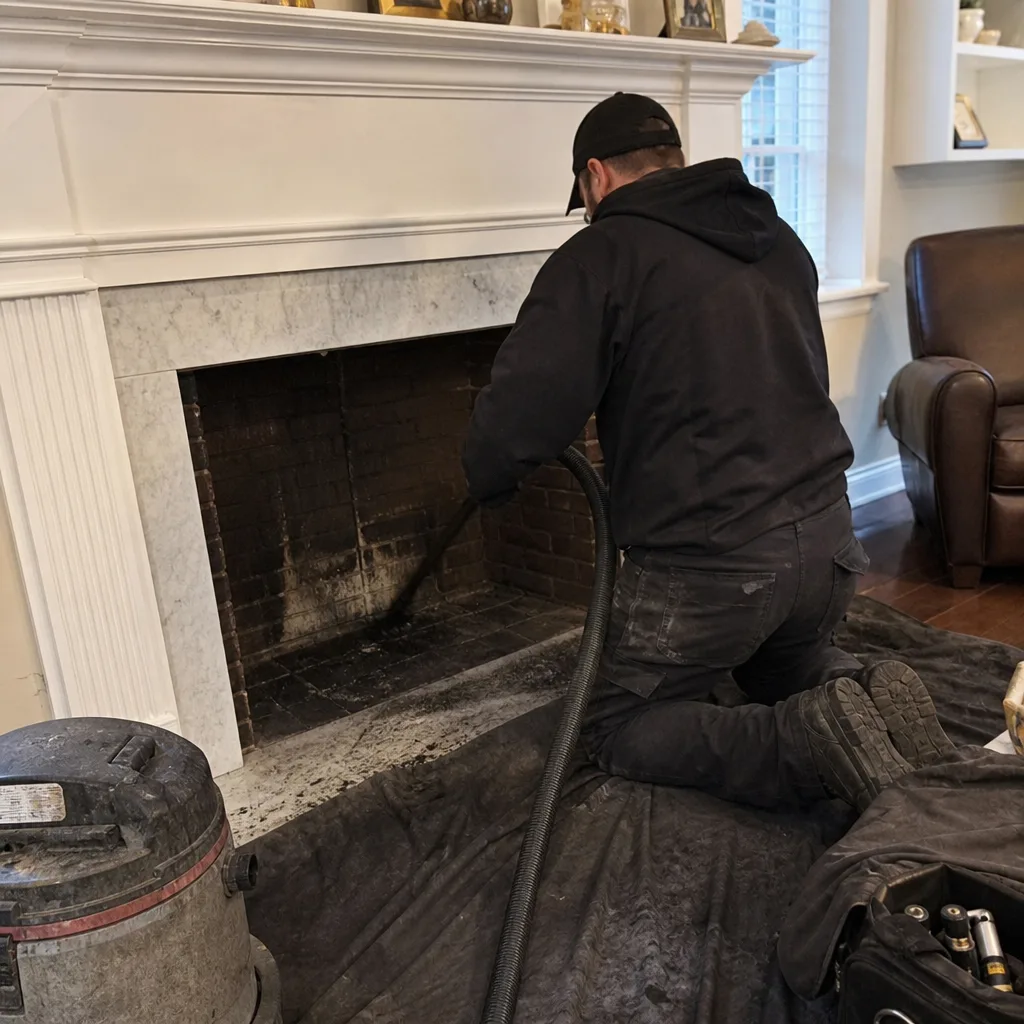 Before
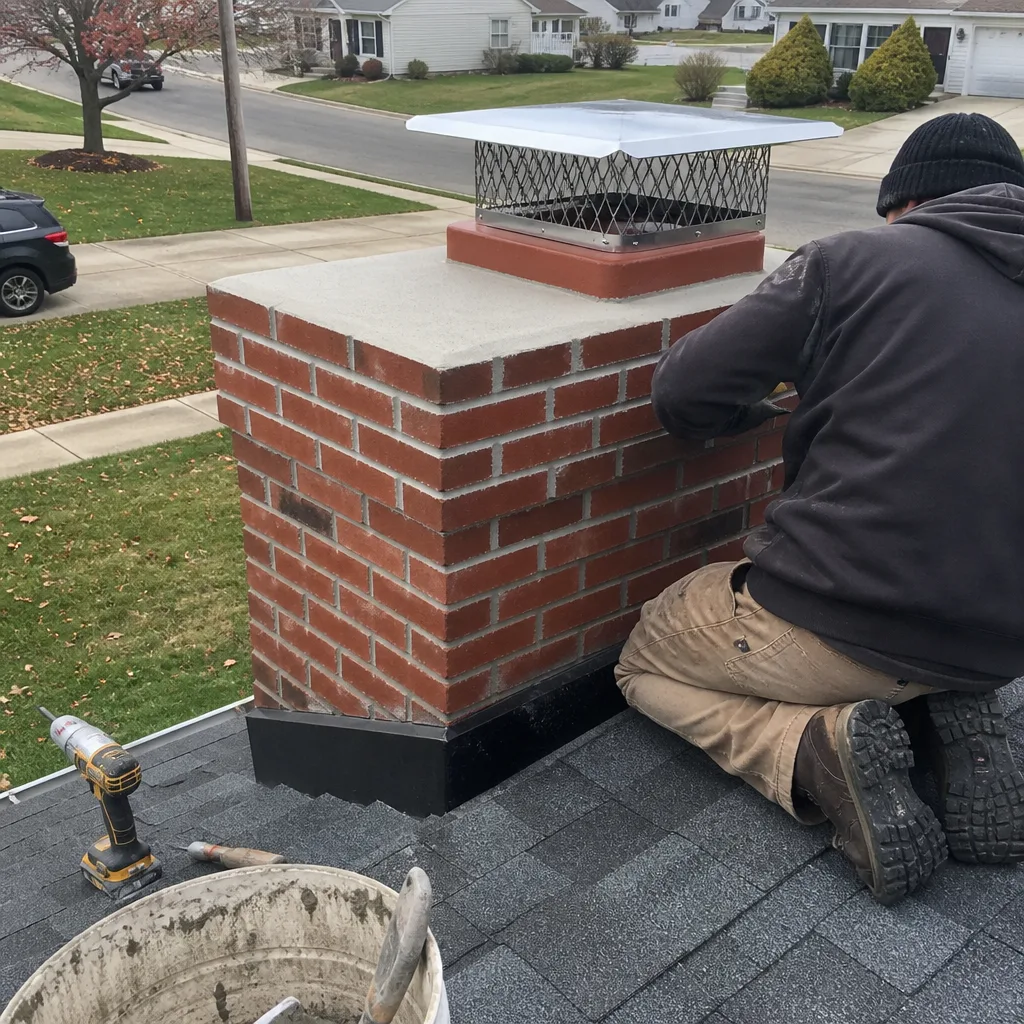 After
After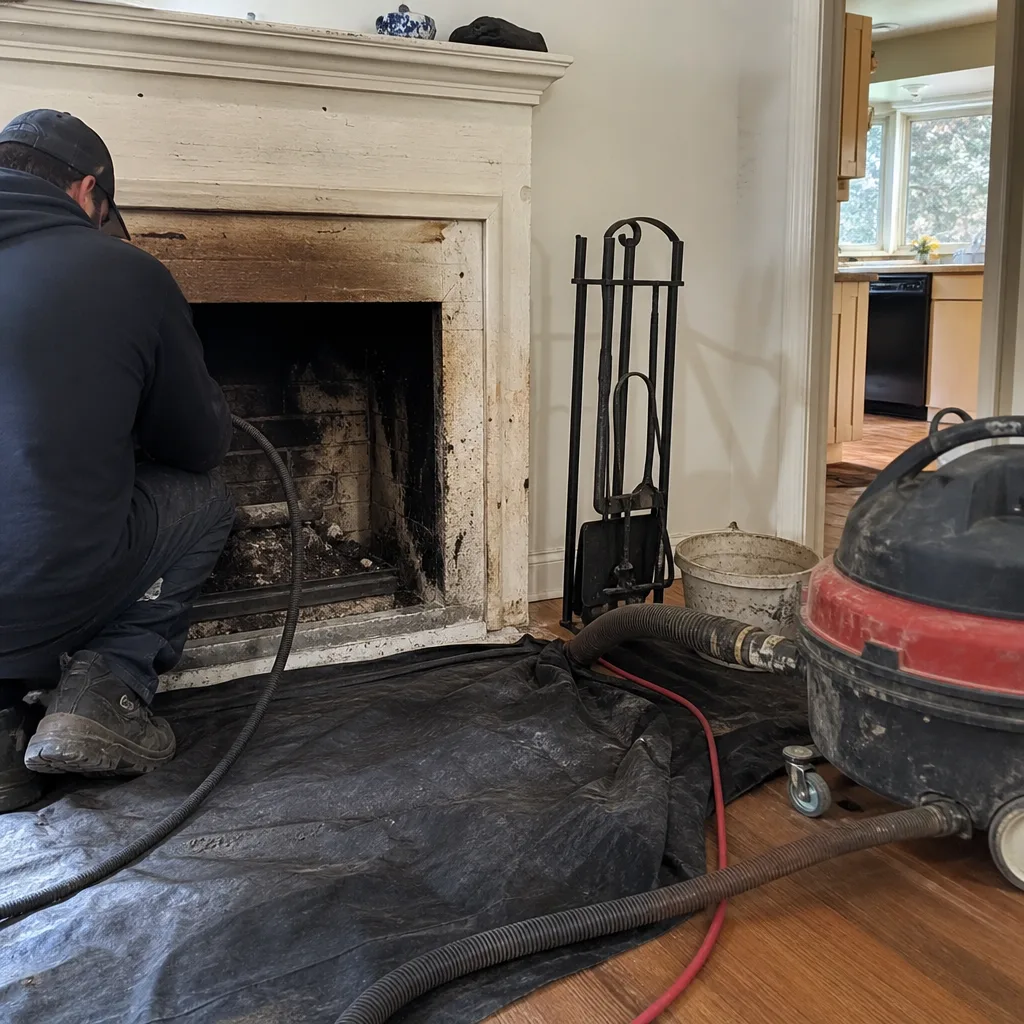 Before
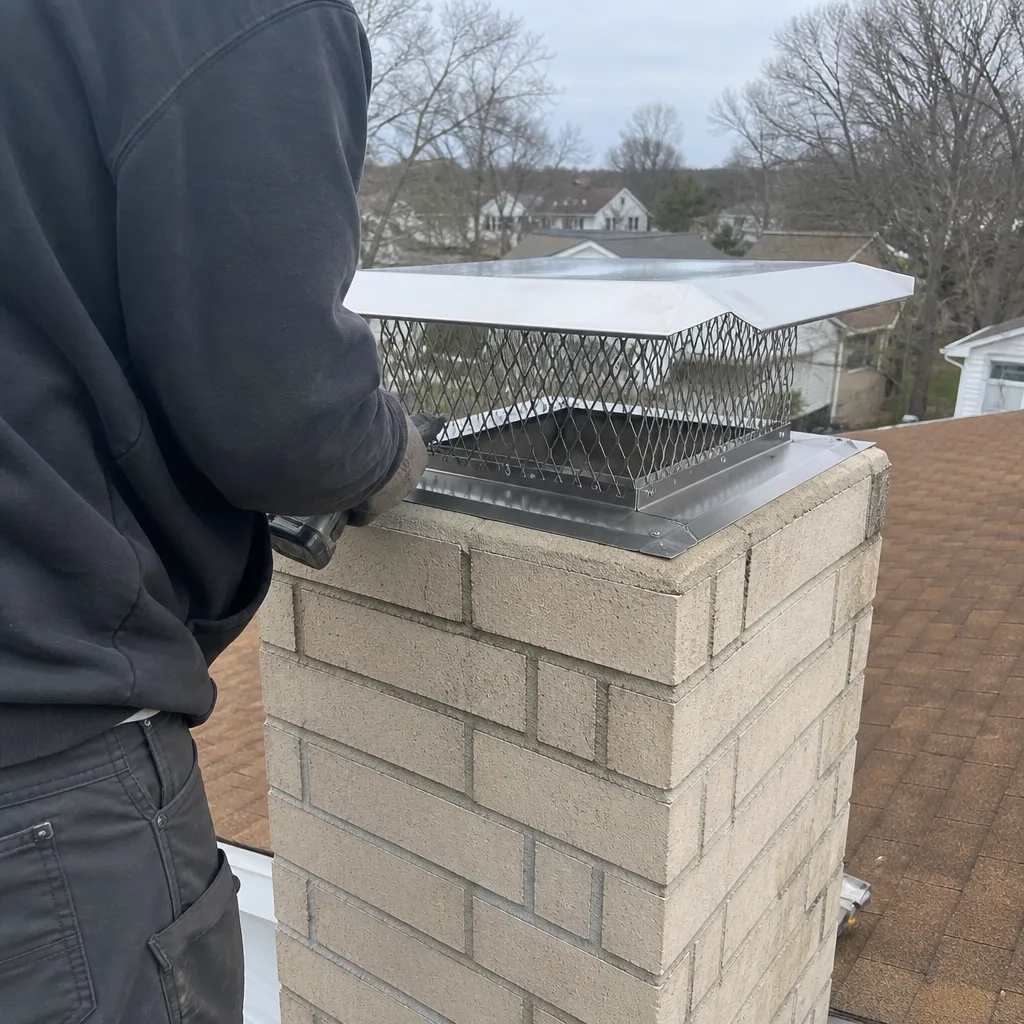 After
After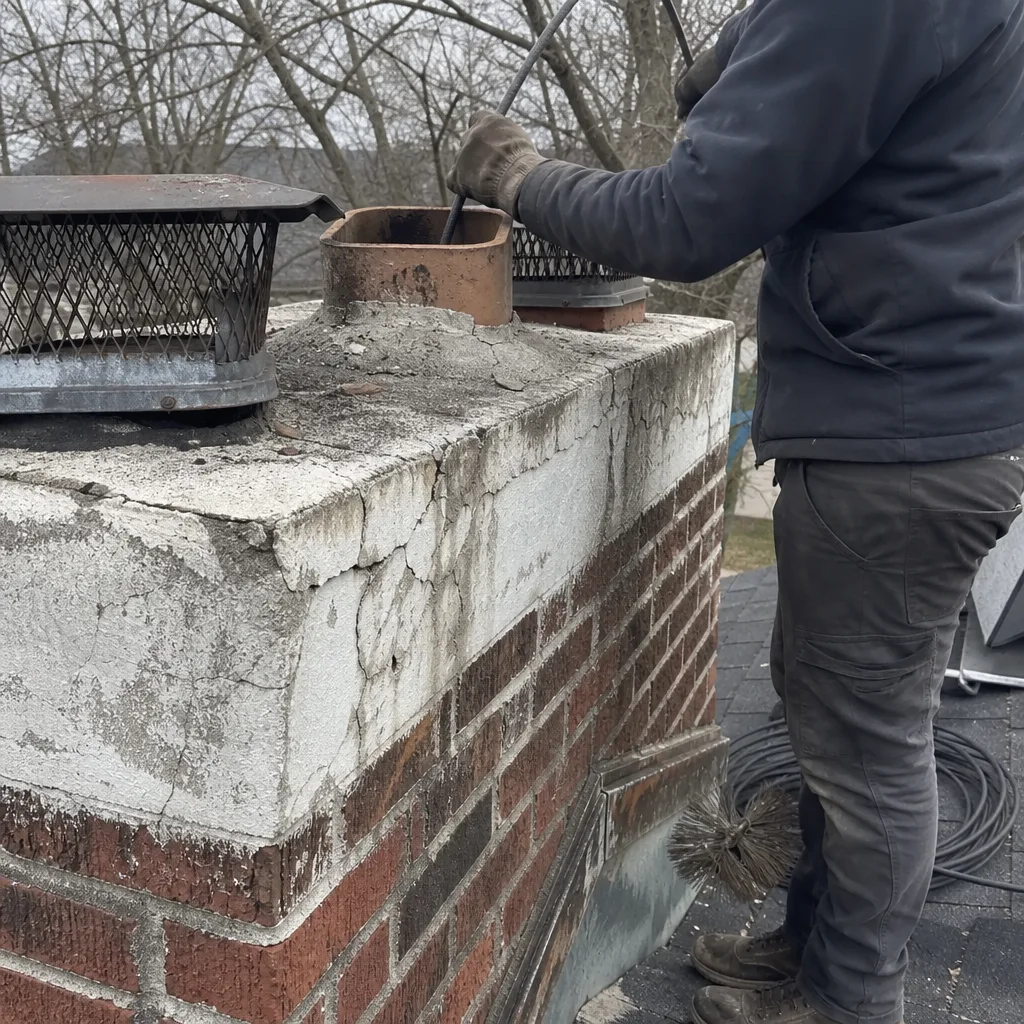 Before
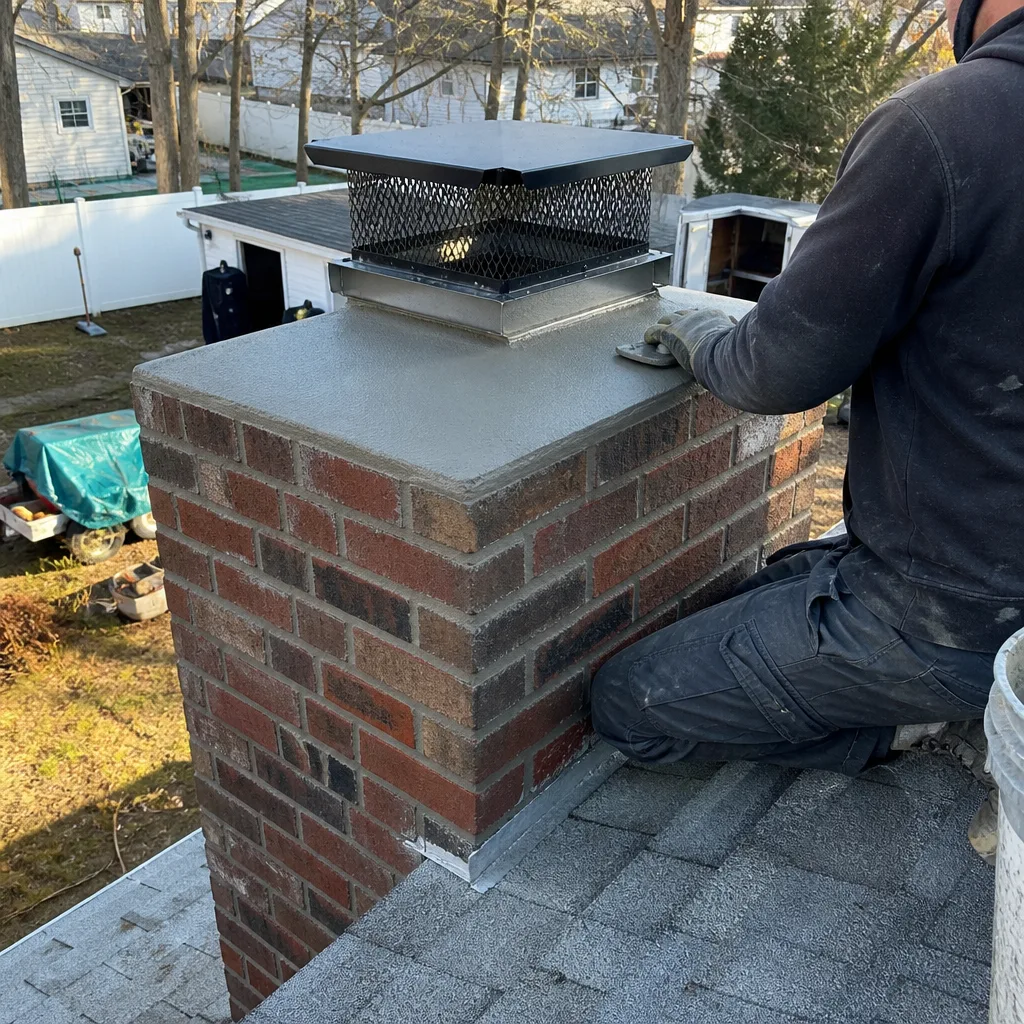 After
AfterThe Complete Guide to Chimney Cleaning in Toms River
The Chimney Safety Institute of America estimates that 25% of home heating fires trace back to dirty chimneys. That figure, while alarming, still understates the risk for Toms River homeowners. The salt-laden humidity rolling off Barnegat Bay, combined with the Shore’s pattern of damp fall evenings and premature fire-lighting, accelerates creosote buildup beyond what standard national guidance accounts for. We’ve pulled liners in North Dover and Silverton that looked five years older than their actual age, corroded from the inside by chloride-rich air that inland sweeps rarely encounter. This guide maps what chimney cleaning actually looks like inside a Shore-area home, not a generic one.
Quick Answer
A proper chimney cleaning in Toms River removes creosote, soot, and obstructions from the flue, smoke chamber, and firebox, followed by a camera inspection with photos you receive and a written condition verdict. For a deeper look at whether to tackle maintenance yourself or call in experts, see our DIY vs Professional Chimney Cleaning: The Toms River Homeowner’s Decision Guide. For most wood-burning fireplaces in Ocean County, this should happen annually, though homes burning more than three fires weekly or using unseasoned hardwood may need sweeping twice per season. Expect the process to take 60-90 minutes for a standard Level 1 cleaning, with Level 2 camera inspections adding 30-45 minutes for documented assessment.
Table of Contents
- Why Toms River Chimneys Differ from Inland Systems
- What Actually Happens During a Professional Chimney Cleaning
- Level 1, Level 2, and Level 3 Inspections: Which One You Need
- Why Creosote Stage Matters More Than Quantity
- How Salt-Air Corrosion Attacks Your Liner
- What a Completed Job Should Produce: Photos, Paperwork, Verdict
- The One Question That Separates Accountable Sweeps from Transient Ones
- What Chimney Cleaning Costs in Toms River and When to Book
Why Toms River Chimneys Differ from Inland Systems
Chimney advice written for Kansas or Vermont won’t serve a homeowner in Pelican Island or Ortley Beach. The Jersey Shore environment imposes three specific stresses that alter both maintenance schedules and failure modes.
Humidity cycling. Toms River sits at the confluence of Barnegat Bay and the Pine Barrens, creating summer humidity that routinely exceeds 75% for weeks at a stretch. A masonry flue that never fully dries between June and September enters October with saturated interior walls. When the first cold snap hits and the fire gets lit, that moisture flash-evaporates, driving soluble salts toward the surface and opening micro-fissures in terracotta liners. We’ve documented this pattern repeatedly in homes east of Route 9, where bay influence is strongest.
Salt-charged air. Ocean County’s prevailing winds carry aerosolized chloride across the barrier island and into Toms River proper. Stainless steel liners rated for 25 years in Pennsylvania show pit corrosion in 12-15 years here. The damage starts at the flue top, where condensation gathers, and works downward in patterns that resemble tree rings when we camera-inspect them. Copperfield and Gelco caps with proper overhang slow this dramatically, but only if they’re installed before the salt gets a foothold.
Burning behavior. Shore homeowners tend to treat fires as ambiance rather than primary heat, which sounds safer but often produces worse creosote. Small, smoldering loads of decorative oak or beach-collected driftwood (which is salt-impregnated and absolutely should not be burned) create Stage 2 and Stage 3 creosote faster than hot, efficient burns. In neighborhoods like Ceder Glen and Snug Harbor, where we’ve swept hundreds of systems, the worst buildup often comes from the occasional “nice evening fire” that never reaches combustion temperatures high enough to volatilize residues.
The practical implication: a Toms River chimney cleaned on a generic “every year” schedule may still harbor dangerous buildup if that annual cleaning happens in May, after a humid summer has preconditioned the flue for accelerated fall accumulation.
What Actually Happens During a Professional Chimney Cleaning
A proper sweep is not a vacuum job. It’s a systematic mechanical cleaning of the entire combustion pathway, with documentation at each stage. Here’s what occurs when we arrive at a Toms River home:
- Exterior assessment. We walk the roofline or use a pole camera to examine the cap, crown, and visible flue tiles for spalling, displacement, or vegetation intrusion. In Toms River, we’re specifically watching for cap corrosion and crown cracking from freeze-thaw cycling.
- Interior containment. The work area gets sealed with HEPA-filtered vacuums running before any brushing begins. We’ve learned this matters more in Shore homes, where tighter construction and energy-recovery ventilators can pull soot into living spaces if negative pressure isn’t managed.
- Flue brushing. We match brush diameter and stiffness to flue lining material. Terracotta tiles receive polypropylene bristles; stainless steel liners get wire brushes sized to manufacturer specification. The brush runs the full flue length on flexible rods, with rotation that dislodges glazed creosote without damaging the lining.
- Smoke chamber and firebox cleaning. The area above the damper and the firebox floor get hand-brushed and vacuumed. In Toms River’s older homes, particularly in Dover Shores and Gilford Park, we often find degraded mortar here from decades of minor water infiltration.
- Component inspection. Damper operation, door gasket condition, and hearth extension clearances get checked against NFPA 211 standards. We note any deviations on the written report.
- Camera inspection. For Level 2 cleanings, we run a high-resolution camera the full flue length, capturing video and still images of every joint, offset, and surface condition. The homeowner sees this footage in real time or receives it by email.
- Debris removal and site restoration. All soot and creosote get double-bagged and removed. We leave the work area cleaner than we found it.
The entire process typically takes 60-90 minutes for a standard cleaning, 90-150 minutes with Level 2 camera documentation. Our technicians carry professional-grade rods and brushes from Chimney Cleaning & Sweep in Toms River inventory, matched to the specific flue dimensions we confirm at arrival.
Level 1, Level 2, and Level 3 Inspections: Which One You Need
The National Fire Protection Association defines three inspection levels, and most Toms River homeowners don’t know which applies to their situation. Choosing wrong means either paying for unnecessary work or missing a hazard.
Level 1 is a visual examination of readily accessible portions of the chimney exterior, interior, and connecting appliances. No tools are used to open or remove components. This suffices when:
- The appliance and venting system haven’t changed
- You’re keeping the same fuel type
- No performance problems or external events (chimney fire, earthquake, lightning strike) have occurred
- It’s been less than 12 months since your last documented inspection
For routine annual maintenance in stable Toms River homes, Level 1 with cleaning is appropriate. But “routine” and “stable” are doing heavy lifting here.
Level 2 adds camera inspection of internal surfaces and accessible portions of attics, crawl spaces, and basements. It requires specialized equipment and training. You need Level 2 when:
- You’re buying or selling the home
- The appliance, fuel type, or liner has changed
- Any building modification may have affected the chimney (new roofline, addition, weather event)
- There has been a chimney fire, even a minor one
- It’s been more than 12 months since any inspection
- You’ve never had a camera inspection and don’t know your liner’s actual condition
In our experience across Toms River, particularly in pre-1990 construction, Level 2 is the right default. Too many homeowners have inherited a “clean bill of health” from a visual-only sweep who never saw the flue’s interior. Our Chimney Repair in Toms River calls frequently begin with a Level 2 that reveals deterioration the previous owner never knew existed.
Level 3 involves demolition of building materials to access concealed portions of the chimney. This is diagnostic, not maintenance. We pursue Level 3 only when Level 2 indicates a hazard that cannot be evaluated otherwise, such as suspected hidden fire damage or structural compromise behind finished surfaces. It’s rare, and we discuss the scope and restoration requirements with the homeowner before proceeding.
After a harsh Ocean County winter with multiple freeze-thaw cycles, we recommend Level 2 for any system that hasn’t been camera-inspected in 24 months. The salt-humidity combination hides damage that visual inspection cannot catch.
Why Creosote Stage Matters More Than Quantity
Homeowners often ask “how much creosote did you find?” The better question is “what stage was it?” Creosote progresses through three distinct forms, and the stage determines both fire risk and removal difficulty.
Stage 1: Sooty or flaky. Light, dusty, or flaky black deposit. Brushes off easily. Indicates relatively efficient burning with seasoned wood. Normal accumulation for a well-operated system. Removal is straightforward mechanical brushing.
Stage 2: Puffy or honeycombed. Crumbly, tar-like layers with visible bubbles or voids. Forms when wood is unseasoned, fires are smoldered, or combustion air is restricted. This is where most Toms River “occasional” fireplaces live. It burns readily if ignited, and requires more aggressive mechanical removal. We often find Stage 2 in homes burning oak purchased green from local suppliers and fired before proper drying.
Stage 3: Glazed or hardened. Shiny, rock-hard, enamel-like coating. Essentially condensed wood tar that has baked onto the flue surface. Requires specialized chemical treatment or rotary mechanical removal. Stage 3 is the product of repeated low-temperature burning, often from homeowners who believe they’re being “safe” by keeping fires small. It is also the most dangerous form, with ignition temperatures near 450°F and burn rates exceeding 2000°F.
Here’s what we tell Toms River homeowners: if your sweep reports “a lot of buildup” without specifying stage, they may not be assessing risk correctly. Stage 1 coating a flue thickly is less urgent than Stage 3 glazing a third of the surface. Ask directly: “What stage creosote did you find, and where?” The answer should be specific: “Stage 2 in the smoke chamber, Stage 1 in the upper flue,” not “pretty dirty.”
Our technicians document stage and location on every report. If we find Stage 3, we also note the probable cause and recommend operational changes, because removing it without addressing why it formed is incomplete work. Done right, and we stand behind it.
How Salt-Air Corrosion Attacks Your Liner
This is the condition that separates Toms River chimney maintenance from generic national guidance. Barnegat Bay’s influence extends farther inland than most residents assume, and its effect on chimney liners is cumulative, invisible, and often misdiagnosed.
Stainless steel chimney liners, the standard replacement for deteriorated terracotta, rely on a passive chromium oxide layer for corrosion resistance. Chloride ions from salt aerosol disrupt this layer. The process accelerates when:
- The cap is missing or undersized, allowing direct precipitation and salt deposition
- The flue experiences temperature cycling that promotes condensation (exactly what happens when Shore homeowners light occasional fires in marginally cold weather)
- The liner was installed with lower-grade 304 stainless rather than marine-appropriate 316Ti or 316L alloy
We’ve extracted liners in Toms River neighborhoods from Pine Lake Park to Ocean Gate that showed through-wall pitting at 8-12 years, where the same product specification lasts 20+ years in Hunterdon County. The failure mode is insidious: the liner looks intact from the firebox view, but camera inspection reveals a cratered interior with wall thinning that compromises both draft safety and structural integrity.
For homeowners east of the Garden State Parkway, or anywhere within three miles of open water, we specifically recommend:
- Annual camera inspection regardless of apparent condition
- Caps with minimum 5-inch overhang and proper storm collar sealing
- When replacement becomes necessary, specifying 316Ti alloy with manufacturer documentation
Our Fireplace Services in Toms River include liner assessment with alloy verification when prior installation records exist. DuraFlex and HeatShield products in our inventory are specified for coastal exposure, not generic application.
The cost of ignoring salt corrosion is not merely liner replacement. A perforated liner can leak combustion gases into wall cavities, with carbon monoxide migration into living spaces. This is not theoretical. We’ve traced CO alarms to this exact mechanism in three Toms River homes since 2019.
What a Completed Job Should Produce: Photos, Paperwork, Verdict
A chimney cleaning without documentation is a black box. You paid someone to do something you cannot see, in a place you cannot reach, with results you cannot verify. The trustworthy sweep treats this asymmetry as a problem to solve, not an advantage to exploit.
After every Hearthstone cleaning and inspection, the Toms River homeowner receives:
Photos you can see. For Level 2 inspections, dated still images from the camera run showing the full flue length, smoke chamber, and firebox. These are not generic stock images. They show your specific system, with identifying features visible. We email them within 24 hours and review them on-site if the homeowner is present.
A plain-English verdict. One page, no jargon. “The terracotta liner shows hairline cracking at the third flue joint but remains structurally sound. Recommend monitoring annually.” Or: “The stainless liner exhibits Stage 3 pit corrosion at 40% wall depth. Replacement recommended before next burning season.” We write it the way we’d explain it to a neighbor, because that’s what you are.
Written scope and pricing for any recommended work. If repair is indicated, you get a line-item proposal with material specifications (brand, model, warranty term) and labor breakdown. The number on the estimate is the number on the invoice. No surprises on the bill.
The 90-Day Done Right Promise. In writing, no arguing. If anything about the cleaning or subsequent work is not right, we come back and make it right. Governed by our K.E.Y.S. code: Krafted right, Every time, Your home first, Standing behind it.
Be wary of any sweep who cannot or will not produce these four items. In our 42 years, we’ve encountered too many Toms River homeowners who discovered liner damage, improper construction, or fire hazards years after a “cleaning” that included no documentation. The paperwork is not bureaucracy. It is the only proof that work occurred and the only basis for comparing condition year over year.
The One Question That Separates Accountable Sweeps from Transient Ones
Toms River, like every market, has price-cutting chains that subcontract to uninsured day laborers, and one-truck operators who may not answer the phone next season. The homeowner’s challenge is distinguishing craftsmanship from performance before money changes hands. Our How to Hire a Chimney Cleaning Contractor in Toms River: A Step-by-Step Guide walks through exactly what to verify before you book.
Ask this: “Will the person who cleans my chimney be a W-2 employee of your company, and can you show me proof of workers’ compensation coverage for that individual?”
The answers separate the accountable from the transient:
- “Yes, here’s the certificate.” The company has payroll, insurance, and something to lose if someone gets hurt on your property. This is the answer you want.
- “We use 1099 contractors, but they’re fully insured.” In New Jersey, this is often unenforceable. If the contractor lacks coverage, your homeowner’s policy may be the primary payer for a jobsite injury. Many “fully insured” claims dissolve under actual scrutiny.
- “Let me check and get back to you.” They won’t. Move on.
- Deflection or irritation. Any sweep who treats this question as an insult has something to hide. Professional operators expect it and answer plainly.
Beyond this threshold question, we suggest verifying:
- CSIA certification for the individual technician, not just the company owner
- Physical business address in Ocean County (not a PO box or virtual office)
- How long they’ve operated under the current business name (some transient operators rebrand after accumulating complaints)
- Whether they carry the brands they claim (we’ve encountered sweeps advertising Famco or Copperfield caps while installing unmarked imports)
At Hearthstone Chimney Co., our technicians are W-2 employees, background-checked, uniformed, and covered under our workers’ compensation policy. Most jobs are completed in a single visit. We’ll be there when we say. A square deal: no surprises on the bill.
What Chimney Cleaning Costs in Toms River and When to Book
Pricing for chimney cleaning in Toms River varies with access difficulty, appliance type, and inspection level. The table below reflects our current market ranges for typical Ocean County homes:
| Service | Typical Range | What Affects Price |
|---|---|---|
| Level 1 cleaning (gas fireplace) | $149 – $199 | Flue length, roof access difficulty |
| Level 1 cleaning (wood-burning fireplace) | $199 – $279 | Creosote stage, insert removal required |
| Level 2 cleaning with camera inspection | $279 – $379 | Number of flues, video documentation delivery |
| Level 2 with pellet stove service | $329 – $429 | Exhaust vent routing complexity |
| Stage 3 creosote removal (chemical + rotary) | $150 – $300 additional | Extent of glazing, flue diameter |
These are upfront prices agreed before booking, not estimates that balloon on arrival. Our $89 Seasonal Tune-Up addresses specific gas fireplace maintenance needs at a lower entry point. Seniors and veterans receive a standing 5% discount. Any repair over $250 qualifies for $50 off with current promotion.
Timing matters in Toms River. The optimal booking window is August through early October, before the first cold snap drives demand and scheduling extends to 3-4 weeks. We’ve seen October temperatures drop to fireplace-lighting levels as early as the third week, and every year homeowners call surprised that we’re booking two weeks out. For a full calendar of what to do when, see our Seasonal Chimney Cleaning Care for Toms River: Year-Round Homeowner’s Guide.
For wood-burning systems, cleaning should precede the first fire by at least two weeks. This allows time for any indicated repairs before temperatures demand use. Gas systems have more flexibility, but pre-season inspection still catches deteriorated logs, valve concerns, or venting issues that become inconvenient mid-winter.
Homes in flood-prone Toms River zones, including parts of South Toms River and near the Toms River itself, should also consider post-storm inspection. Hurricane-driven water intrusion can damage liners, dampers, and fireboxes in ways that aren’t visible until the system is used. Explore more guides & resources for protecting your chimney through every season.
Common Mistakes to Avoid
- Booking based on price alone. The lowest bid often reflects uninsured labor, no camera inspection, or rushed work that misses deterioration. In Toms River’s salt-air environment, a missed liner pitting can cost thousands in remediation.
- Assuming gas fireplaces need no maintenance. Gas systems don’t produce creosote, but their vents accumulate debris, ceramic logs degrade, and valves require inspection. Annual service prevents carbon monoxide risks and extends appliance life.
- Burning driftwood or treated lumber. Salt-impregnated driftwood from Ocean County beaches releases hydrochloric acid when burned, accelerating liner corrosion. Treated lumber releases arsenic and chromium. Both are common fuel mistakes we encounter.
- Ignoring the cap. A missing or damaged cap is the single most preventable cause of water and animal intrusion. In Toms River, it’s also your first defense against salt deposition. Replacement costs less than one emergency service call.
- Accepting “all clear” without photos. Verbal assurances without documentation leave you no recourse if problems emerge later. Demand images and a written report every time.
- Waiting for visible smoke problems. By the time smoke backs up into the room, the hazard has progressed significantly. Preventive maintenance catches draft issues, obstructions, and liner damage before symptoms appear.
- Hiring unverified “chimney sweeps” from app-based platforms. These services perform minimal vetting. We’ve corrected dangerous work from platform contractors who lacked proper equipment and training for Level 2 inspection.
When to Call a Professional
Call a sweep immediately if you notice smoke entering the room, a strong tar odor when the fireplace is not in use, visible creosote flakes in the firebox, or any evidence of animals or nesting materials. After any chimney fire, even one that self-extinguished, Level 3 inspection may be warranted to assess hidden damage. For Toms River homeowners who haven’t had camera inspection in two or more years, or who are new to their home and lack documentation of prior service, schedule Level 2 cleaning and inspection before the next burning season. Hearthstone Chimney Co. offers free estimates in Toms River. Call (609) 303-9679 and a live person will answer, 24 hours a day, every day.
Frequently Asked Questions
A standard Level 1 chimney sweep for a wood-burning fireplace in Toms River typically runs $199 to $279, while Level 2 cleaning with camera inspection ranges from $279 to $379 depending on flue length and access difficulty. Gas fireplace cleaning generally costs $149 to $199. Call (609) 303-9679 for an exact quote - estimates are free.
For wood-burning systems in Ocean County, annual sweeping is the minimum, with twice-seasonal service for heavy use or unseasoned fuel. The salt-air environment and humidity cycling here accelerate deterioration, so we recommend annual Level 2 camera inspection even when visual condition appears stable. Gas systems should be inspected and serviced annually, though cleaning requirements are lighter.
A trustworthy sweep shows you camera evidence and explains the specific failure mode. In Toms River, we frequently encounter salt-corroded liners that appear sound from the firebox but show through-wall pitting on camera. If a sweep recommends replacement without photos you can see and a plain-English explanation of why, get a second opinion. Our Free Second Opinion offer applies to any written estimate.
Accumulated creosote ignites at temperatures as low as 450°F, causing chimney fires that can reach 2,000°F and crack liners or penetrate to framing. Even without ignition, obstructed flues vent carbon monoxide into living spaces. In Toms River’s older housing stock, where construction may predate modern safety standards, these risks carry particular weight. The cost of prevention is modest against the cost of remediation.
Cleaning removes deposits and obstructions. Inspection assesses structural and functional condition. They often occur together, but they’re distinct services. A cleaning without inspection cannot identify liner damage, crown deterioration, or clearance violations. We bundle them because neither alone is sufficient for safety.
Mechanical brushing of a straightforward fireplace flue is physically possible for a homeowner with proper equipment, but we don’t recommend it. Without camera inspection, you cannot assess liner condition or verify complete creosote removal. In Toms River’s salt-air environment, the critical question is often liner integrity, not surface cleanliness. For safety-critical components, trained professional assessment provides value that DIY cannot replicate.
The Bottom Line
Chimney cleaning in Toms River is not a commodity service. The Shore’s salt-laden humidity, specific burning patterns, and aging housing stock create conditions that generic guidance misses. Effective maintenance means matching inspection level to actual need, understanding creosote stage rather than volume, documenting condition with photos and written verdicts, and selecting a sweep with verifiable accountability. The cost of informed prevention is always lower than the cost of undetected deterioration. Schedule before the season turns, ask the hard questions, and keep the paperwork. Your chimney will outlast the shortcuts.
Written by Russell Haines, Owner at Hearthstone Chimney Co., serving Toms River since 2014.