
Last updated September 10, 2026
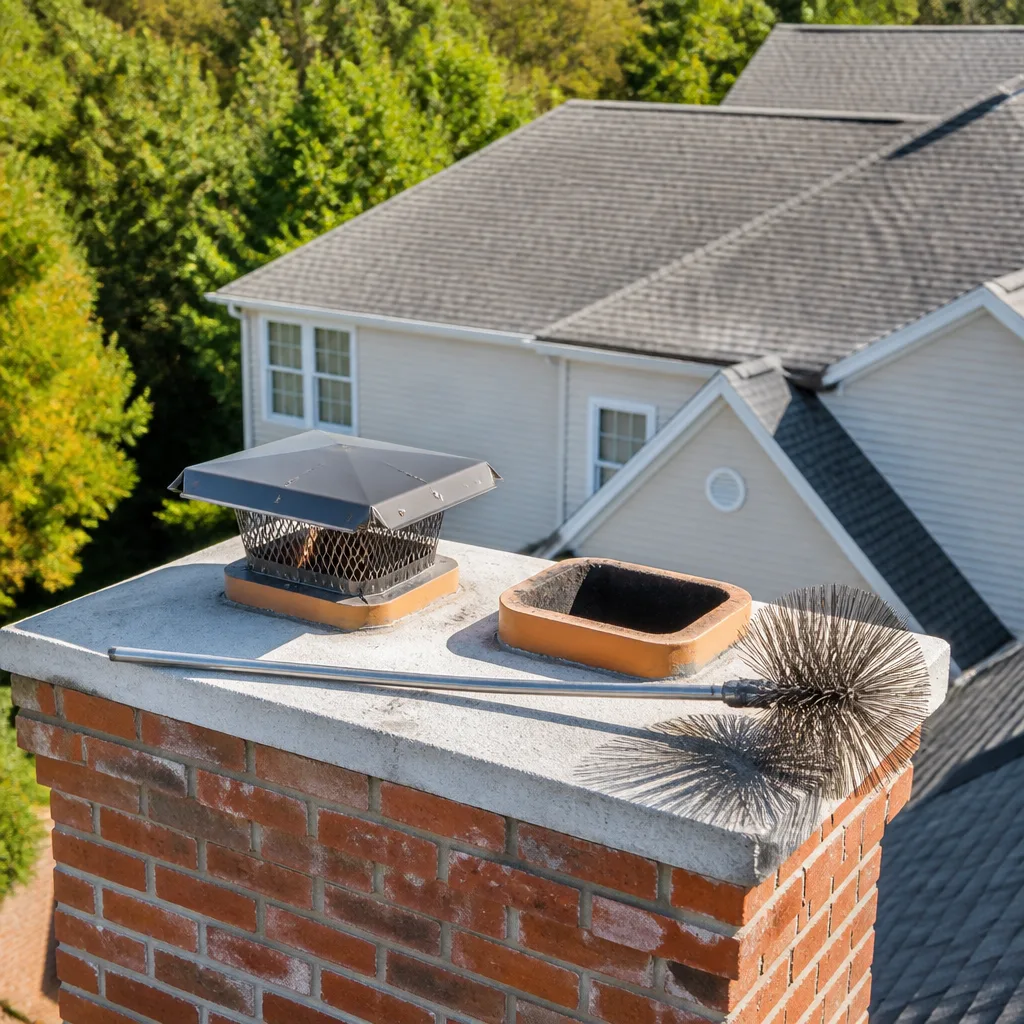
Level 1 sweep and inspection to the NFPA 211 annual standard - flue, crown, cap, and flashing checked and photographed
Chimney sweep logs do not sweep chimneys. They loosen some creosote - which then falls where a brush and vacuum still have to collect it.
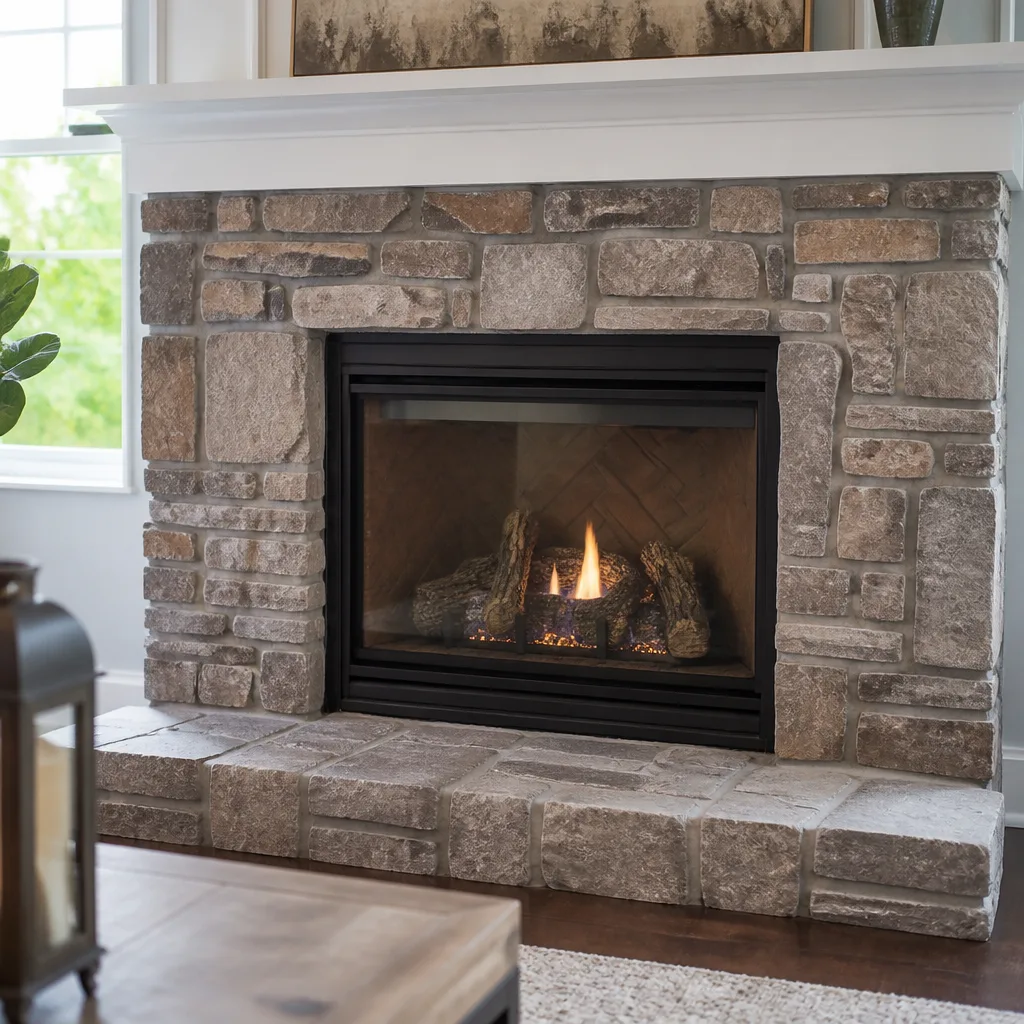
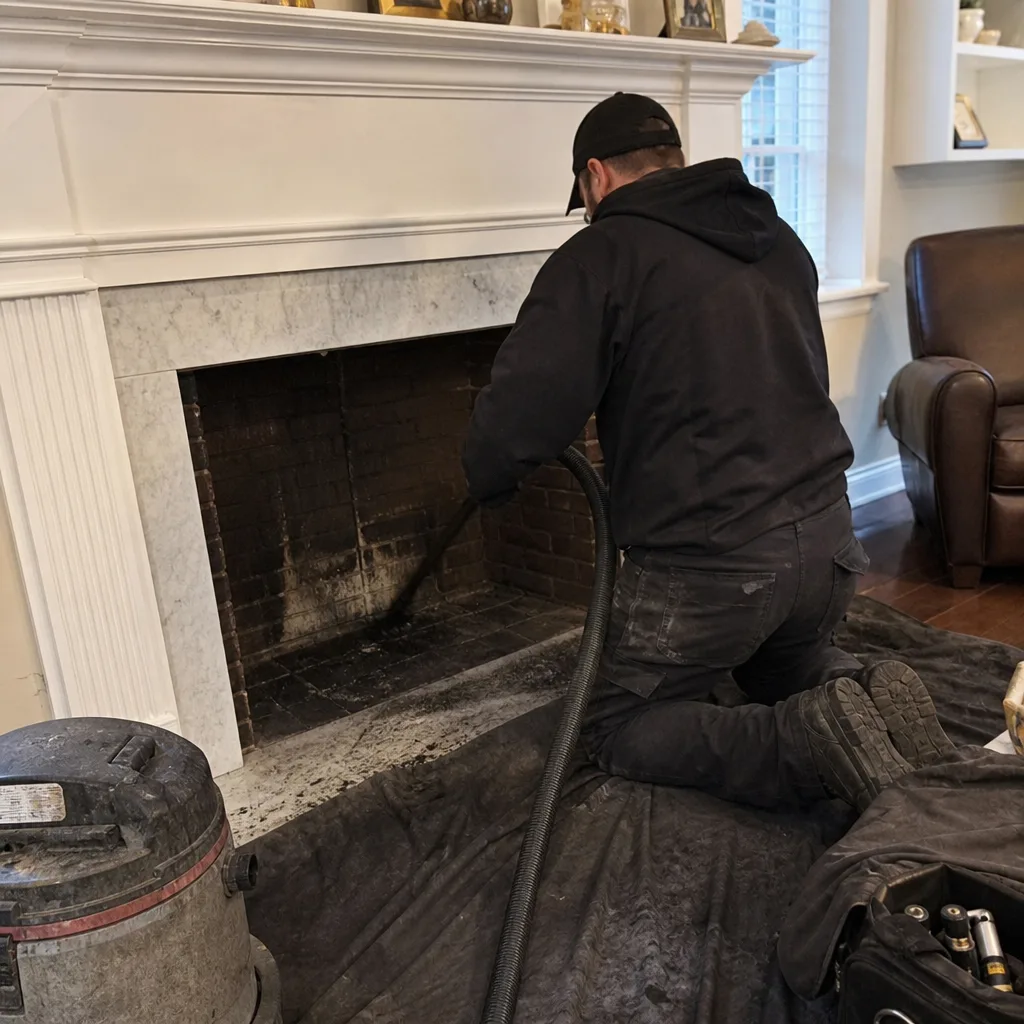 Before
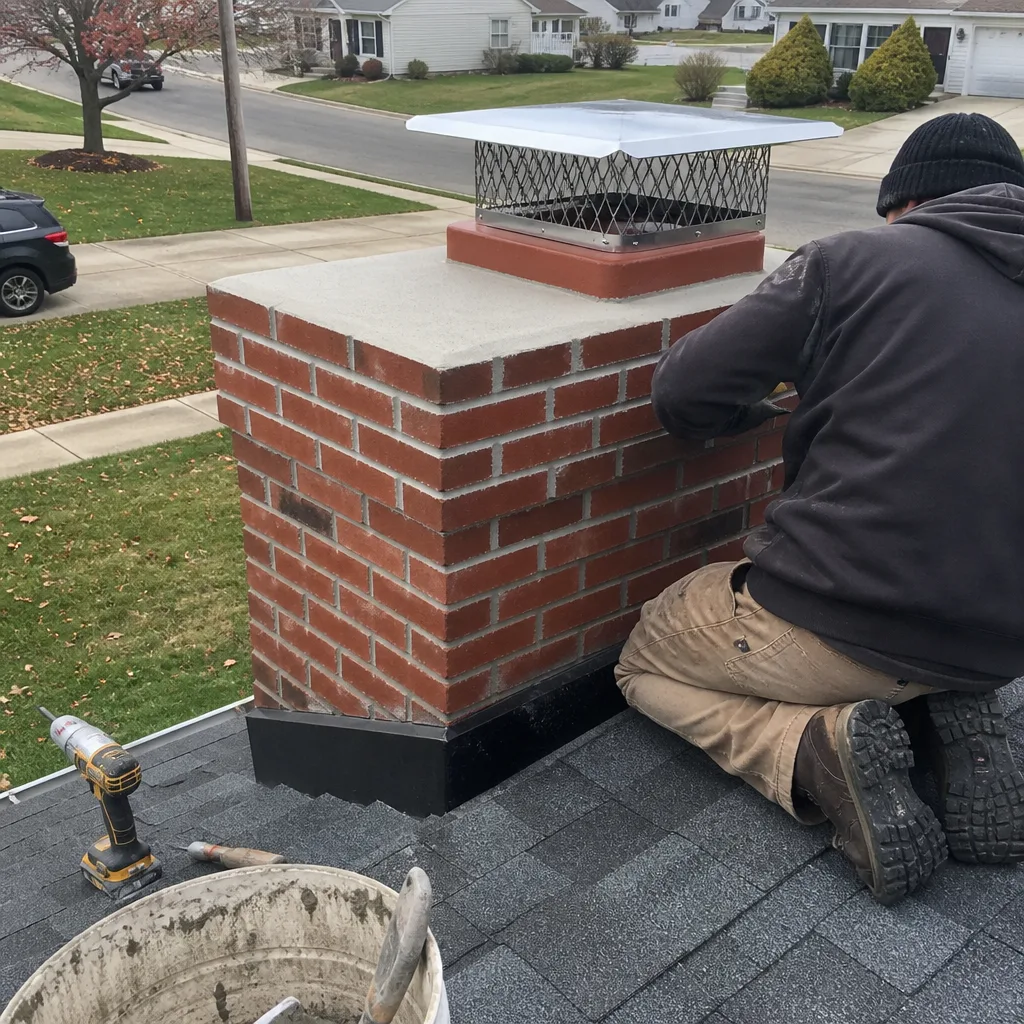 After
After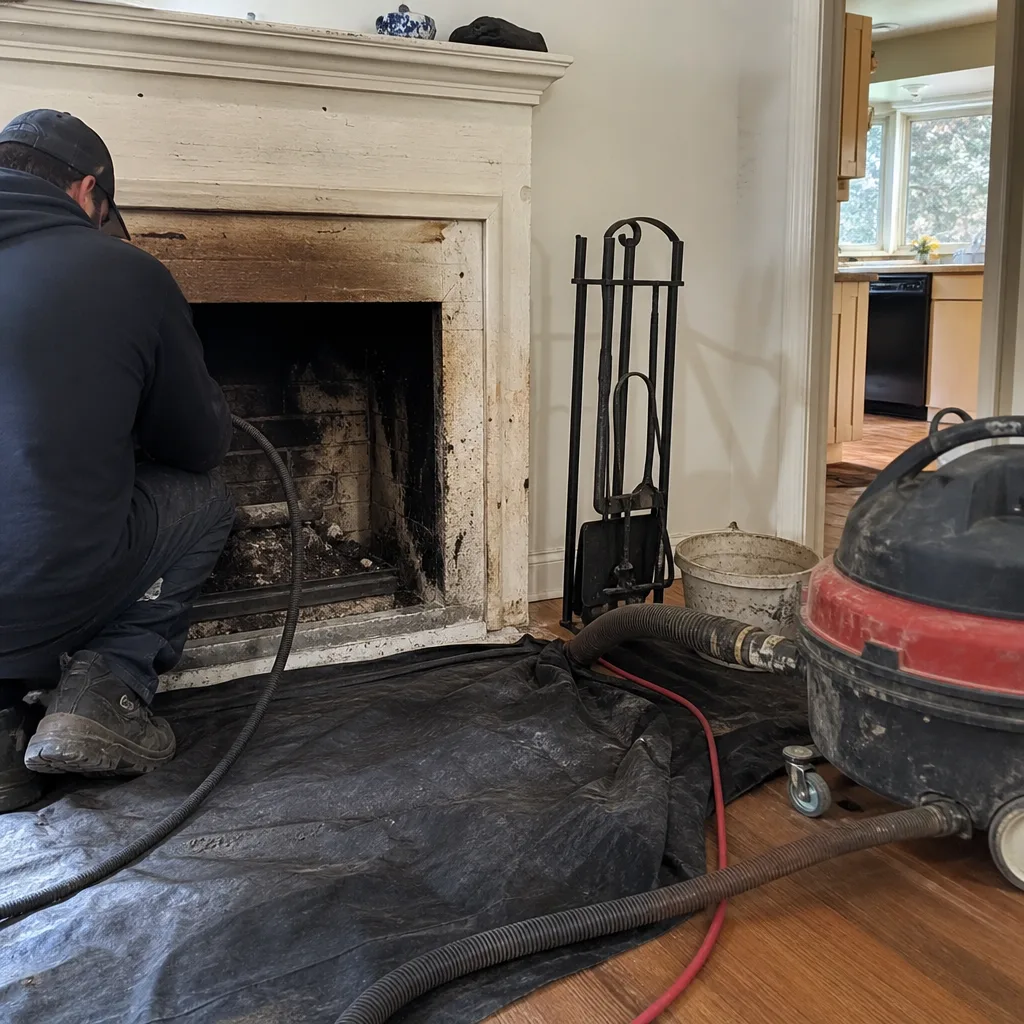 Before
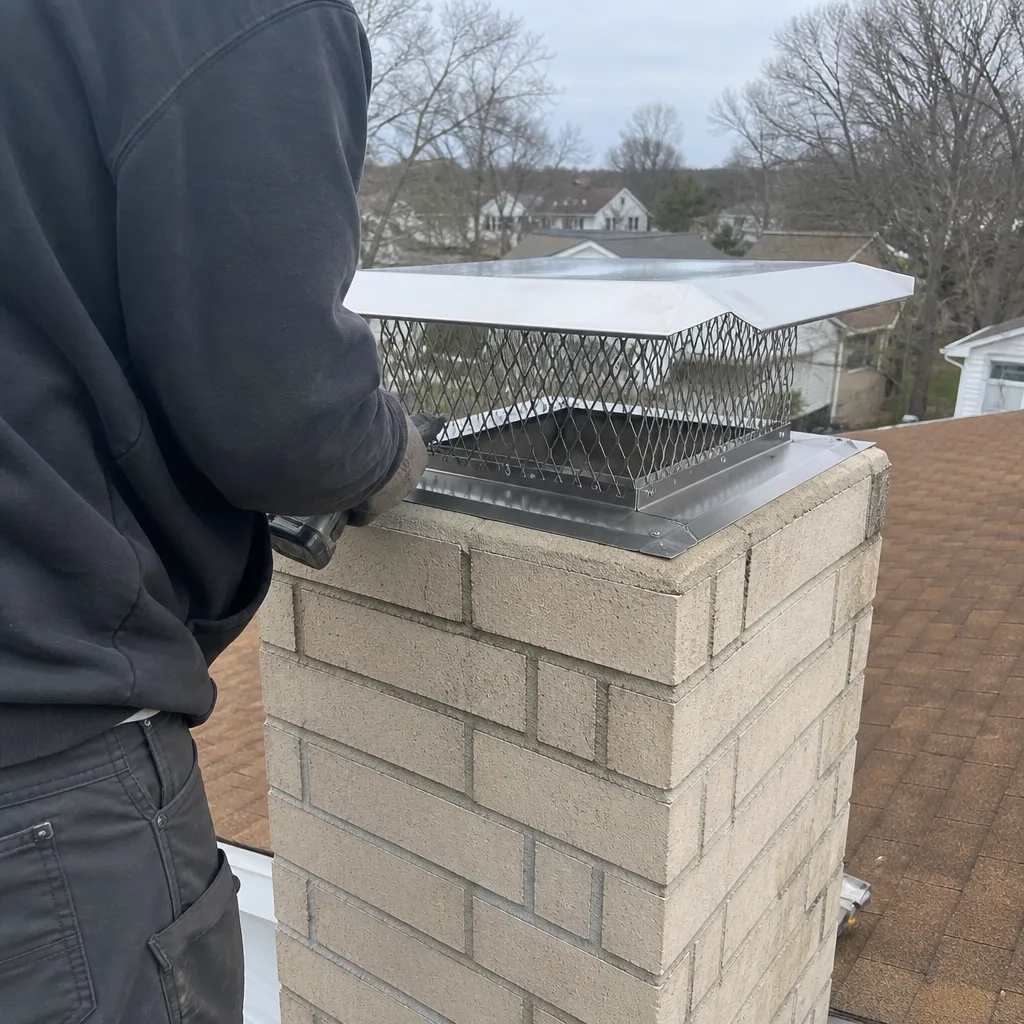 After
After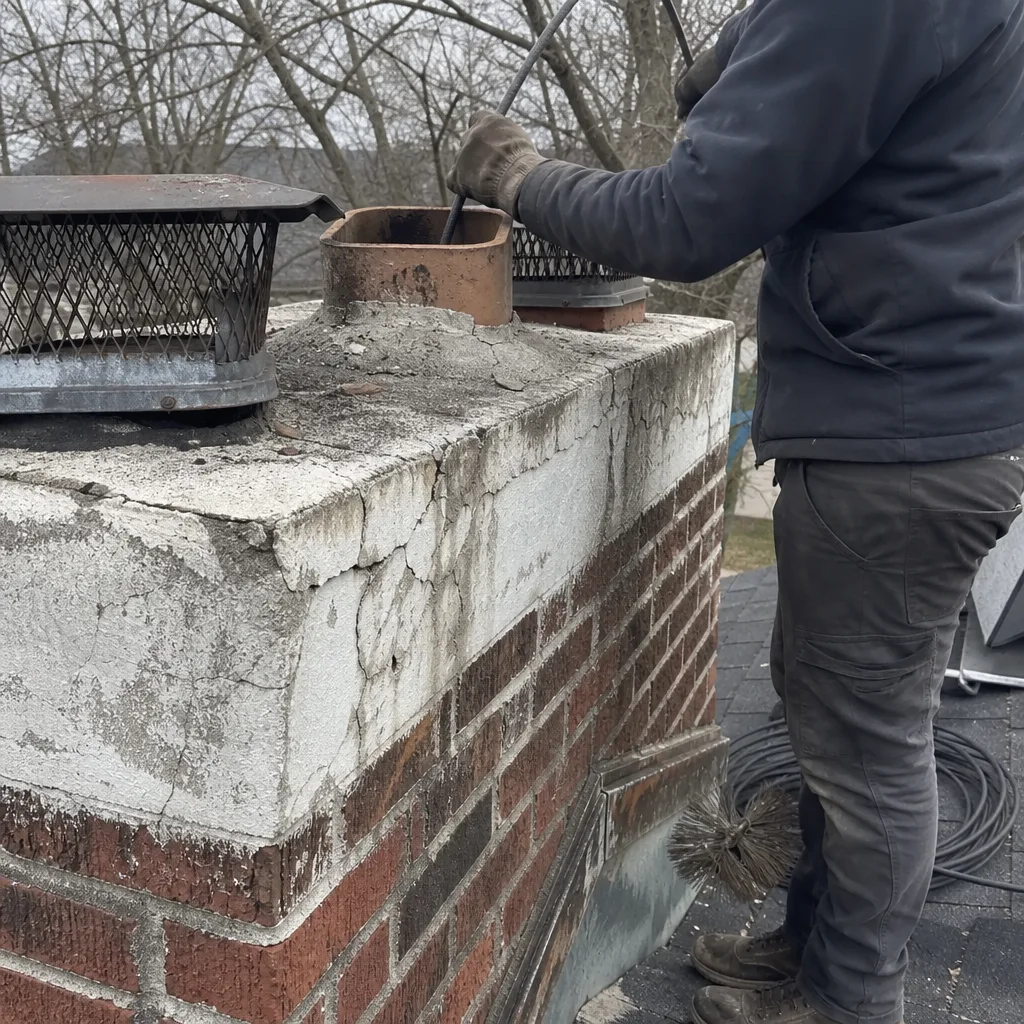 Before
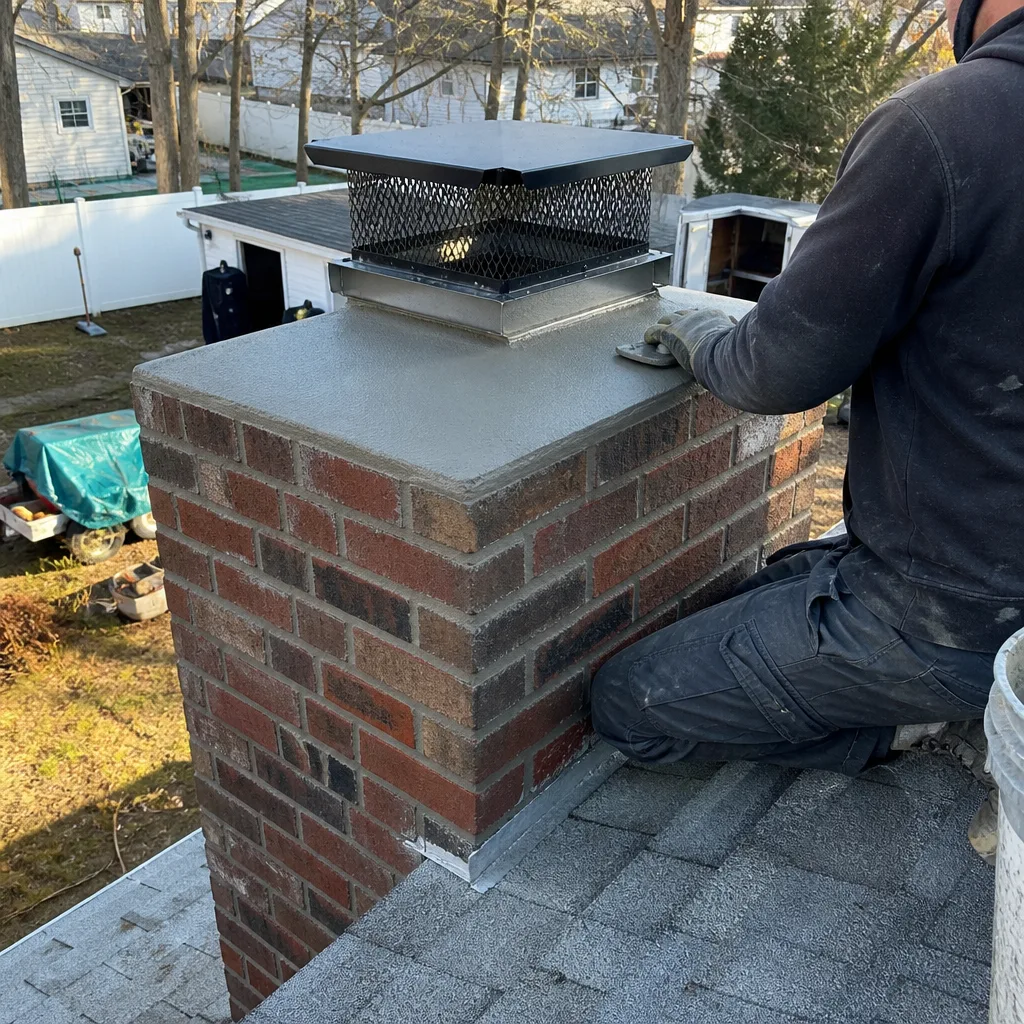 After
AfterDIY vs Professional Chimney Cleaning: The Toms River Homeowner’s Decision Guide
A chimney brush and rod kit costs about $60 at a hardware store, and on YouTube it looks straightforward. What those videos don’t show is what happens after you dislodge a section of deteriorated liner tile into the firebox, or the difference between sweeping light soot and chipping glazed creosote that has the consistency of hardened tar. In Toms River, where salt air accelerates crown deterioration and freeze-thaw cycles from nor’easters stress masonry from October through April, the condition inside your flue is rarely what the outside suggests. This guide draws a clear line between what a capable homeowner can safely handle and what requires a trained professional with a camera, the right tools, and the judgment that comes from inspecting thousands of chimneys. For how to hire a chimney cleaning contractor in Toms River, see our step-by-step guide.
Quick Answer
DIY chimney cleaning is genuinely possible for a narrow set of Toms River homeowners: single-story homes with accessible cleanout doors, modern metal liners in good condition, and only light, powdery soot deposits. For every other scenario, including glazed creosote, clay tile liners, or any chimney serving a wood stove or insert, professional cleaning with a Level-2 camera inspection is the safer and ultimately more economical choice.
Table of Contents
- When DIY Chimney Cleaning Actually Makes Sense
- Why Creosote Stage Is the Deciding Factor
- The Real Equipment Gap: What DIY Actually Requires
- What You Genuinely Cannot Inspect Yourself
- Toms River-Specific Risks: Climate, Codes, and Common Conditions
- The Four-Question Decision Framework
- Common Mistakes to Avoid
- When to Call a Professional
- Frequently Asked Questions
- The Bottom Line
When DIY Chimney Cleaning Actually Makes Sense
We’ll start with the honest short list. After 42 years of inspecting chimneys in Ocean County, we’ve seen a small subset of homeowners who can clean their own flues without creating new problems. The profile is specific, and deviating from it is where trouble begins.
The viable DIY scenario checks every box:
- Single-story home with a straight flue and accessible cleanout door at ground level
- Stainless steel or aluminum liner installed within the last 10-15 years, with no known damage
- Light, powdery soot (Stage 1 creosote) that brushes off easily
- Standard open fireplace used occasionally, not as primary heat source
- Homeowner is comfortable on a roof, has proper fall protection, and understands the limits of what they can assess
Even in this narrow scenario, the homeowner is cleaning only, not inspecting. The distinction matters. Cleaning removes combustible deposits. Inspecting evaluates structural integrity, clearance to combustibles, and hidden deterioration. A clean chimney with a cracked liner or deteriorated mortar joints is still a hazard.
In Toms River neighborhoods like North Dover and Silverton, we see a concentration of 1970s and 1980s colonials with original clay tile liners that have survived four decades of thermal cycling. These homeowners sometimes assume their straightforward fireplace setup qualifies for DIY maintenance. What they don’t see from the firebox is the network of hairline cracks that open when the flue heats, then close as it cools, a pattern that only a camera inspection reveals. We’ve documented this exact condition in homes on Bay Avenue and throughout the Green Island section.
The homeowner who genuinely benefits from DIY cleaning is the one who burns exclusively seasoned hardwood, maintains hot fires with adequate air supply, and treats the annual cleaning as routine maintenance rather than deferred maintenance. If you’re burning pine, construction scraps, or unseasoned wood, or if you’re running the fireplace daily through winter, you’ve already moved outside the DIY zone regardless of your setup.
Why Creosote Stage Is the Deciding Factor
Creosote forms in three distinct stages, and the stage present in your flue determines whether DIY is reasonable, risky, or impossible. This is the single most important factor in the decision, yet it’s the one basic brush kits and online tutorials almost never address accurately.
Stage 1: Soot
Light, powdery, black or brown deposit. Brushes off readily with a standard poly or wire brush. This is the only stage suitable for DIY removal. In Toms River, we see this primarily in fireplaces used a few times per month with well-seasoned oak or maple. If you can wipe the deposit off with your finger and it comes away like fine dust, you’re likely at Stage 1.
Stage 2: Crunchy or Flaky Creosote
Appears as hard, porous flakes or chips. Requires more aggressive mechanical action, typically a motorized whip or chain system run on a drill. The fragments are sharp and can damage a clay liner if dislodged carelessly. This stage indicates incomplete combustion, usually from burning wet wood or restricting air supply. DIY removal is technically possible with rental equipment, but the risk of liner damage and the difficulty of proper debris containment make professional service the wiser choice.
Stage 3: Glazed Creosote
Shiny, hardened, tar-like coating that adheres tenaciously to flue walls. Has the consistency of obsidian or hardened syrup. This is a professional-only job without exception. Removal requires chemical treatment to soften the deposit, followed by specialized mechanical cleaning. Attempting to chip Stage 3 creosote with hand tools risks damaging the liner, creating blockages, or simply redistributing the hazard without removing it. In extreme cases, the liner must be replaced.
Here’s what we’ve observed in Toms River specifically: the combination of humid summers and extended shoulder seasons means many homeowners run their fireplaces in marginal conditions, temperatures where the flue never fully heats. This produces the slow, cool fires that generate Stage 2 and Stage 3 creosote rapidly. We’ve pulled heavy Stage 2 deposits from chimneys in the Pleasant Plains area where owners burned nothing but seasoned wood, simply because they built small, smoldering fires on 45-degree October evenings rather than waiting for true cold weather. Our seasonal chimney cleaning care guide for Toms River explains how to avoid this year-round.
The critical point: you cannot accurately assess creosote stage from the firebox looking up. A flashlight shows you the bottom few feet at best. The majority of accumulation occurs in the upper flue and smoke chamber, areas invisible without a camera. We’ve had Toms River homeowners tell us their chimney “looked fine” from below, only to find Stage 3 glazing concentrated at the top where cooler gases first begin to condense.
The Real Equipment Gap: What DIY Actually Requires
The $60 brush kit at the hardware store is a starting point, not a solution. For the narrow DIY scenario we described, you’ll need more than the basic package, and the cost gap erodes savings faster than most homeowners anticipate.
Minimum viable DIY equipment:
- Proper brush and rods: Polypropylene for metal liners, wire for masonry, sized correctly to your flue diameter. Expect $40-80 for quality components. The wrong brush diameter leaves deposits or damages the liner.
- Drop cloths and containment: Professional-grade tarps, HEPA vacuum or dedicated ash vacuum ($150-300), P100 respirator ($30-50), not a dust mask. Creosote particles are carcinogenic.
- Roof access and fall protection: Extension ladder rated for your roof height, harness and anchor system if working above single story. Add $200-400 if you don’t own suitable equipment.
- Inspection capability: Basic borescope camera ($80-200) to verify the flue is actually clean and undamaged. Cleaning without inspecting is maintenance theater.
- Debris disposal: Creosote is hazardous waste in many jurisdictions. Standard trash pickup may not accept it.
For a single-story home with an accessible cleanout, you’re already at $300-500 in equipment for a job that professional Chimney Cleaning & Sweep in Toms River typically prices starting around that same range for a standard sweep with inspection. The economics only begin to favor DIY if you plan to clean annually for multiple years and already own the ancillary equipment.
The equipment gap widens dramatically for anything beyond basic soot removal. Motorized cleaning systems for Stage 2 creosote run $800-1,500 to purchase, $150-250 per day to rent. Chemical treatments for Stage 3 require controlled application and extended dwell times that aren’t practical for homeowners to manage safely, which factors into the chimney cleaning cost breakdown for Toms River homeowners. The professional-grade materials we use, from suppliers like DuraFlex and Olympia Chimney, are specified for specific liner types and creosote conditions, matching the tool to the job rather than forcing a single approach.
In our experience, the Toms River homeowner who attempts DIY with inadequate equipment typically achieves one of three outcomes: they stop at the point of “good enough” visual cleanliness while leaving hazardous deposits; they damage the liner with aggressive brushing; or they recognize the limitations mid-job and call us anyway, having spent the equipment money plus their Saturday.
What You Genuinely Cannot Inspect Yourself
Cleaning is visible labor. Inspection is invisible judgment. The gap between them is where most chimney hazards hide, and it’s the reason we recommend professional service even for homeowners capable of basic brushing.
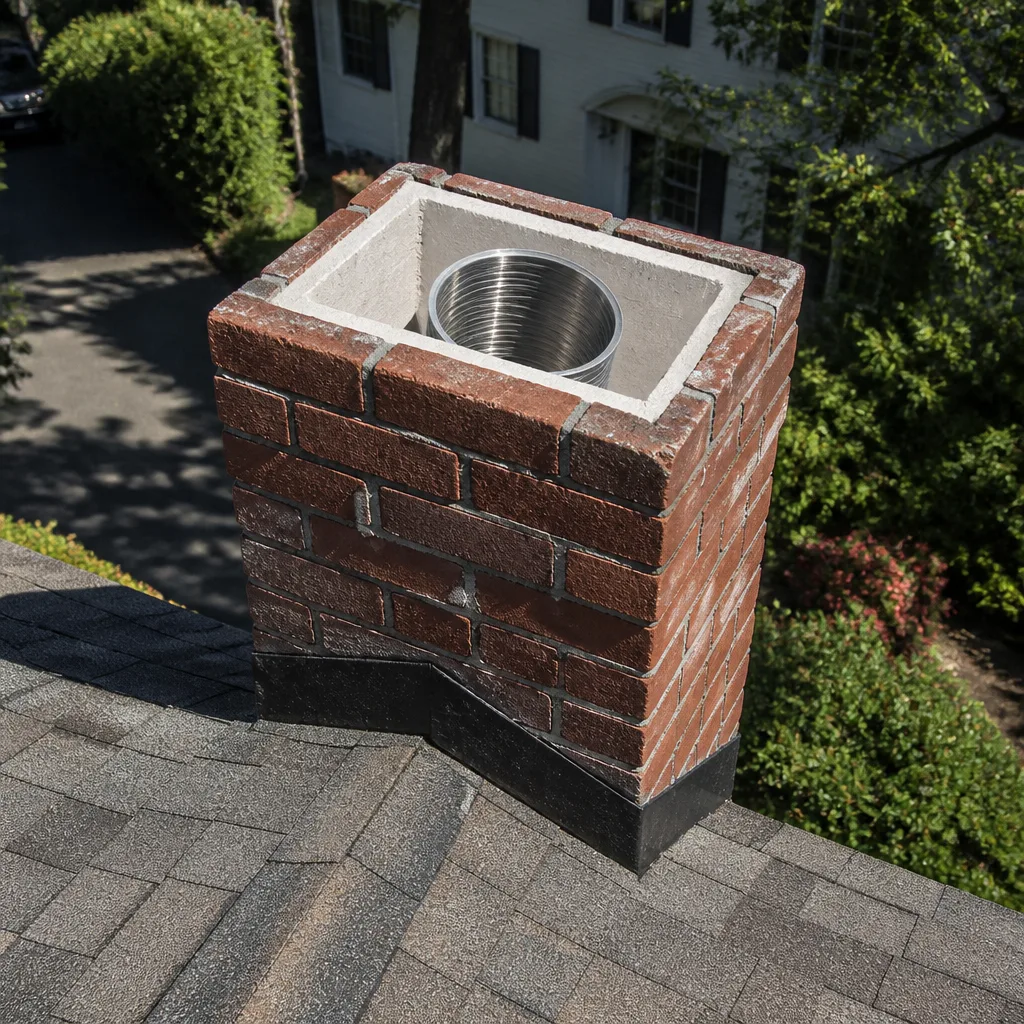
Liner integrity: Clay tile liners crack from thermal shock, settle with foundation movement, or deteriorate from flue gas condensation. A crack visible on camera may be invisible from below, and a “sound” tile tapped with a brush handle may be fractured internally. In Toms River’s coastal plain, soil conditions contribute to subtle settling that stresses chimney structures over decades. We’ve replaced liners in homes on Hooper Avenue and Fischer Boulevard where exterior masonry showed no distress but internal tiles had shifted and separated.
Smoke chamber condition: The smoke chamber, the area above the damper and below the flue, is the most neglected space in most chimneys. Building codes require parging (smoothing) to reduce turbulence and creosote accumulation, yet many older Toms River homes have rough, corbeled brick that collects deposits and accelerates buildup. This area is inaccessible to visual inspection without a camera and specialized lighting.
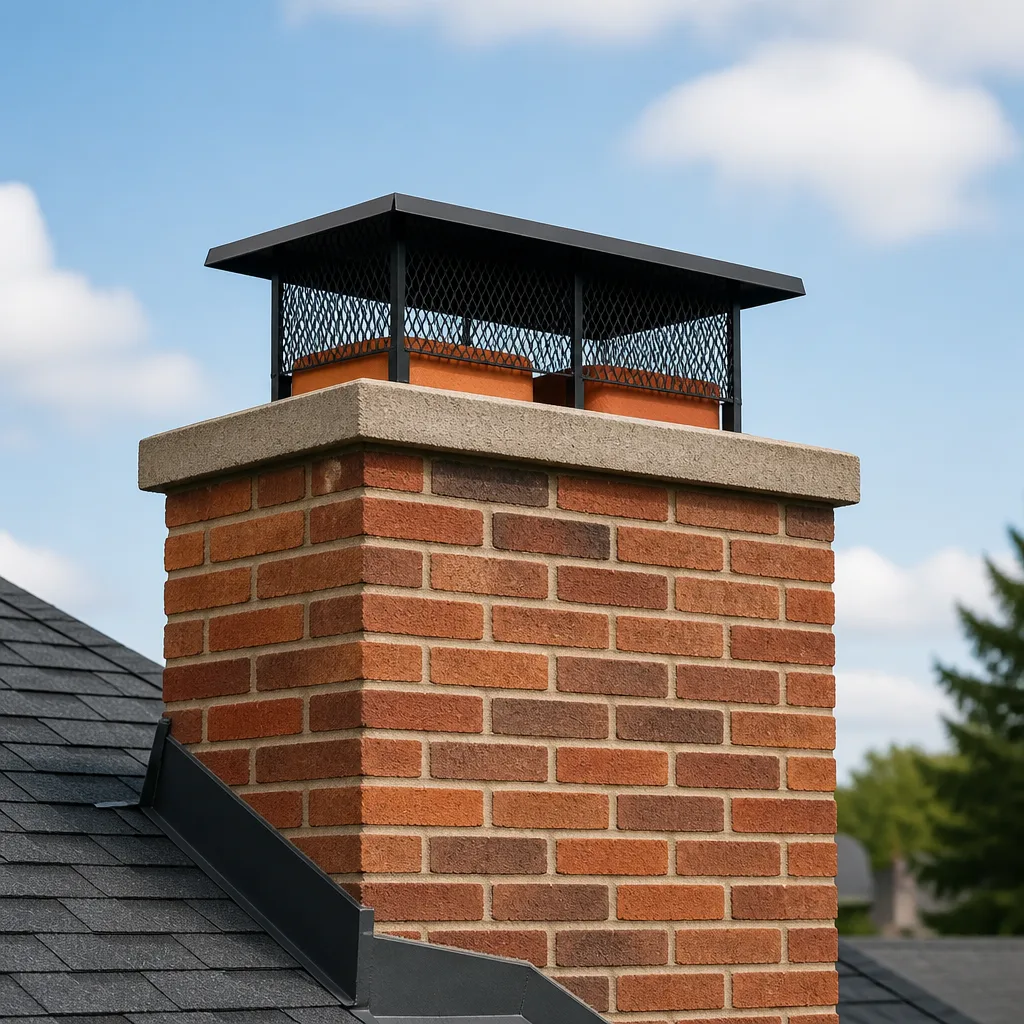
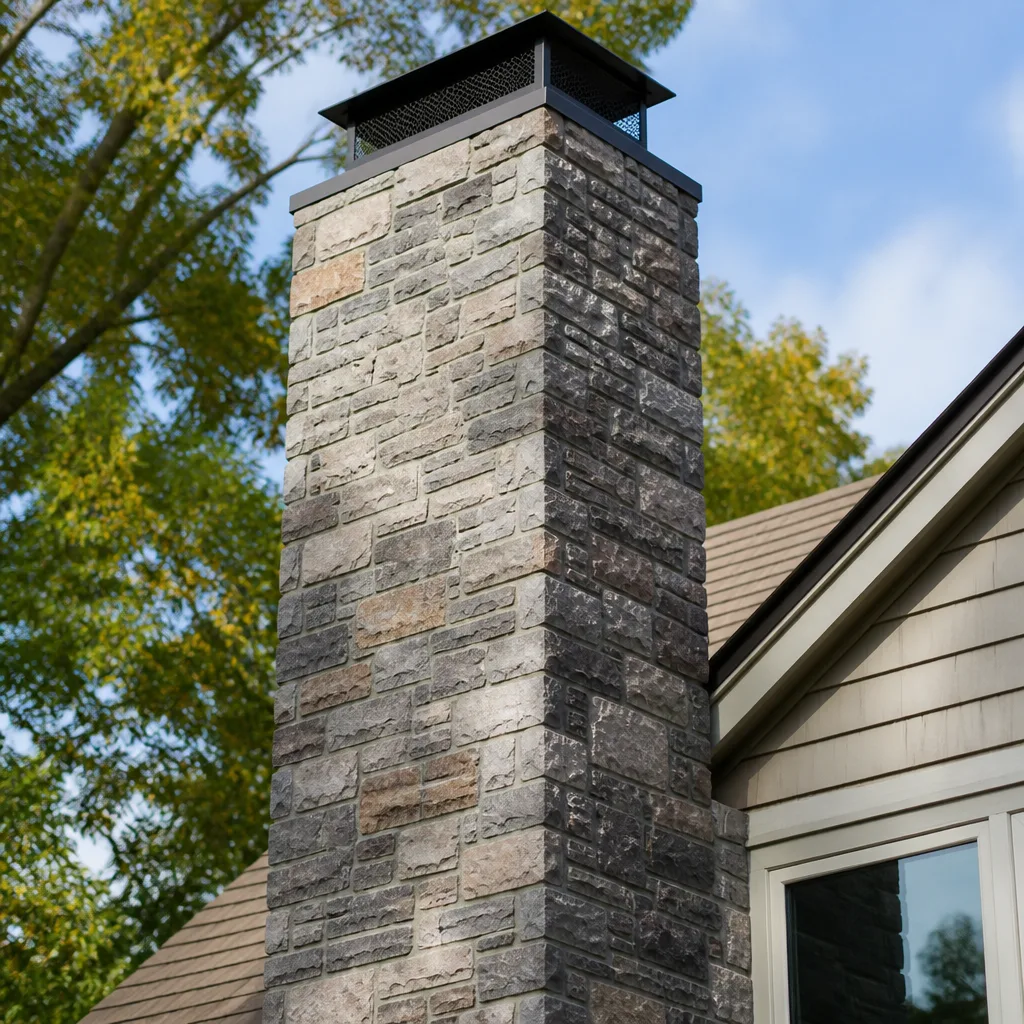
Crown and cap weathering: The concrete crown at the chimney top and the metal cap above it are your primary weather protection. Crown cracks allow water into the chimney structure, causing freeze-thaw damage, liner deterioration, and in extreme cases, structural failure. From ground level, a crown may appear intact while harboring cracks that open under thermal stress. We document crown condition with photos from the roof level, not estimates from the driveway.
Clearance to combustibles: Framing too close to the chimney structure is a leading cause of house fires. It cannot be assessed without accessing the attic or other concealed spaces and measuring actual distances against code requirements. Toms River follows the International Residential Code with New Jersey amendments, specifying minimum clearances that vary by construction type and appliance. A homeowner without code knowledge and measurement access cannot verify compliance.
Combustion appliance venting: If your fireplace shares a chimney with a furnace or water heater, the interaction between appliances affects draft and safety. This configuration is common in Toms River’s older housing stock, particularly in the downtown and east side neighborhoods. Proper evaluation requires understanding both fireplace and appliance venting requirements.
Our Chimney Repair in Toms River service begins with Level-2 camera inspections that end with photos you can see and a plain-English verdict. Documented like an engineer, explained like a craftsman. The photos are yours to keep, and the verdict tells you what needs attention now, what can wait, and what requires monitoring.
Toms River-Specific Risks: Climate, Codes, and Common Conditions
Geography and climate create distinct chimney hazards that generic advice misses. Toms River’s position on the Barnegat Bay peninsula, its housing stock, and its weather patterns produce conditions we address regularly.
Salt air corrosion: Within two miles of the bay, we see accelerated deterioration of metal components. Stainless steel caps and dampers last, but galvanized or lower-grade metals corrode prematurely. In neighborhoods like Ortley Beach and Normandy Beach, we’ve replaced caps that failed in 5-7 years rather than the 15-20 expected inland. The corrosion isn’t always visible from below; it begins at fasteners and seams where salt-laden moisture concentrates.
Freeze-thaw masonry damage: Toms River averages 15-20 freeze-thaw cycles annually, with temperatures oscillating above and below 32°F during winter storms. Water absorbed into brick and mortar expands when frozen, creating progressive deterioration. Crown cracks, missing mortar joints, and spalling brick are the visible results. The damage accelerates when chimneys lack proper caps or have deteriorated crowns that admit water. We’ve rebuilt crowns in the Cranmoor section where freeze-thaw had reduced the concrete to gravel in less than a decade.
Hurricane and nor’easter exposure: Sustained winds drive rain into chimney openings even with functional caps. After major storms, we inspect chimneys for water intrusion that wouldn’t occur in calmer climates. The 2012 storm season produced a backlog of leak-related calls that persisted for two years as delayed damage manifested.
Local code and permit requirements: Toms River Township requires permits for chimney rebuilding, liner replacement, and new appliance installations. The permit process includes inspection by the building department. DIY work that triggers permit requirements without proper documentation creates problems at sale or insurance claim time. Professional work includes permit handling as standard practice.
Common local construction: Many Toms River homes built 1960-1990 have unlined brick chimneys or original clay tile liners in 8×8 or 8×12 flue sizes. These were adequate for open fireplaces but are often undersized for modern inserts or wood stoves installed without proper liner downsizing. The mismatch produces poor draft, rapid creosote accumulation, and increased fire risk. Identifying this condition requires measurement and code knowledge, not visual estimation.
For Fireplace Services in Toms River involving inserts or stoves, we specify liners from DuraFlex and Olympia Chimney sized to the appliance, not the existing flue. The right fit matters more than the convenient fit.
The Four-Question Decision Framework
Use these four questions for an honest answer about whether to pick up a brush or pick up the phone. A “no” to any question moves you to professional service.
Question 1: Is your chimney single-story with a ground-level cleanout door?
Multi-story chimneys require working from the roof or handling longer, more flexible rods that bind in offset flues. Without a cleanout, debris removal requires specialized vacuum equipment. The Toms River homeowner without cleanout access who attempts DIY typically creates a soot spill in the basement or living space that costs more to remediate than professional cleaning would have.
Question 2: Do you know your liner type and condition with certainty?
“I think it’s metal” or “it was fine last time someone looked” doesn’t qualify. If you’ve had a camera inspection within two years that confirmed intact stainless steel or aluminum liner with no damage, proceed. If your chimney has clay tile, is unlined, or its condition is unknown, professional evaluation comes first. Cleaning an unlined or damaged flue can dislodge material that blocks the chimney or damages the structure.
Question 3: Is your deposit light, powdery soot with no glazing or hard buildup?
Assess honestly. If you’ve burned wet wood, had smoldering fires, or skipped cleaning for multiple seasons, you’re likely beyond Stage 1. The test: run your finger along the flue wall above the damper. If the deposit wipes away like fine dust, you’re probably at Stage 1. If it flakes, chips, or resists removal, you’re at Stage 2 or 3.
Question 4: Are you equipped to inspect after cleaning, and willing to call a professional if you find anything concerning?
DIY without follow-up inspection is incomplete maintenance. If you cannot or will not verify that the flue is clean, undamaged, and properly clear of combustibles, you’re performing a ritual, not maintenance. And if inspection reveals anything outside the narrow “clean and intact” outcome, you need professional service regardless.
Four “yes” answers mean DIY is reasonable for basic cleaning, with the understanding that you’re still due for a professional Level-2 inspection at appropriate intervals. Any “no” means professional service is the right choice for this cycle.
Common Mistakes to Avoid
- Using the wrong brush type for your liner. Wire brushes on stainless steel liners create scratches that accelerate corrosion. Poly brushes on glazed creosote simply polish the deposit. In Toms River’s humid climate, a scratched metal liner corrodes faster than it would inland.
- Cleaning without containing debris. Soot and creosote particles are fine, oily, and persistent. Without sealed containment and HEPA filtration, they migrate through HVAC systems and settle into porous surfaces. We’ve been called to remediate DIY soot spills that required professional cleaning of entire rooms.
- Assuming “looks clean” means “is clean.” The upper flue and smoke chamber accumulate the heaviest deposits. If you only brushed what you could reach from below, you likely left the most hazardous material in place.
- Ignoring the smoke chamber. This inverted funnel above the damper is where many chimney fires begin. It’s inaccessible to standard brushing from below and requires specialized tools and access.
- Using household vacuums for ash and soot. Standard vacuums lack the filtration to contain fine particles and can disperse combustible material through the exhaust. Hot embers destroy vacuum motors and create fire hazards.
- Skipping inspection after cleaning. The cleaning process itself can reveal or cause damage. A tile dislodged by brushing, a crack opened by thermal cycling during the fire test, or a damper mechanism damaged by debris, these conditions require professional attention.
- Deferring maintenance because “I can do it myself someday.” The Toms River homeowner who buys the brush kit, uses it once with marginal results, then lets three years pass before the next attempt has created more hazard than the original condition. Consistency matters more than method.
When to Call a Professional
Call a professional when any of these conditions apply: multi-story chimney, clay tile or unknown liner, Stage 2 or 3 creosote, fireplace insert or wood stove, shared chimney with another appliance, any history of chimney fire, water intrusion, or structural damage, or simply when you want the job documented and guaranteed.
In Toms River, Hearthstone Chimney Co. offers free estimates with no obligation. Explore more guides & resources on our blog for additional homeowner advice. Our technicians arrive in uniform, complete most jobs in a single visit, and provide upfront pricing so the number on the estimate is the number on the invoice. Every inspection includes photos you can see and a plain-English verdict. All work is covered by our 90-Day Done Right Promise, in writing, with no arguing.
Call (609) 303-9679 to schedule. A live person answers 24 hours a day, 7 days a week.
Frequently Asked Questions
A standard chimney cleaning with Level-2 camera inspection in Toms River typically ranges from $200 to $350, depending on flue configuration, accessibility, and creosote condition. Heavy buildup requiring chemical treatment or mechanical removal adds $150 to $300. Our $89 Seasonal Tune-Up offers basic service at a reduced rate during off-peak months. Call (609) 303-9679 for an exact quote, estimates are free.
The National Fire Protection Association recommends annual inspection, with cleaning as needed based on deposit accumulation. In Toms River’s climate, where humid summers and extended shoulder seasons create conditions for accelerated creosote formation, most wood-burning fireplaces need annual cleaning. Gas appliances require less frequent maintenance but still need periodic inspection for venting integrity and debris obstruction. We recommend scheduling before the burning season begins, typically September or October, to avoid the November rush.
A liner recommendation without photographic evidence of the specific condition is suspect, and you should question it. At Hearthstone, we show you the photos and explain the failure mode: cracked tiles that can allow flue gases into wall cavities, gaps that reduce draft and allow creosote to accumulate outside the flue, or corrosion that compromises structural integrity. We also tell you plainly when a condition can be monitored rather than replaced immediately. Nothing is recommended without camera evidence you can see for yourself, and we’ll say directly when work can safely wait.
Skipped cleaning allows creosote to accumulate, increasing fire risk and reducing draft efficiency. Stage 1 soot progresses to Stage 2 and 3, becoming progressively harder and more hazardous to remove. Water intrusion and minor damage go undetected, worsening until they require major repair rather than maintenance. In Toms River, where freeze-thaw cycles accelerate masonry damage, deferred maintenance typically costs 3-5 times more than annual service when finally addressed. The most expensive chimney repair is the one that follows years of neglect.
Chemical creosote modifiers exist, but they supplement rather than replace mechanical cleaning. These products, burned in the fireplace or applied as powders, help convert glazed creosote to a more removable form over multiple fires. They do not eliminate the need for physical removal, and they are not effective for heavy Stage 3 deposits. Used improperly, they can produce noxious fumes or mask the severity of accumulation. We use chemical treatment as part of professional service when appropriate, not as a substitute for proper cleaning.
DIY cleaning of your own home’s chimney is legal in New Jersey, but it does not satisfy requirements for permit-related inspections, insurance documentation, or real estate transactions. Work that modifies the chimney structure, including liner replacement or rebuilding, requires permits and licensed contractor execution in Toms River Township. Additionally, if a DIY cleaning leads to damage or fire, insurance coverage may be contested. Professional service provides documentation that protects your interests.
The Bottom Line
DIY chimney cleaning is possible for a narrow subset of Toms River homeowners: single-story, accessible cleanout, modern metal liner in confirmed good condition, light soot only, equipped to inspect afterward. For everyone else, and for critical inspection regardless of cleaning method, professional service is the safer, more economical, and more complete choice. The line is drawn by liner condition and creosote stage, not by willingness or tool ownership.
At Hearthstone Chimney Co. home, we’ve built our reputation on showing homeowners exactly what their chimney contains, explaining what it means in plain language, and standing behind our work with a guarantee in writing. No surprises on the bill. No arguing if something needs correction. We’ll be there when we say, and we’ll document what we find so you can see it for yourself.
Call (609) 303-9679 for a free estimate. A live person answers, every hour of every day.
Written by Russell Haines, Owner at Hearthstone Chimney Co., serving Toms River since 2014.