
Last updated September 10, 2026
Level 1 sweep and inspection to the NFPA 211 annual standard - flue, crown, cap, and flashing checked and photographed
Chimney sweep logs do not sweep chimneys. They loosen some creosote - which then falls where a brush and vacuum still have to collect it.
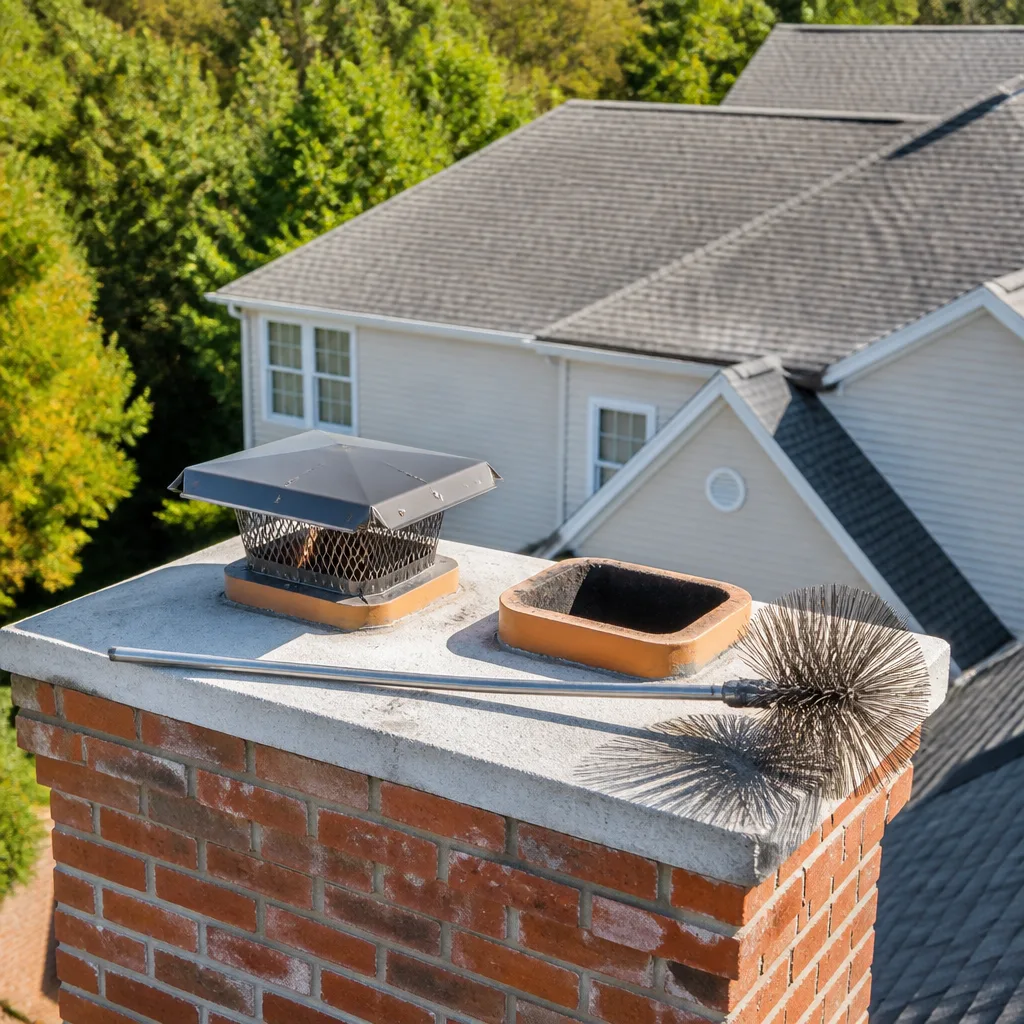
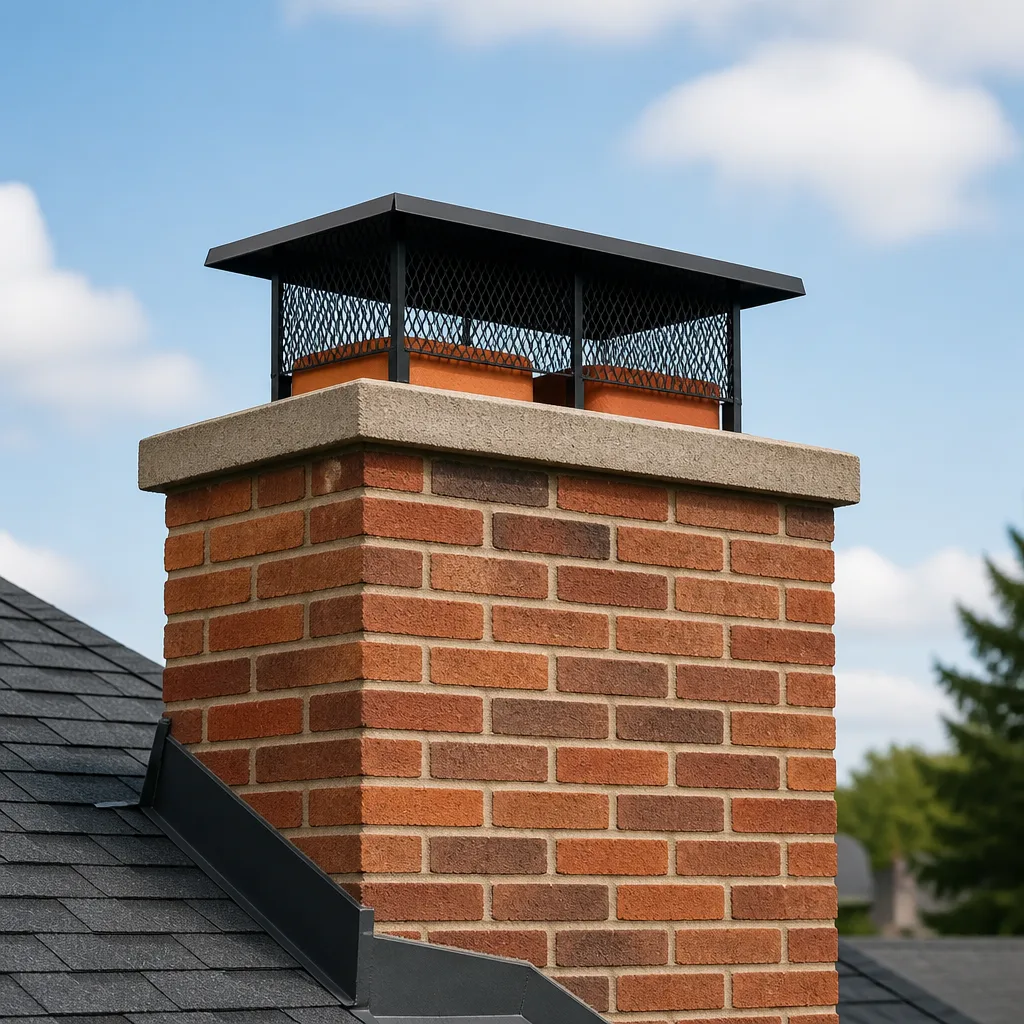
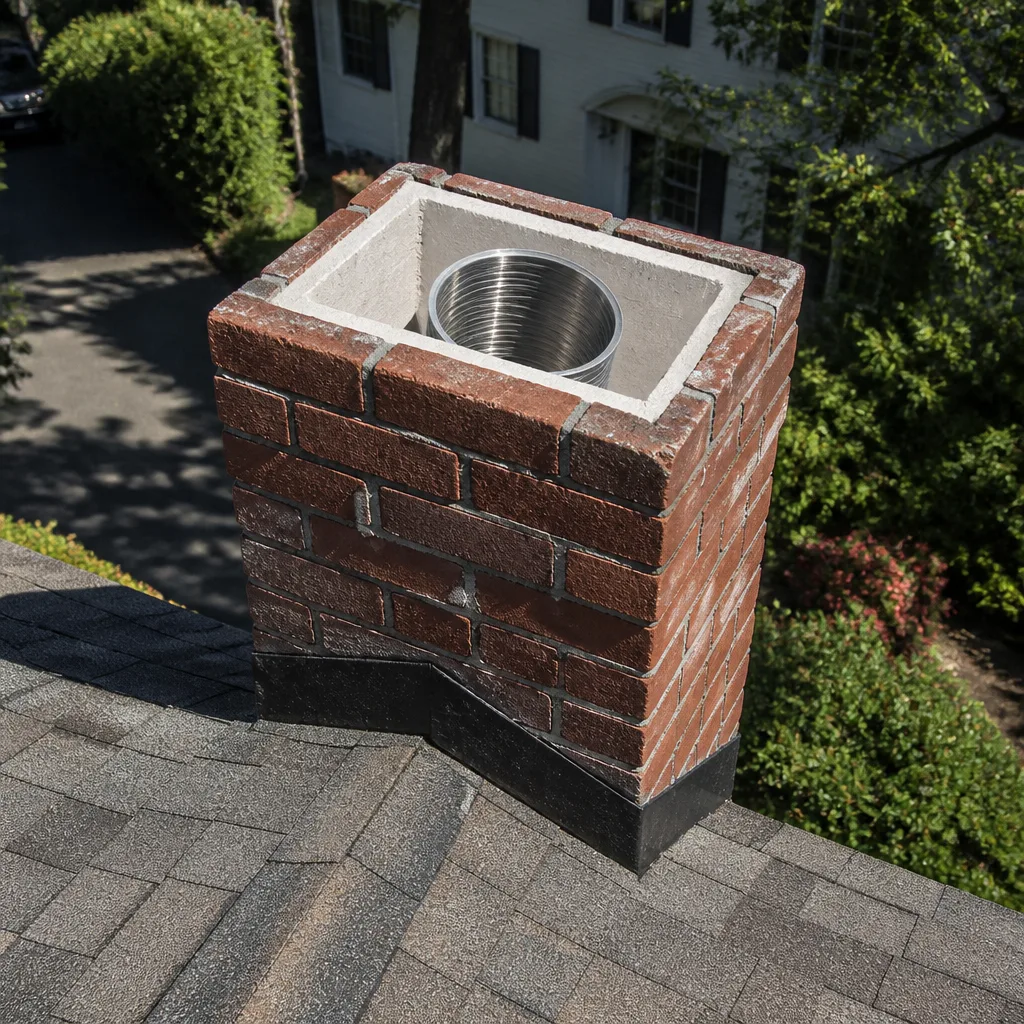
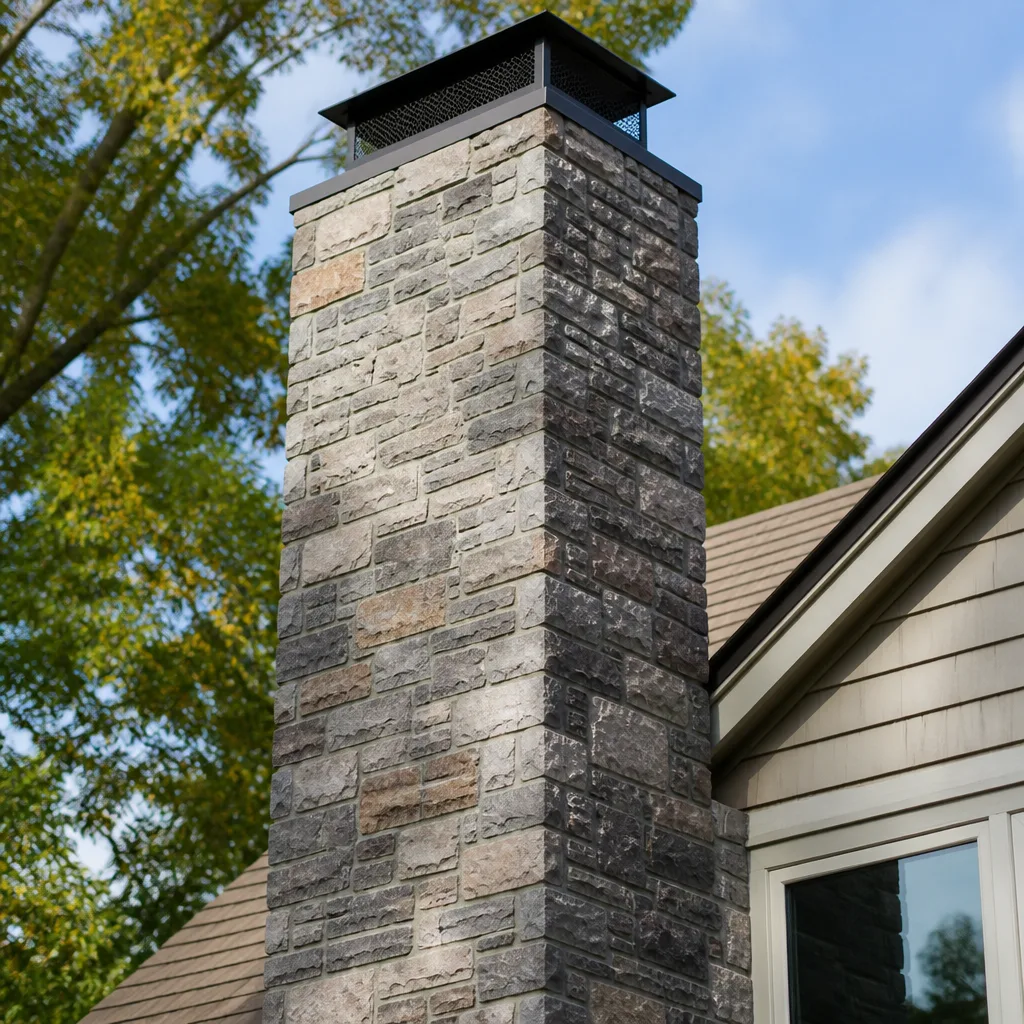
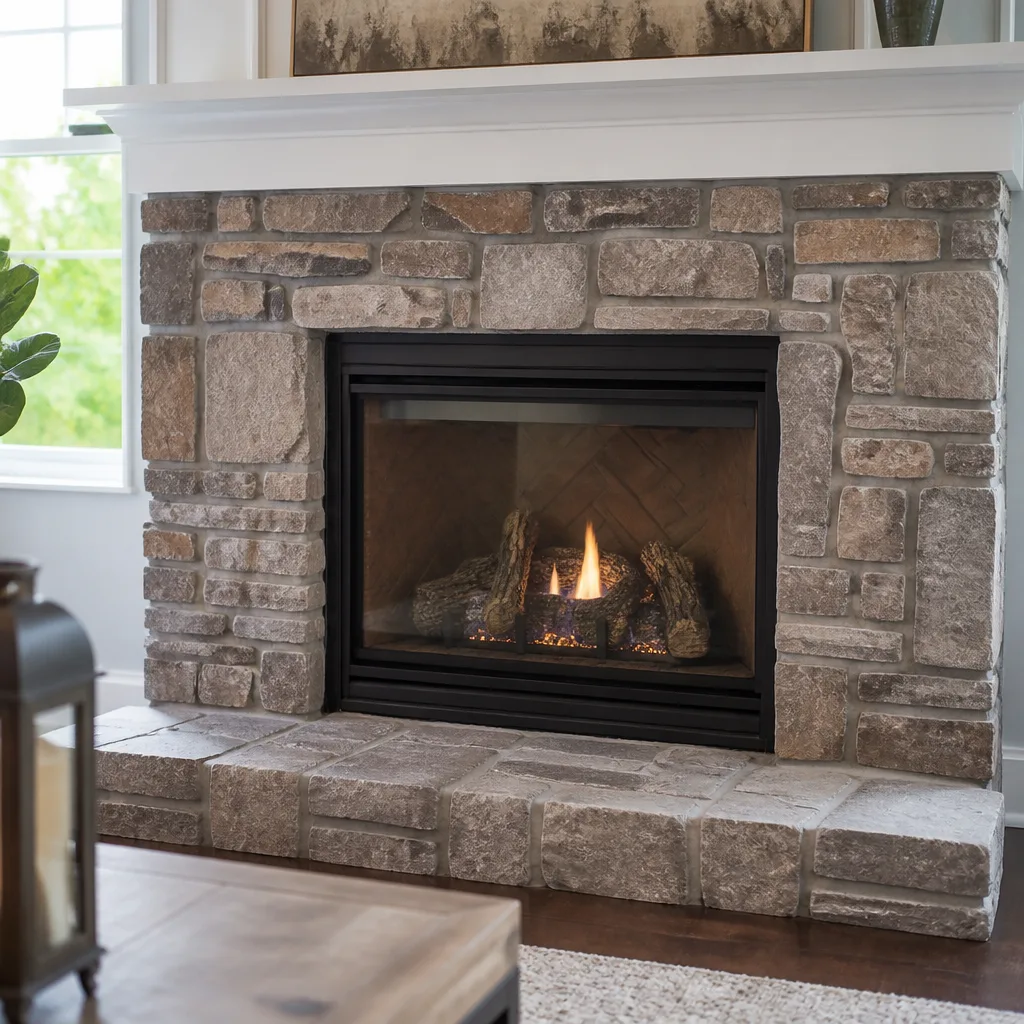
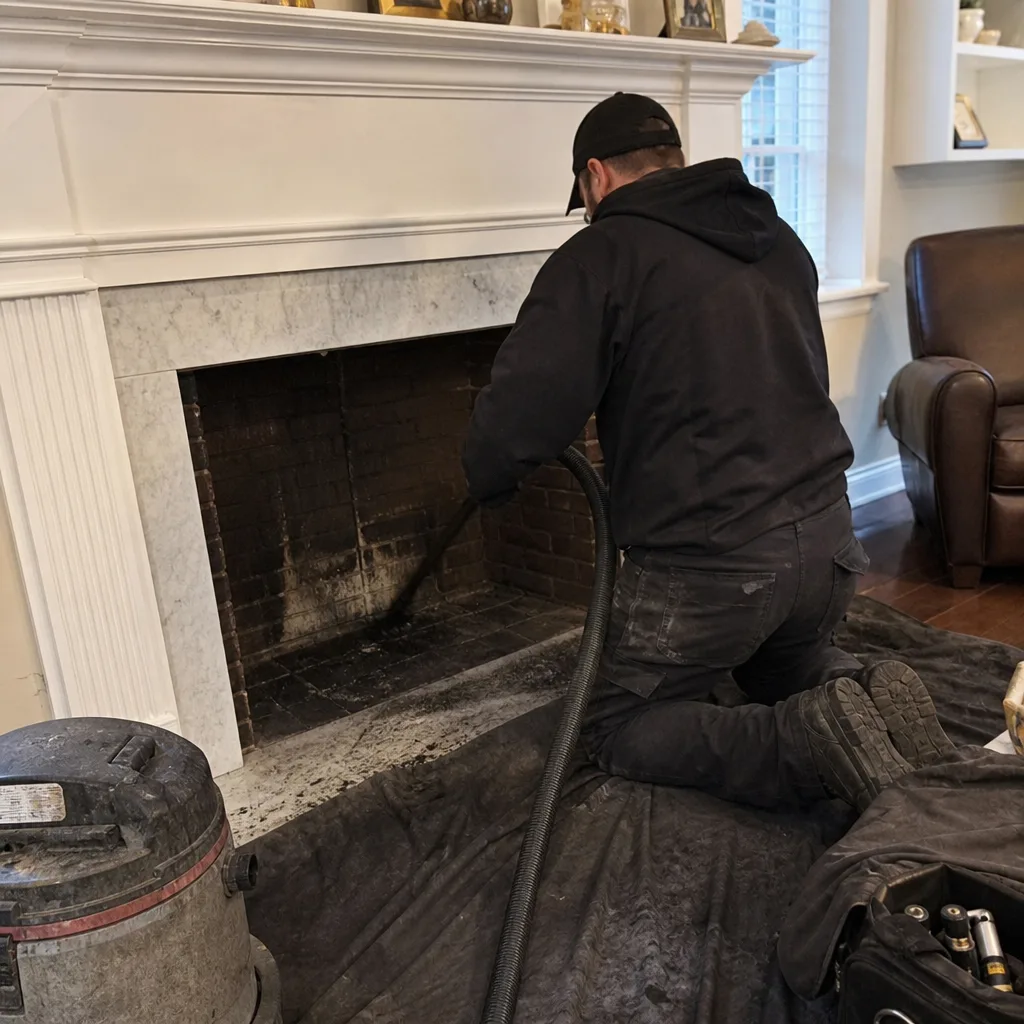 Before
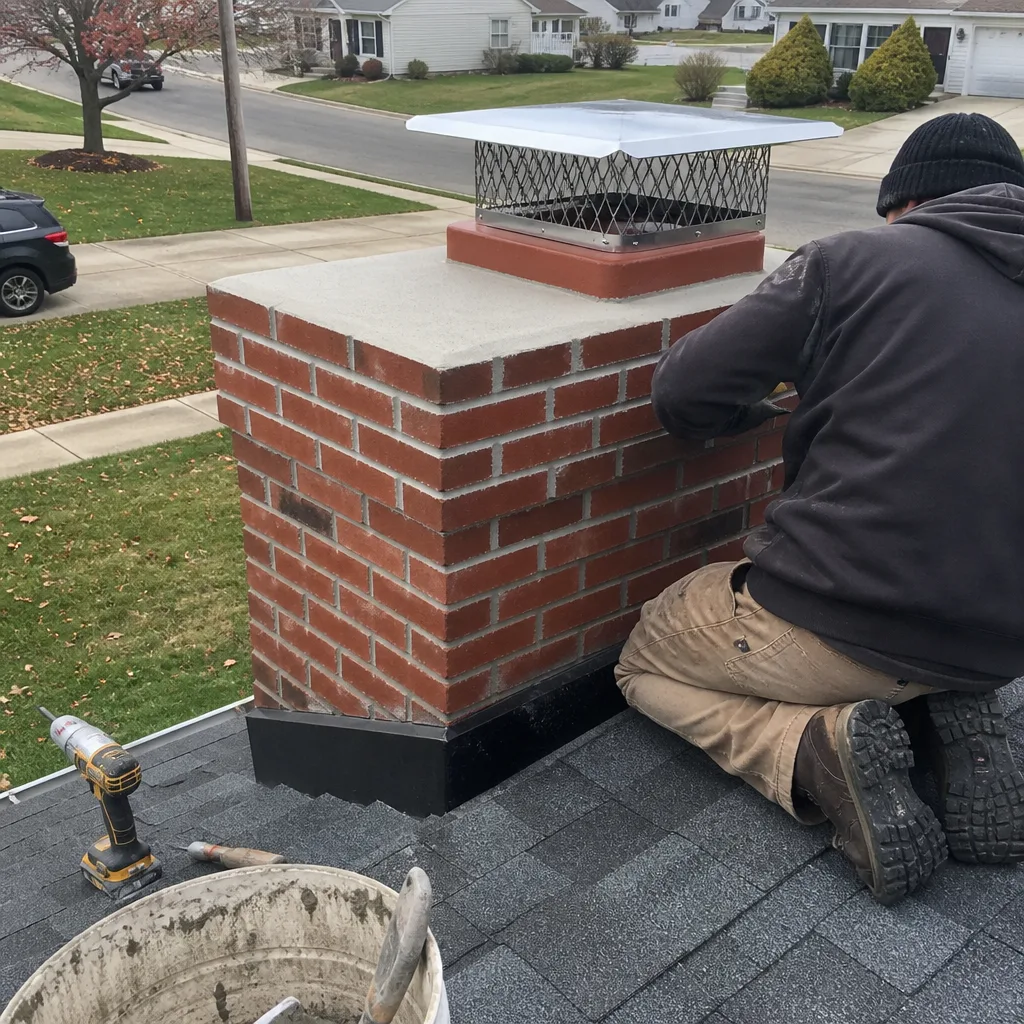 After
After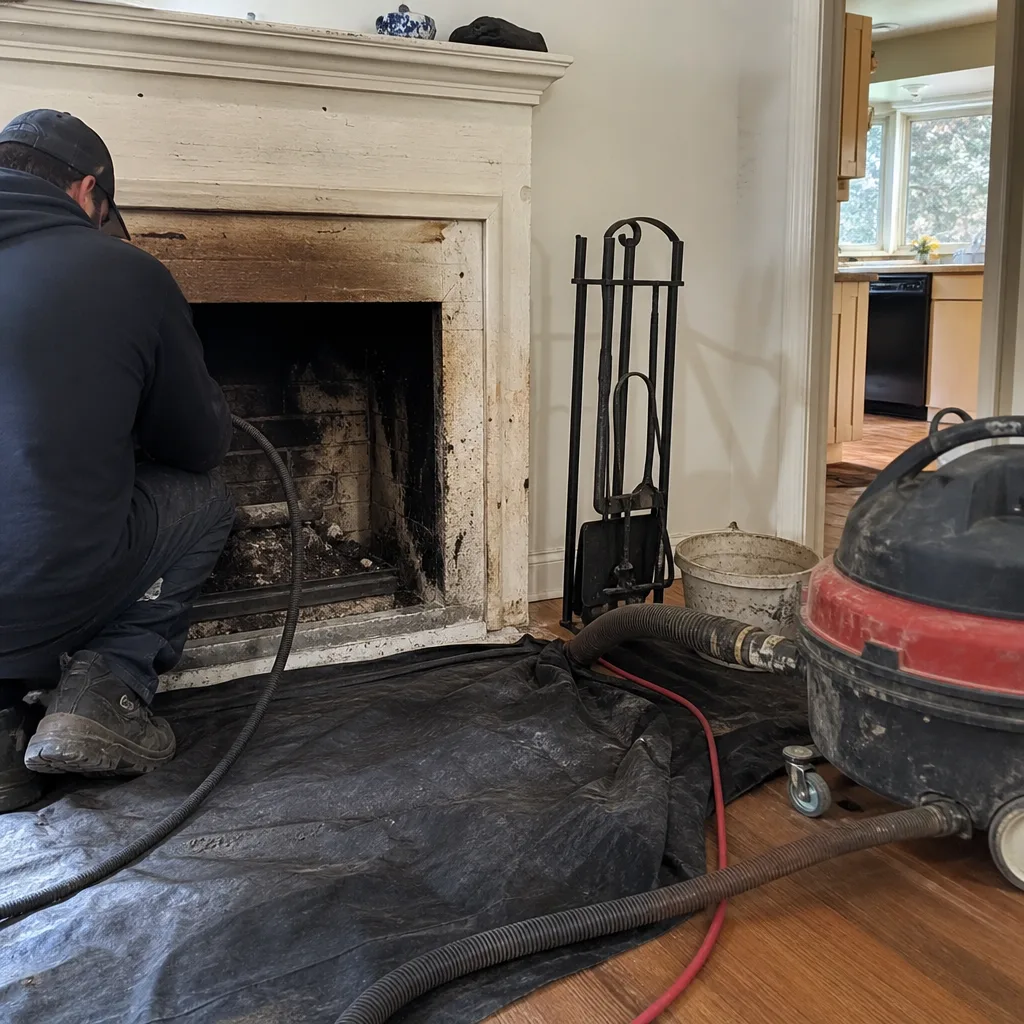 Before
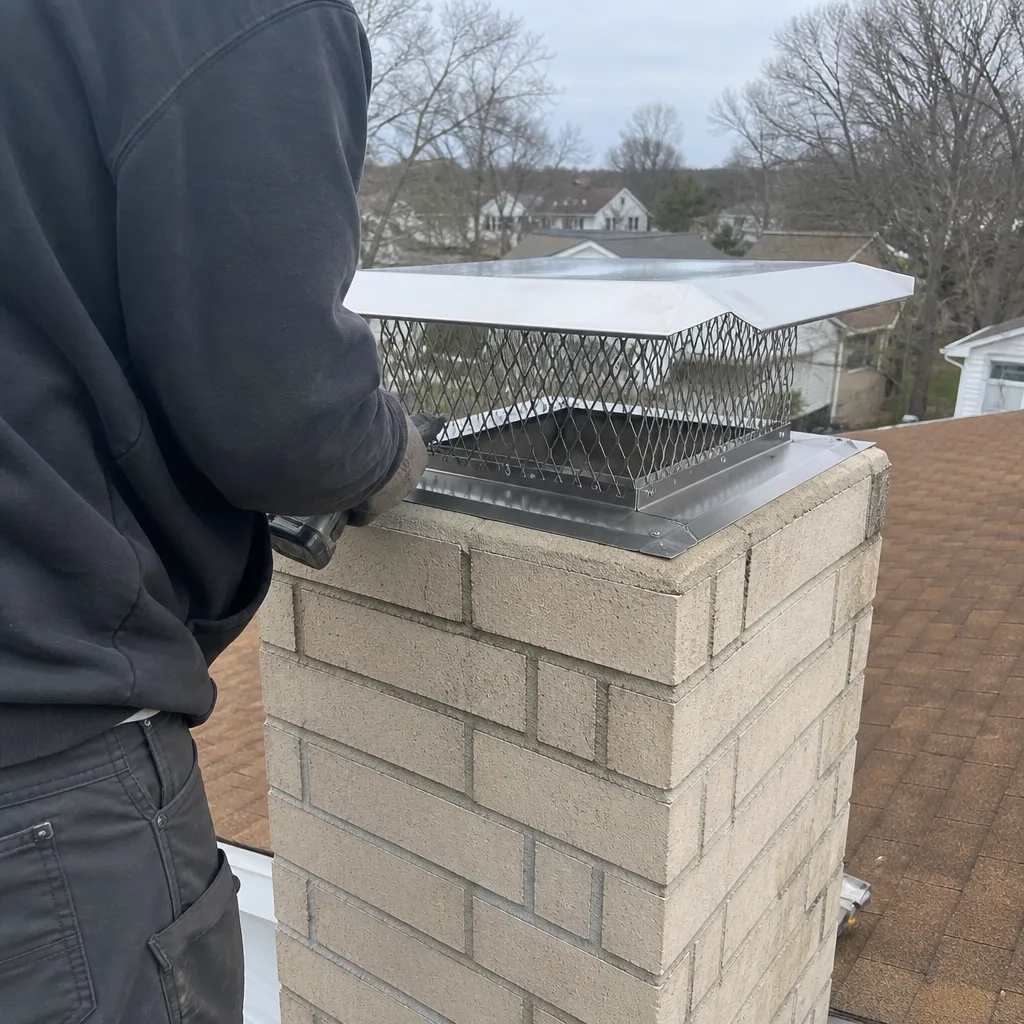 After
After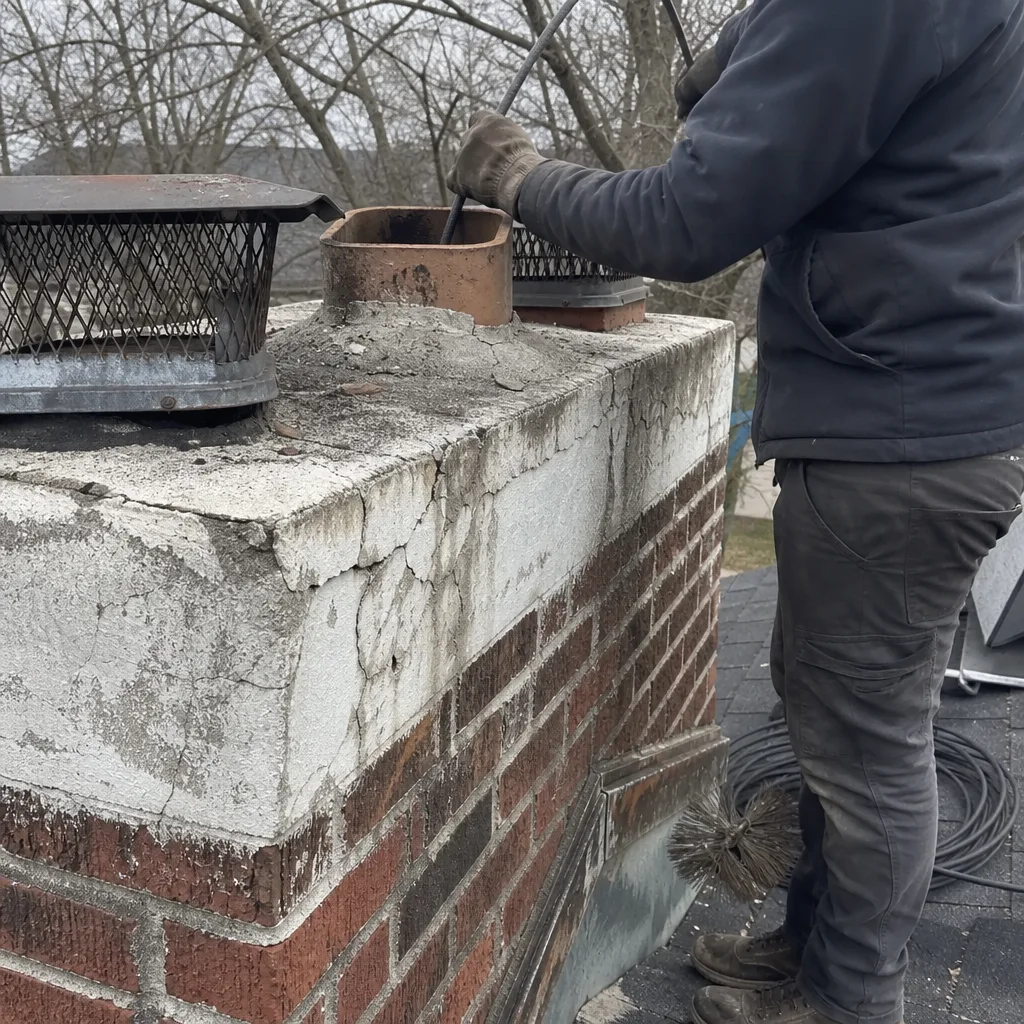 Before
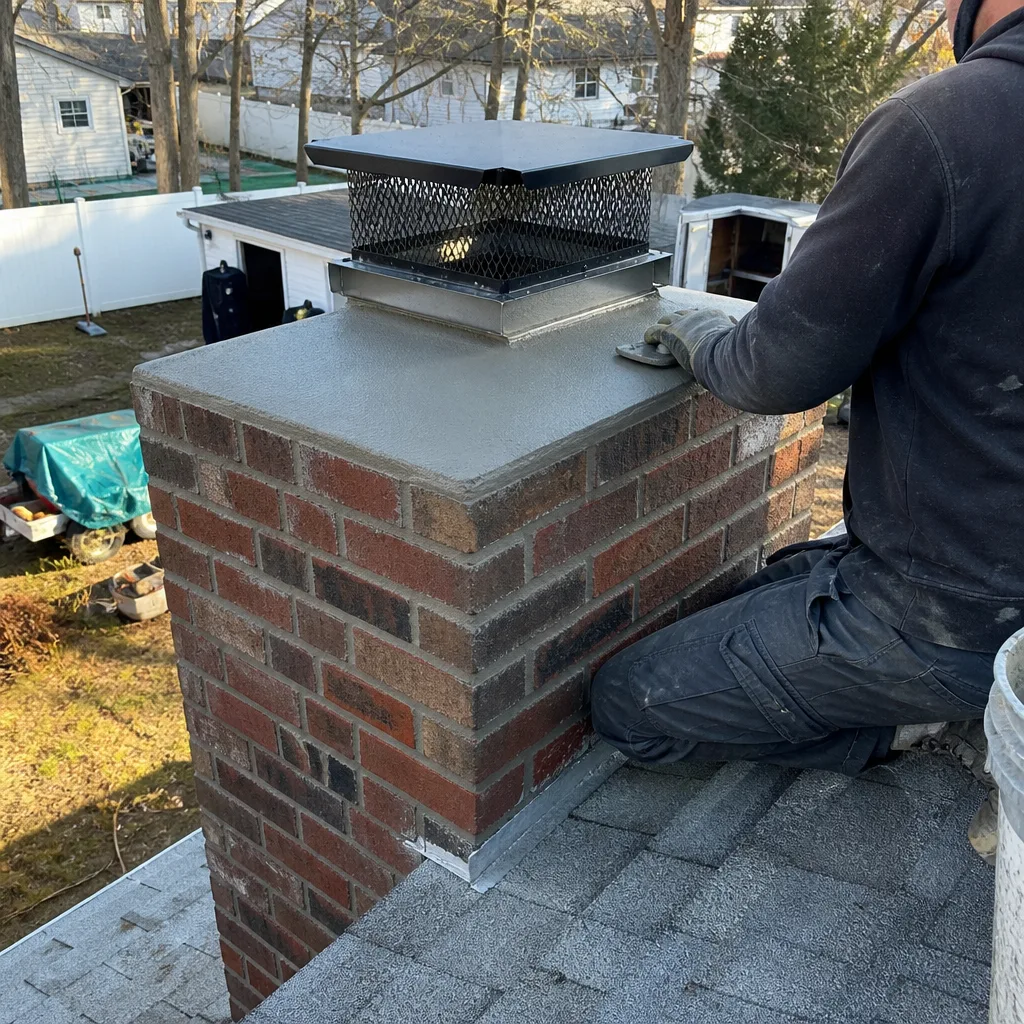 After
AfterHow to Hire a Chimney Cleaning Contractor in Toms River: A Step-by-Step Guide
In Ocean County, chimney sweep licensing is not required by the state of New Jersey. That means the credential a contractor claims on their truck door may be the only thing standing between your family and an untrained person working around your flue. Every fall, Toms River sees a fresh crop of one-season operators who rent a magnet sign, run social media ads, and disappear before spring. This guide and our more guides & resources give you a concrete vetting process that filters them out before anyone gets on your roof. You’ll learn what certifications actually mean, how to verify a real local business, the contract terms that separate accountable sweeps from unaccountable ones, and how to compare two bids without falling into the cost-per-hour trap.
Quick Answer
To hire a chimney cleaning contractor in Toms River, verify current CSIA certification, confirm a physical local address (not a P.O. box), and insist on three contract terms: a written scope of work, photo documentation of your flue’s condition, and a written guarantee with a real phone number. Get at least two written estimates, compare what each includes rather than just the bottom line, and never pay cash upfront. A legitimate sweep in Toms River will answer detailed questions without pressure and let you see evidence before recommending any additional work.
Table of Contents
- What CSIA Certification Means (and What It Doesn’t)
- How to Verify a Real Local Business in Toms River
- The Three Contract Terms That Separate Accountable Sweeps
- Red Flags Specific to the Shore-Area Market
- How to Compare Two Bids Honestly
- What Happens During a Proper Chimney Cleaning
- Common Mistakes to Avoid
- When to Call a Professional
- Frequently Asked Questions
- The Bottom Line
What CSIA Certification Means (and What It Doesn’t)
The Chimney Safety Institute of America (CSIA) is the closest thing our industry has to a standard credential. A CSIA-certified sweep has passed a written exam covering fire safety codes, chimney physics, and proper cleaning techniques. The certification requires renewal every three years through continuing education or re-examination. That last part matters more than most homeowners realize.
Here’s what CSIA certification does mean: the person has demonstrated baseline knowledge of NFPA 211 standards, understands how different fuel types affect flue deposits, and has agreed to a code of ethics that includes no deceptive practices. In our 42 years serving Ocean County, we’ve found that CSIA-certified sweeps are less likely to damage a flue liner or miss a blocked chimney cap.
Here’s what it does not mean: it is not a license backed by state enforcement. New Jersey does not require chimney sweeps to carry any license at all. A CSIA certificate can lapse, and there’s no automatic notification to homeowners. A contractor who earned the credential in 2019 and let it expire can still advertise the logo on their website.
The follow-up question that reveals whether certification is current: “Can you show me your CSIA card with the expiration date?” A legitimate sweep carries it or can produce it within hours. At Hearthstone Chimney Co., our technicians keep current cards on hand. We’ve seen too many Toms River homeowners assume a logo on a truck door tells the whole story.
One more layer: CSIA offers a Certified Chimney Technician level and a Master Chimney Sweep level. The Master designation requires years of documented field experience and additional examination. If your chimney has complex masonry damage or a historic flue in a pre-1970s Toms River home, ask specifically about Master-level experience. The extra training shows in how they diagnose spalling brick versus simple efflorescence, or distinguish between a cracked flue tile and one that needs full relining with a chimney repair in Toms River.
How to Verify a Real Local Business in Toms River
The Shore-area market attracts operators who list a local phone number that forwards to a dispatch center two counties away. Others use a Toms River P.O. box while their actual base is in Pennsylvania or North Jersey, migrating south for the busy season. Here’s how to tell who’s actually rooted here.
- Check the physical address on Google Maps. Street View should show a building, a yard with service vehicles, or at minimum a commercial location. A residential house is not automatically suspicious for a small trade business, but an empty lot or a mailbox store is. Search the address separately from the business name to see what other companies share it.
- Call the number and ask a specific local question. “Where do you park your trucks overnight?” or “What’s the best route to your shop from the Garden State Parkway?” A dispatcher in another state will hesitate or deflect. A local operation knows that traffic on Route 37 backs up past the Ocean County Mall on Saturday mornings.
- Ask how long they’ve worked in Toms River specifically. “We’ve served New Jersey for fifteen years” is not the same as “We’ve swept chimneys in Silverton, Ortley Beach, and North Dover for fifteen years.” Local knowledge shows up in details: knowing which neighborhoods near Barnegat Bay get more salt-air corrosion on chimney caps, or which side of town has more pre-1950s masonry that tends to settle.
- Verify the business entity with the New Jersey Division of Revenue. Search for the exact business name. A legitimate company will appear with a registered agent and filing history. Absence doesn’t always mean fraud, but presence with years of consistent filings means someone plans to be around to honor a guarantee.
- Check who answers the phone after hours. A live person at 9 PM on a Sunday suggests invested staff, not a forwarded cell phone. At Hearthstone Chimney Co., we’ve answered calls 24 hours a day, 7 days a week, for over 42 years. A homeowner smelling smoke at 10 PM shouldn’t reach a recording telling them to call back Monday.
One practical test: ask if they’ll come back in six months for a follow-up inspection at no charge if you’re uncertain about their diagnosis. A transient operator can’t afford that. A business planning to be in Toms River for decades can.
The Three Contract Terms That Separate Accountable Sweeps
Verbal agreements and handshake deals still happen in home services, but a chimney flue is not a place for ambiguity. These three contract terms separate sweeps who stand behind their work from those who plan to be unreachable by Thanksgiving.
Written Scope of Work
The document should state exactly what will be done: Level 1 or Level 2 inspection per NFPA 211, rotary or hand brushing of the flue, debris removal, and whether the firebox, smoke chamber, and exterior are included. Vague language like “complete chimney service” is a blank check. In Toms River, where many homes have fireplaces converted from wood to gas inserts, the scope must specify whether the inspection covers the original flue, the insert venting, or both.
Ask for the scope before booking, not after arrival. A contractor who won’t commit in writing before seeing your chimney is telling you something.
Photo Documentation
A Level 2 inspection includes internal imaging of the flue. The photos belong to you, not the company. Any recommendation for liner replacement, crown rebuilding, or masonry repair should come with images you can see and a plain-English explanation of what they show. We’ve documented flue conditions for Toms River homeowners since digital cameras became practical, and we won’t recommend a fireplace service in Toms River without showing why.
Be wary of the contractor who describes “dangerous creosote buildup” or “crumbling flue tiles” but has no images, or who shows you generic photos from another job. Your flue has unique characteristics: the pattern of soot deposition, the condition of mortar joints, the presence of animal nesting. Demand to see them.
A Guarantee with a Phone Number Attached
A guarantee without a working phone number is a piece of paper. The document should state what is covered, for how long, and how to invoke it. At Hearthstone, our 90-Day Done Right Promise means if it’s not right, we make it right. Backed in writing. No paperwork to dig up, no arguing, no “we’ll get back to you.” The K.E.Y.S. values govern it: Krafted right, Every time, Your home first, Standing behind it.
Ask specifically: “If I have a concern three weeks from now, who do I call and what happens?” The answer should be immediate and specific. Hesitation here predicts absence later.
Red Flags Specific to the Shore-Area Market
Toms River’s seasonal economy, large retiree population, and concentration of second homes create conditions that attract operators who would not survive in a market with year-round accountability. These are the patterns we’ve observed in four decades of watching the local trade.
Cash-Only Pricing
A legitimate business pays taxes, carries insurance, and accepts traceable payment. Cash-only often means no workers’ compensation coverage, no liability policy, and no paper trail if something goes wrong. In New Jersey, a chimney fire caused by negligent cleaning can lead to six-figure damage. If the sweep has no insurance, your homeowner’s policy may not cover it, and you may face subrogation issues. We accept checks and cards because we’re here to stay.
Urgency Tactics Around “Dangerous Levels”
Some creosote buildup is genuinely hazardous. Glazed creosote (Stage 3) requires chemical treatment and can ignite at lower temperatures. But a contractor who arrives for a routine cleaning and declares an emergency without documentation, pressuring for immediate additional work, is selling fear. In Toms River, we’ve seen this tactic deployed heavily in September and October, when homeowners are anxious to get their first fire lit before the holidays.
The proper response to any “dangerous” claim: “Show me the photo, explain the NFPA standard you’re referencing, and give me 24 hours to consider.” A professional will comply. A predator will escalate pressure or offer a “today-only” discount.
Vague Upsells Without Evidence
“Your liner is deteriorating” or “You need a crown seal” should trigger automatic requests for visual proof and a second opinion. The chimney cleaning and sweep in Toms River should be complete and standalone. Additional work should be proposed with documentation, priced separately, and left for your decision without immediate pressure.
One specific Shore-area variant: the “salt air damage” upsell for stainless steel caps. Ocean County does get corrosion, but a five-year-old quality cap in North Dover is not in the same environment as one on the waterfront in Ortley Beach. The recommendation should match your actual exposure, not a generic coastal premium.
Seasonal Magnet Signs and Rental Trucks
Check the vehicle. A wrapped or lettered company truck with local plates suggests permanent operation. An unmarked rental truck or a personal vehicle with a magnetic sign suggests temporary presence. Ask the technician’s name and whether they’ve worked for the company longer than one season. High turnover is a signal of poor treatment of workers, which correlates with poor treatment of customers.
How to Compare Two Bids Honestly
Homeowners in Toms River often receive estimates ranging from $149 to $400 for what sounds like the same service; our Chimney Cleaning Cost Breakdown: The Toms River Homeowner’s Reference for 2026 explains why. The difference is rarely profit margin alone. Here’s how to read what each bid actually includes.
The Cost-Per-Hour Trap
A lower bid often reflects less time on site, not better efficiency. A thorough Level 1 cleaning and inspection for a standard masonry fireplace takes 45 minutes to 1.5 hours, depending on creosote buildup and accessibility. A bid of $149 that budgets 30 minutes is likely skipping steps: no rooftop inspection of the crown and cap, no smoke chamber evaluation, no camera look if conditions suggest it.
Ask each contractor: “How long do you expect to be in my home, and what happens during each portion?” Compare the answers minute by minute. The $280 bid that includes 90 minutes, photo documentation, and debris containment may cost less per unit of actual work.
What’s Included in the Base Price
| Component | Often Included | Often Excluded (Upsell) |
|---|---|---|
| Flue brushing (rotary or hand) | Most bids | Rarely excluded |
| Firebox inspection and cleaning | Higher bids | Lower bids |
| Smoke chamber evaluation | Mid-to-high bids | Often excluded |
| Rooftop crown, cap, flashing inspection | Higher bids | Frequently excluded |
| Interior camera documentation | Level 2 bids only | Level 1 bids |
| Written condition report with photos | Professional bids | Often verbal only |
| Debris containment and HEPA cleanup | Established companies | Often minimal |
In Toms River, where many homes have chimneys that haven’t been inspected in a decade or more, the excluded items are often where the real problems hide. A flue that brushes clean but has a cracked crown letting water into the masonry will fail within seasons. The bid that includes rooftop inspection discovers this; the cheap bid misses it until the repair is larger.
Material Specifications
If one bid includes liner repair or crown work, ask what materials are specified. Professional-grade materials from DuraFlex, HeatShield, or Gelco carry manufacturer warranties and are formulated for Northeast freeze-thaw cycles. Generic or builder-grade alternatives may cost less upfront and fail faster. We specify our materials because we’ve seen what survives 42 Jersey winters and what doesn’t.
The Second Opinion
We offer free second opinions on any written estimate because we believe informed homeowners make better decisions. Bring us a competitor’s bid and we’ll walk through what’s included, what’s omitted, and what questions to ask. No charge, no pressure. A company confident in its pricing doesn’t fear comparison.
What Happens During a Proper Chimney Cleaning
Understanding the actual process helps you evaluate whether what you’re getting matches what you paid for. This is what a complete cleaning and inspection looks like at a Toms River home.
- Exterior arrival and protection. Technicians arrive in uniform, lay protective coverings from the door to the work area, and inspect the exterior chimney structure, cap, crown, and flashing for visible damage. In Toms River neighborhoods with mature oak canopy, we often find cap screens clogged with leaves or animal nesting that the homeowner hasn’t seen from the ground.
- Interior setup and firebox evaluation. The work area is sealed with plastic sheeting and a HEPA vacuum is positioned. The firebox is inspected for cracked refractory panels, deteriorating mortar, and proper damper operation. For gas inserts, the venting connection is checked.
- Flue brushing and debris removal. The flue is brushed with appropriately sized brushes, rotary equipment for glazed creosote if present, and debris is captured at the smoke chamber and firebox. The vacuum runs continuously to prevent dust migration into your home.
- Smoke chamber and damper inspection. Often skipped in rushed jobs, this area where the firebox narrows to the flue is evaluated for proper parging (smooth mortar surface) and clearance to combustibles. Improper smoke chamber construction is a common fire cause in older Toms River homes built before modern codes.
- Level 2 camera inspection if indicated. For chimneys with suspected damage, recent chimney fire history, or real estate transactions, a camera is run the full flue length. Images are captured and reviewed with the homeowner. We document with photos you can see and a plain-English verdict.
- Cleanup, documentation, and discussion. The work area is restored, debris is removed, and findings are presented with recommendations prioritized by urgency. Work that can safely wait is identified as such. Nothing is recommended without evidence you can evaluate yourself.
Most jobs are completed in a single visit. Our technicians are background-checked and uniformed, and the price agreed upfront is the price on the invoice. No surprises on the bill.
Common Mistakes to Avoid
- Hiring based on the lowest bid without comparing scope. The $149 sweep that excludes rooftop inspection and camera documentation may cost you thousands in undiscovered water damage. Compare what’s included, not just the final number.
- Assuming a truck with a local number means a local business. Verify the physical address, ask specific local questions, and check how long they’ve operated in Toms River specifically, not just “the Shore area.”
- Paying cash upfront for any portion of the work. Traceable payment protects you if the work is incomplete or causes damage. A deposit for large repair work is standard; full cash payment before work begins is not.
- Skipping the guarantee details. “We’re fully guaranteed” means nothing. Get the duration, coverage specifics, and claim process in writing. Test the phone number before you need it.
- Ignoring seasonal timing pressure. The contractor who insists you must book immediately because “slots are filling” is using scarcity tactics. In Toms River, legitimate sweeps operate from spring through fall; the October panic is manufactured urgency.
- Neglecting to ask about insurance. Request a certificate of insurance naming you as additional insured for large jobs. General liability and workers’ compensation are baseline requirements, not luxuries.
- Accepting verbal recommendations for major repairs. Liner replacement, crown rebuilding, and masonry repair should never be authorized without written scope, material specifications, and photo evidence. Get a second opinion on any estimate over $1,000.
When to Call a Professional
Call a chimney professional before your first fire of the season, after any chimney fire event, when you notice new odors or drafting problems, or if your last inspection was more than a year ago. In Toms River, where heating degree days accumulate from October through April, annual inspection is the NFPA 211 standard for wood-burning systems and the practical standard for all fuel types.
Specific signs that warrant immediate attention: visible cracks in the exterior masonry, rust stains on the chimney breast indicating liner failure, debris falling into the firebox, or smoke entering the living space during operation. These conditions can indicate carbon monoxide risk or chimney fire potential. Do not operate the system until evaluated.
Hearthstone Chimney Co. offers free estimates in Toms River. Call (609) 303-9679 and a live person will answer, any hour, any day. We’ll schedule a time that works for you, arrive when we say, and give you a square deal with no surprises on the bill.
Frequently Asked Questions
A professional chimney cleaning and inspection in Toms River typically ranges from $200 to $350 for a standard masonry fireplace, depending on accessibility, creosote level, and whether Level 2 camera inspection is included. Gas fireplace inspections may run lower; heavily glazed creosote requiring chemical treatment runs higher. Our $89 Seasonal Tune-Up covers basic gas fireplace inspection and cleaning during spring and early summer months. Call (609) 303-9679 for an exact quote - estimates are free.
You need a new liner when the existing one is damaged, improperly sized, or missing, as documented by camera inspection and NFPA 211 evaluation. Cracked clay tiles, gaps between tiles, or a liner that doesn’t match the appliance’s venting requirements create fire and carbon monoxide hazards. However, “your liner is failing” without photo evidence is a common upsell tactic. At Hearthstone, we show you the images, explain what standard applies, and identify work that can safely wait. Call (609) 303-9679 for a documented second opinion on any liner recommendation.
Wood-burning chimneys should be inspected annually and swept when creosote buildup reaches 1/8 inch, per NFPA 211. In Toms River, where many homeowners burn oak and maple from local sources, our Seasonal Chimney Cleaning Care for Toms River: Year-Round Homeowner’s Guide explains why annual inspection is practical even if sweeping isn’t always required. Gas and oil systems should be inspected annually for venting integrity, though sweeping frequency is lower. The salt air and freeze-thaw cycles in Ocean County make exterior condition checks especially important for masonry longevity.
Skipped maintenance leads to creosote accumulation that can ignite at temperatures above 1,000 degrees Fahrenheit, causing chimney fires that damage flue liners and spread to framing. Blocked or deteriorated flues can vent carbon monoxide into living spaces. Water intrusion from cracked crowns or missing caps destroys masonry from the inside, turning minor repairs into rebuilds. In Toms River, we’ve rebuilt chimneys that could have been preserved with timely crown sealing and cap installation. The cost of prevention is always lower than the cost of remediation.
No. New Jersey does not require any license, certification, or training for chimney sweeps. This makes CSIA certification a voluntary credential that separates trained professionals from untrained operators, but it is not government-enforced. Homeowners must verify current certification status themselves by asking to see the card with expiration date. We’ve maintained CSIA-certified technicians throughout our 42 years because we believe the standard matters, even when the state doesn’t require it.
Basic firebox cleaning and ash removal are within most homeowners’ ability, but flue sweeping and structural inspection require proper equipment and training. Rooftop work on pitched surfaces carries fall risk, and improper brushing can damage clay tile liners or lodge debris in bends. More critically, only trained eyes recognize the difference between surface staining and active liner deterioration, or between minor crown cracking and structural failure. For safety and accurate assessment, professional evaluation is the sound choice. We document every inspection so you understand your chimney’s actual condition, not guess at it.
The Bottom Line
Hiring a chimney cleaning contractor in Toms River comes down to verifying what can be verified, demanding documentation for what can’t be seen, and refusing pressure for decisions you haven’t had time to consider. Check current CSIA certification, confirm a real local address, and insist on written scope, photo evidence, and a guarantee with a phone number that answers. Compare bids by what’s included, not just the bottom line. The sweep who plans to be in town next spring will welcome your scrutiny. The one who doesn’t will find reasons to hurry you past it.
At Hearthstone Chimney Co., we’ve swept chimneys in Toms River since 1984. We’re not going anywhere. Our 90-Day Done Right Promise is in writing with no arguing. Our phones are answered by a live person 24 hours a day, 7 days a week. And we’ll be there when we say.
Call (609) 303-9679 for a free estimate. Ask us anything. Done right - and we stand behind it.
Written by Russell Haines, Owner at Hearthstone Chimney Co., serving Toms River since 2014.