
Level 1 sweep and inspection to the NFPA 211 annual standard - flue, crown, cap, and flashing checked and photographed
Chimney sweep logs do not sweep chimneys. They loosen some creosote - which then falls where a brush and vacuum still have to collect it.
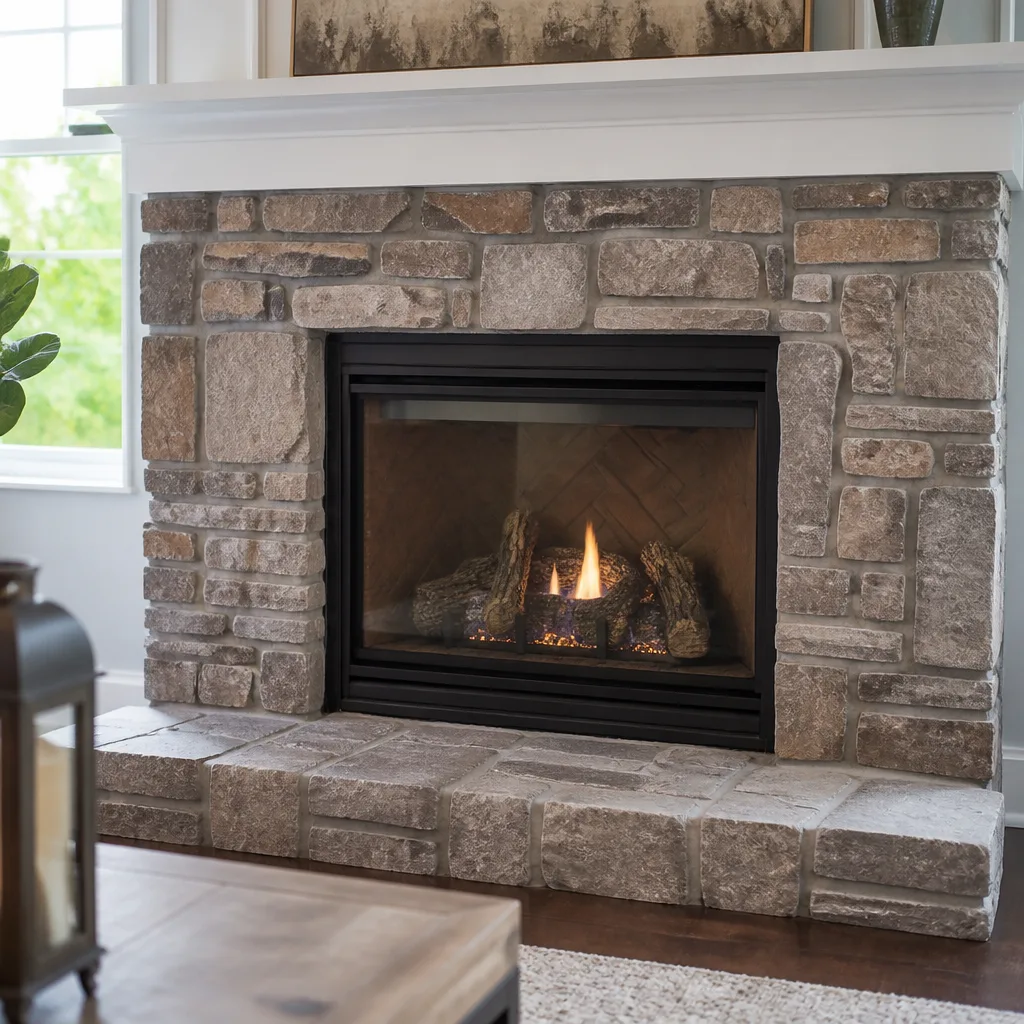
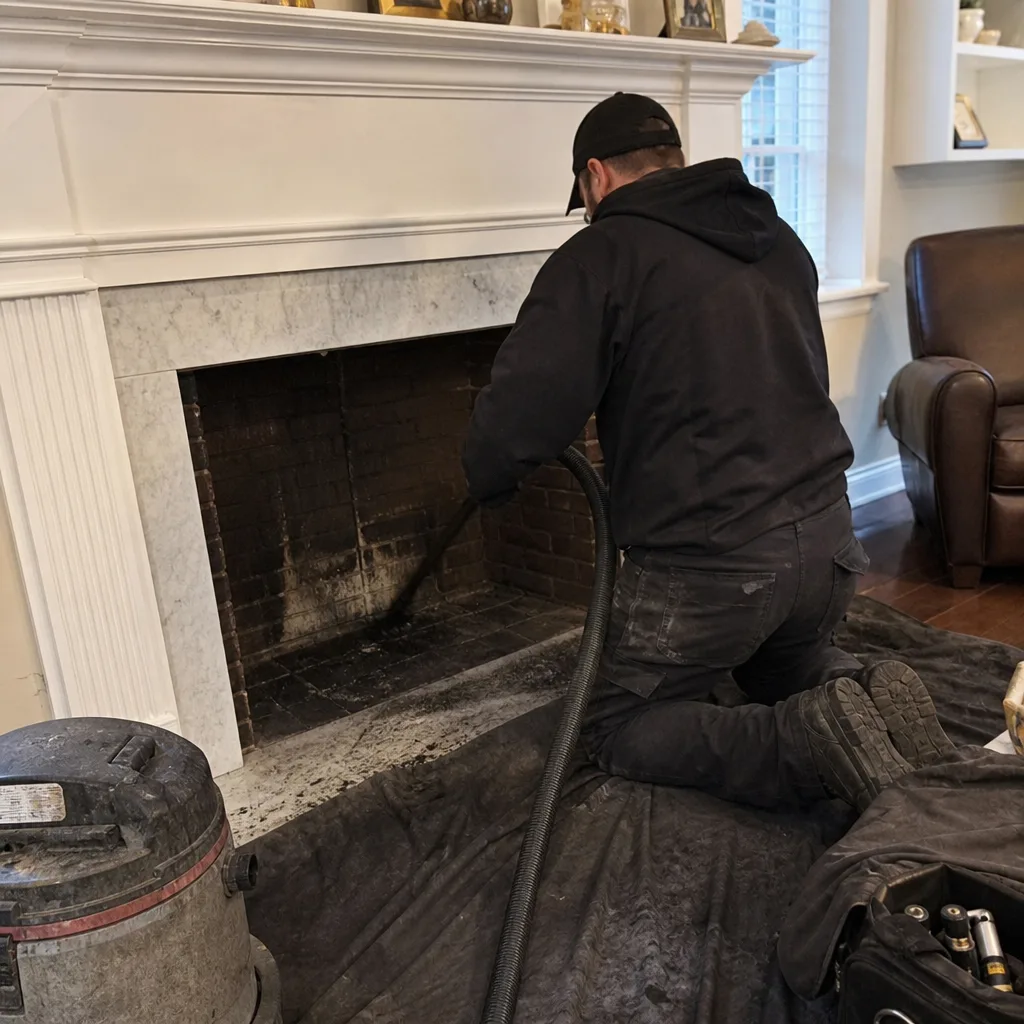 Before
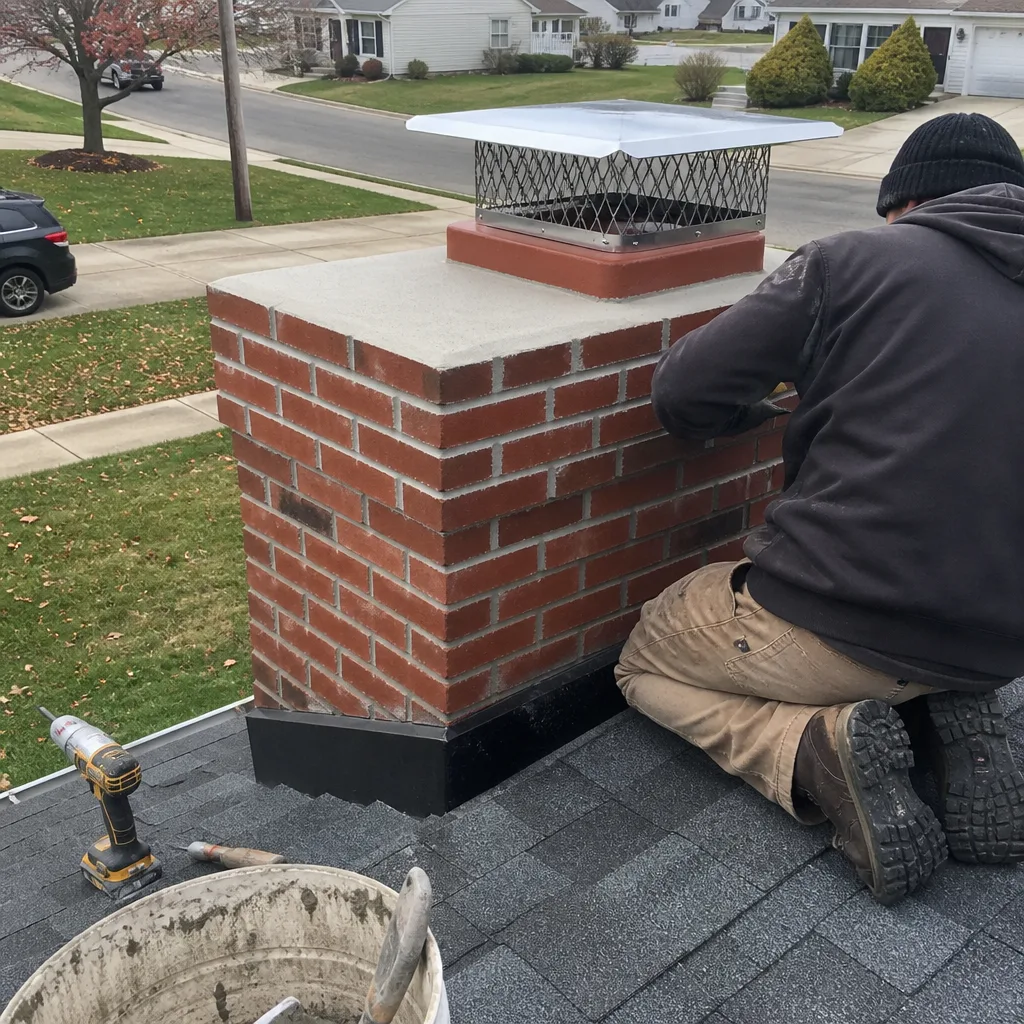 After
After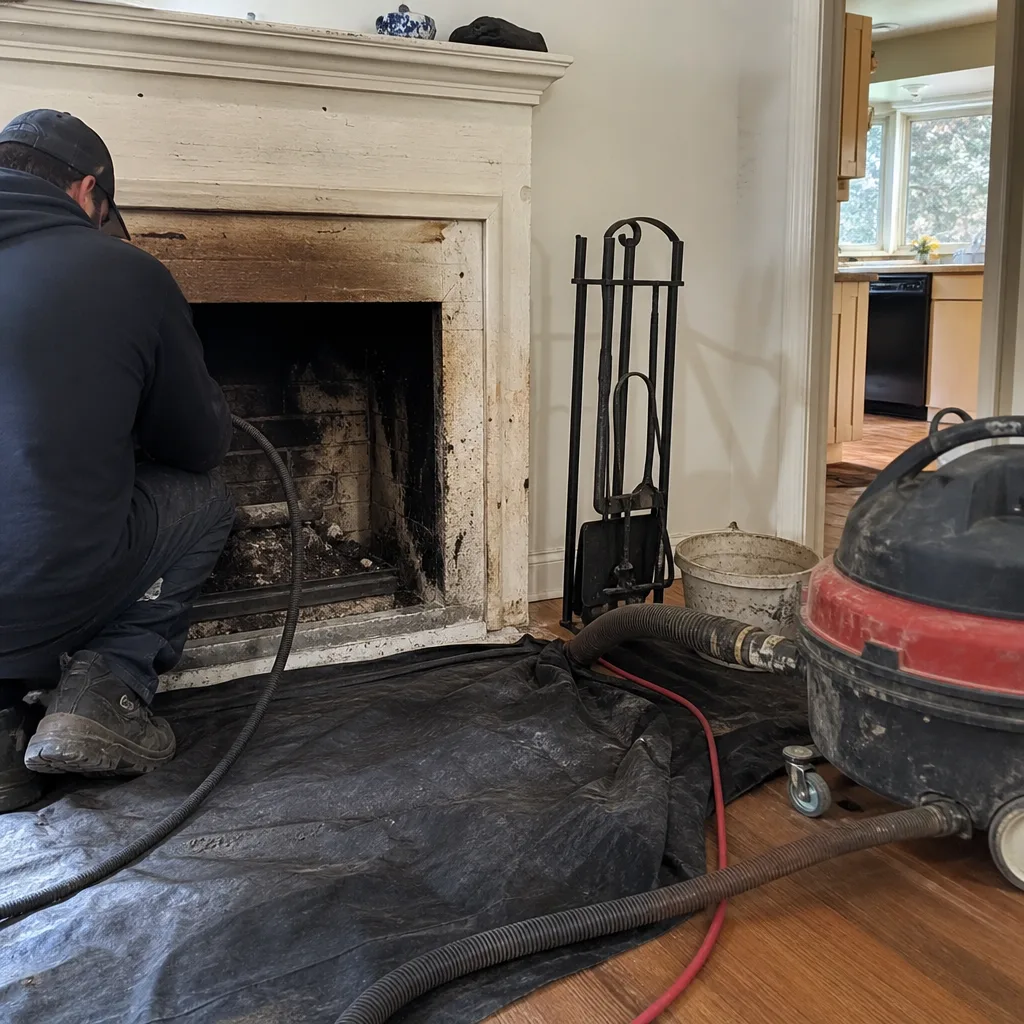 Before
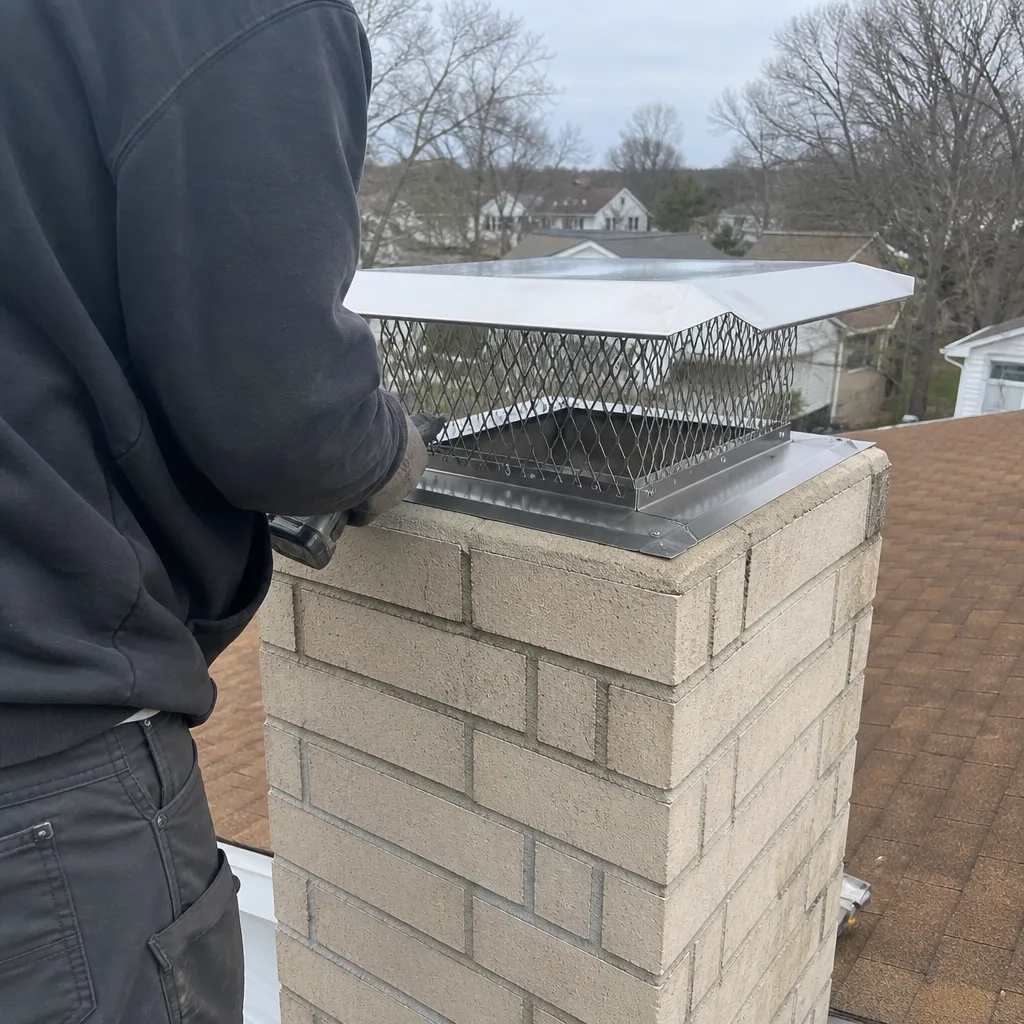 After
After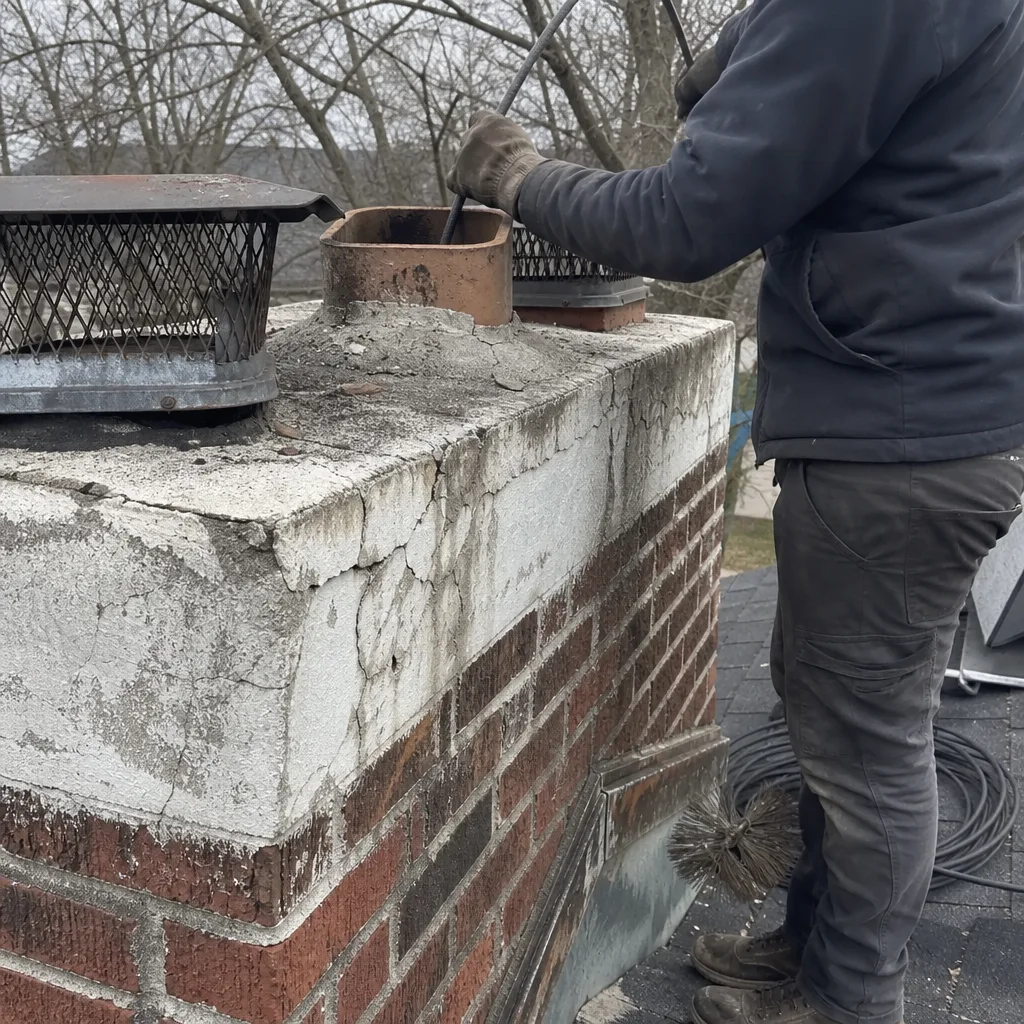 Before
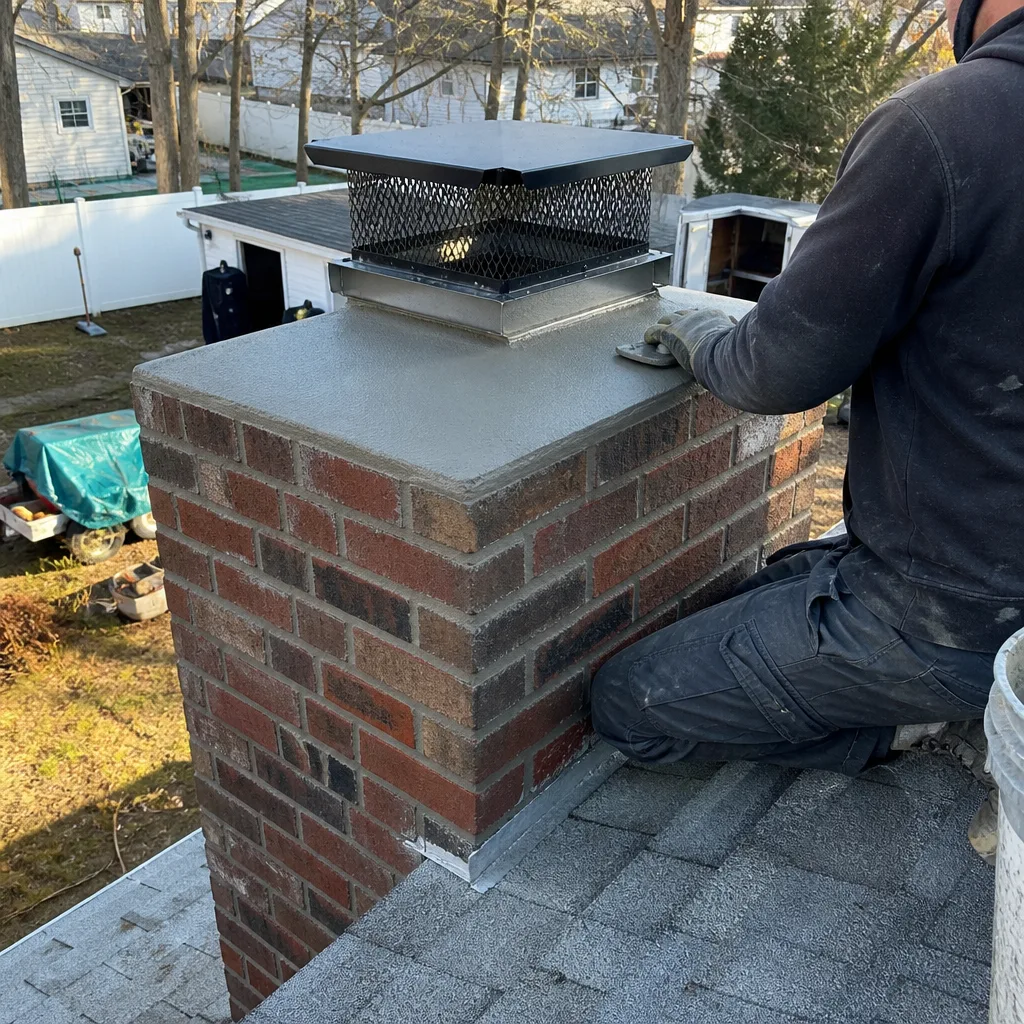 After
AfterMortar Repointing in Toms River, NJ
Mortar repointing in Toms River, NJ typically costs between $300 and $1,500 depending on chimney height, the extent of joint deterioration, and how many linear feet need attention. Most single-story chimneys with moderate wear are completed in one visit. If crumbling or recessed mortar joints are left alone, water gets in, the masonry begins to shift, and what starts as a straightforward repair becomes a partial or full rebuild through our Chimney Repair services.
At Hearthstone Chimney Co., we’ve been repointing chimneys in Ocean County since 1984. Russell Haines built this company on one principle: fix what’s actually wrong, do it with the right materials, and stand behind the result. If you’re seeing cracked joints, white staining on the brick face, or mortar that flakes out when you press it, call us at (609) 303-9679 – a live person answers every time, including weekends. Repointing fits squarely under our broader Chimney Repair in Toms River work, and it’s one of the most effective ways to extend the life of a masonry chimney before serious structural damage sets in.
Toms River sits close enough to Barnegat Bay that chimneys here deal with something most inland areas don’t: a persistent salt-air cycle that accelerates mortar breakdown. The freeze-thaw season that runs from late November through early March compounds the problem. Water infiltrates a hairline crack, freezes, expands, and opens the joint wider. By spring, what looked like surface weathering is now a gap that channels rainwater straight into the masonry core. We see this pattern regularly in neighborhoods like Silverton, Pine Beach, and along the Route 37 corridor – older brick homes where the original mortar has simply reached the end of its service life.
When You Need Mortar Repointing
Not every chimney needs repointing, and we won’t tell you that you do if you don’t. But these are the signs that warrant a close look – and in most cases, prompt action saves money over waiting.
- Mortar joints are recessed more than a quarter inch. Run your finger along the joint between bricks. If it sinks noticeably or crumbles under light pressure, the mortar has lost its density and water is already finding its way in. In Toms River’s climate, a shallow joint becomes a saturated joint within a season or two.
- Efflorescence – white chalky staining – on the brick face. That white residue is dissolved mineral salt being pushed outward by moisture moving through the masonry. It’s a reliable sign that water is migrating through compromised joints somewhere above the stain line.
- Spalling bricks near the joints. When mortar fails first, water reaches the brick face and the face begins to flake. Spalling bricks cost significantly more to address than the original mortar repair would have, so catching the joints early matters.
- Visible cracks following the mortar line. Cracks that run along joints rather than through brick faces are usually mortar failure rather than structural movement – the more common situation on chimneys built before 1990, which describes a large share of Toms River’s housing stock.
- Water stains on the ceiling or firebox walls after rain. If moisture is showing up inside the house after a storm, the chimney’s exterior envelope has a breach. Mortar joints are one of the first places to check before assuming the flashing or cap is the culprit.
- Your chimney hasn’t been inspected in five or more years. Mortar joints deteriorate gradually and evenly, so a homeowner walking past the fireplace every day doesn’t notice the change the way a technician with a camera does. Proactive inspection every few years – especially in a coastal county – catches joint wear before it migrates inward.
Our Mortar Repointing Process
Repointing done correctly requires more patience than most contractors budget for. Cutting corners at any stage – grinding too shallow, skipping the cure window, using the wrong mortar mix – produces a joint that looks finished but fails within a few winters. Here’s how we do it.
- Level-2 camera inspection before any work begins. We photograph every joint we’re going to address and document the surrounding masonry condition. You’ll see the photos. You’ll get a plain-English explanation of what we found and what we recommend. Nothing moves forward until you understand the scope and agree to it in writing, with upfront pricing on the estimate.
- Mechanical removal of deteriorated mortar. We cut existing mortar to a minimum depth of three-quarters of an inch – ideally one inch – using an angle grinder or oscillating tool. Shallow grinding leaves old, weak material bonded to the brick face, and new mortar applied over it won’t hold. This step takes longer than people expect, and that’s fine. It’s where the quality of the finished joint is actually determined.
- Joint cleaning and preparation. After cutting, we remove dust and loose debris from every joint using compressed air and a stiff brush. Mortar bonds to a clean, slightly damp surface. If the brick face is dry and dusty, the new mortar will cure with weak adhesion at the edges – the same failure point that caused the original problem.
- Mortar matching and application. We mix mortar to match the original in color, texture, and – critically – hardness. On pre-1950 chimneys, which exist throughout the older sections of Toms River and nearby Beachwood, the original mortar is often a softer lime-based formulation. Applying a harder Portland cement mortar over soft historic brick creates a mismatch that damages the brick rather than protecting it. We assess the existing material and match accordingly. For modern masonry in good condition, we use professional-grade products from brands like Copperfield and HeatShield – never builder-grade substitutes.
- Joint tooling and finishing. Fresh mortar is tooled to a concave or weather-struck profile while it’s still workable. The profile sheds water away from the joint face, which is the whole point of the geometry. A flat-finished joint holds water against the brick; a properly tooled joint directs it away.
- Post-cure inspection and documentation. We return to the completed joints, photograph the finished work, and note it in your service record. Every job at Hearthstone is backed by our 90-Day Done Right Promise – in writing, no arguing. If something isn’t right within 90 days, Russell Haines will send someone back to make it right, no paperwork, no runaround.
Mortar Repointing Pricing in Toms River
Mortar repointing in Toms River, NJ runs anywhere from $300 for a small section of joints on a one-story chimney to $1,500 or more for a full chimney on a two-story home with significant deterioration. The range is wide because the variables are real – height, linear footage, mortar type, and access all affect the final number, as detailed in our guide on How Much Does Chimney Repair Cost? (2026 Price Guide) - Toms River, NJ.
| Scope of Work | Typical Price Range |
|---|---|
| Spot repointing (localized section, 1-story chimney) | $300 – $500 |
| Partial repointing (upper two-thirds, 1-story) | $500 – $800 |
| Full repointing, 1-story chimney | $700 – $1,100 |
| Full repointing, 2-story chimney | $1,000 – $1,500+ |
| Combined repointing + crown repair | $900 – $1,800 |
A few things push the number higher: chimneys that need scaffold rather than a standard ladder setup, mortar matching on pre-1960 historic masonry, and jobs that uncover underlying brick damage that needs to be addressed before the joints can be properly reset.
What never changes is the pricing structure. The number on the estimate is the number on the invoice. No adjustments at the end of the job, no add-ons that weren’t discussed upfront. If our inspection reveals something additional, we tell you before we do anything about it.
Current standing offers that apply to this work: $50 off any repair over $250, and a permanent 5% discount for seniors and veterans. If you have a written estimate from another company, we’ll give you a free second opinion – because a second set of eyes on a chimney costs you nothing and sometimes changes the picture considerably.
Call (609) 303-9679 to schedule a free estimate. Most inspection and estimate appointments in the Toms River area are available within a few business days.
Why Toms River Chimneys Age Differently
Ocean County’s coastal geography creates conditions that wear masonry faster than most homeowners realize. The bay and ocean influence means humidity stays elevated for most of the year, and the salt content in the air – especially in neighborhoods within a mile or two of the water, like portions of Ortley Beach, Island Heights, and the Toms River waterfront – works its way into porous mortar over decades.
Salt crystal formation inside the mortar matrix is its own mechanism of deterioration, separate from freeze-thaw. As moisture evaporates, salts crystallize and expand, slowly widening voids from the inside. It’s a slow process on any individual chimney, but chimneys in Toms River that were built in the 1960s and 1970s – a large portion of the housing stock in this part of Ocean County – are now at a point where the original mortar is at or past the end of its expected service life regardless of visible surface condition.
This is one reason we don’t skip the camera inspection before repointing. A chimney that looks like it needs surface repointing sometimes has flue or crown issues that should be addressed in the same visit. Fixing the joints without addressing a cracked crown, for example, means the water that was entering through the joints will simply redirect through the crown. The work has to be considered as a system, not a list of individual tasks.
Our broader home page covers the full range of services we provide, but mortar repointing is one of the most common calls we get from Toms River homeowners in the spring – after the winter freeze-thaw cycle has done its work and the damage becomes visible at eye level.
What Hearthstone Does That Most Chimney Companies Don’t
Russell Haines started this company in 1984, and the way we approach a repointing job reflects over four decades of working on masonry in this specific coastal market. A few things that matter to homeowners who have dealt with contractors before:
- We document before and after, every time. Photos from the Level-2 inspection go into your file. You see what we saw. You’re not asked to take our word for it.
- Our technicians are background-checked and uniformed. You know who’s on your roof and who’s knocking on your door. That’s not a given in this industry.
- Most jobs are completed in a single visit. We arrive prepared. We carry the materials and tools for the work we’ve scoped. A repointing job that’s properly quoted doesn’t stretch across multiple appointments.
- The 90-Day Done Right Promise covers every job in writing. If the repair doesn’t hold, we come back. No paperwork, no argument. That’s how Russell built this company, and it’s still how we operate.
- A live person answers every call. Not a voicemail system. Not an app. When you call (609) 303-9679 at 7 a.m. on a Saturday, someone picks up.
FAQs – Mortar Repointing
How long does repointed mortar last on a Toms River chimney?
Properly done mortar repointing lasts 20 to 30 years under normal conditions. In Toms River’s salt-air environment, you’re realistically looking at the lower end of that range for chimneys in waterfront-adjacent neighborhoods – closer to 15 to 20 years before significant joint wear recurs. Using professional-grade materials suited to the original masonry, and tooling the joints correctly for water shedding, gets you to the far end of that lifespan. Cheap mortar and shallow grinding cut it significantly shorter. Call (609) 303-9679 if you’re unsure where your chimney stands – we’ll give you a straight answer after the inspection.
Is repointing the same as tuckpointing?
Repointing and tuckpointing are often used interchangeably, but they’re technically different. Repointing means removing deteriorated mortar and replacing it with new material in a matching profile. Tuckpointing in its traditional form involves two contrasting colored mortars – a filler and a narrow contrasting ribbon – to create the appearance of fine joints. In modern residential chimney work in Toms River, most contractors use “tuckpointing” to mean what’s actually repointing: cutting and refilling joints. We’ll tell you exactly what we’re doing and why before we start.
Can I repoint chimney mortar myself?
Surface-level mortar work on a low garden wall, yes. A chimney, no – and not only because of the height. The mortar matching requirement alone is enough to get most DIY attempts wrong. Using a mortar that’s harder than the surrounding brick causes the brick face to spall rather than the joint to fail first, and that’s a more expensive Spalling Brick Repair than the original problem. Beyond that, working on a chimney above the roofline on a ladder carries real injury risk. We’ll give you a free estimate, and in most cases the cost is reasonable enough that doing it right professionally makes more sense than the liability of doing it yourself.
How do I know if my chimney needs repointing or a full rebuild?
Repointing addresses mortar joints. A rebuild is needed when the bricks themselves are structurally compromised – cracked through, displaced, or when the chimney has shifted out of plumb. A Level-2 camera inspection gives a clear answer because it shows what’s happening at the crown, the flue liner, and the upper courses that aren’t visible from the ground. In our experience with Toms River chimneys, the large majority of homeowners calling about visible joint deterioration need repointing, not a rebuild – but the inspection confirms it either way. Call (609) 303-9679 to schedule yours; estimates are free and there’s no obligation.
Written by Russell Haines, Owner at Hearthstone Chimney Co., serving Toms River since 1984.