
Level 1 sweep and inspection to the NFPA 211 annual standard - flue, crown, cap, and flashing checked and photographed
Chimney sweep logs do not sweep chimneys. They loosen some creosote - which then falls where a brush and vacuum still have to collect it.
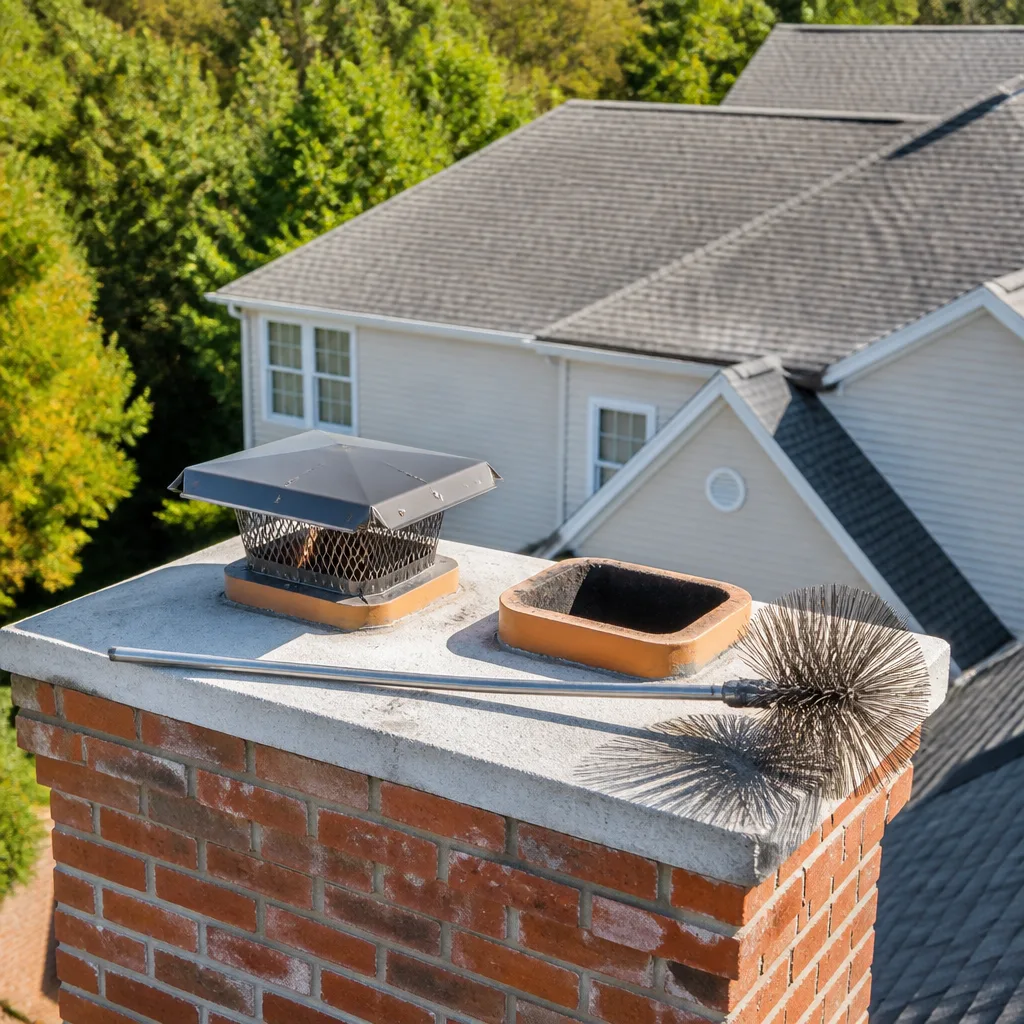
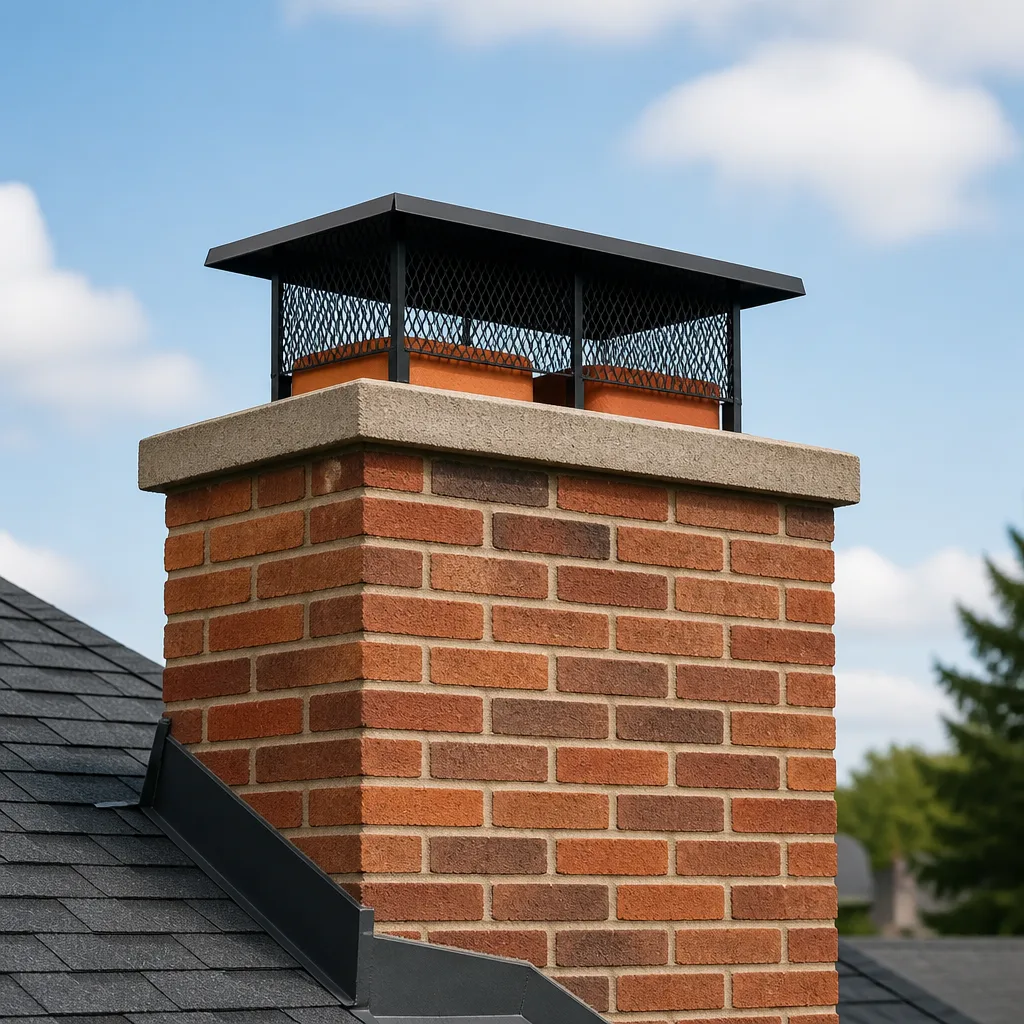
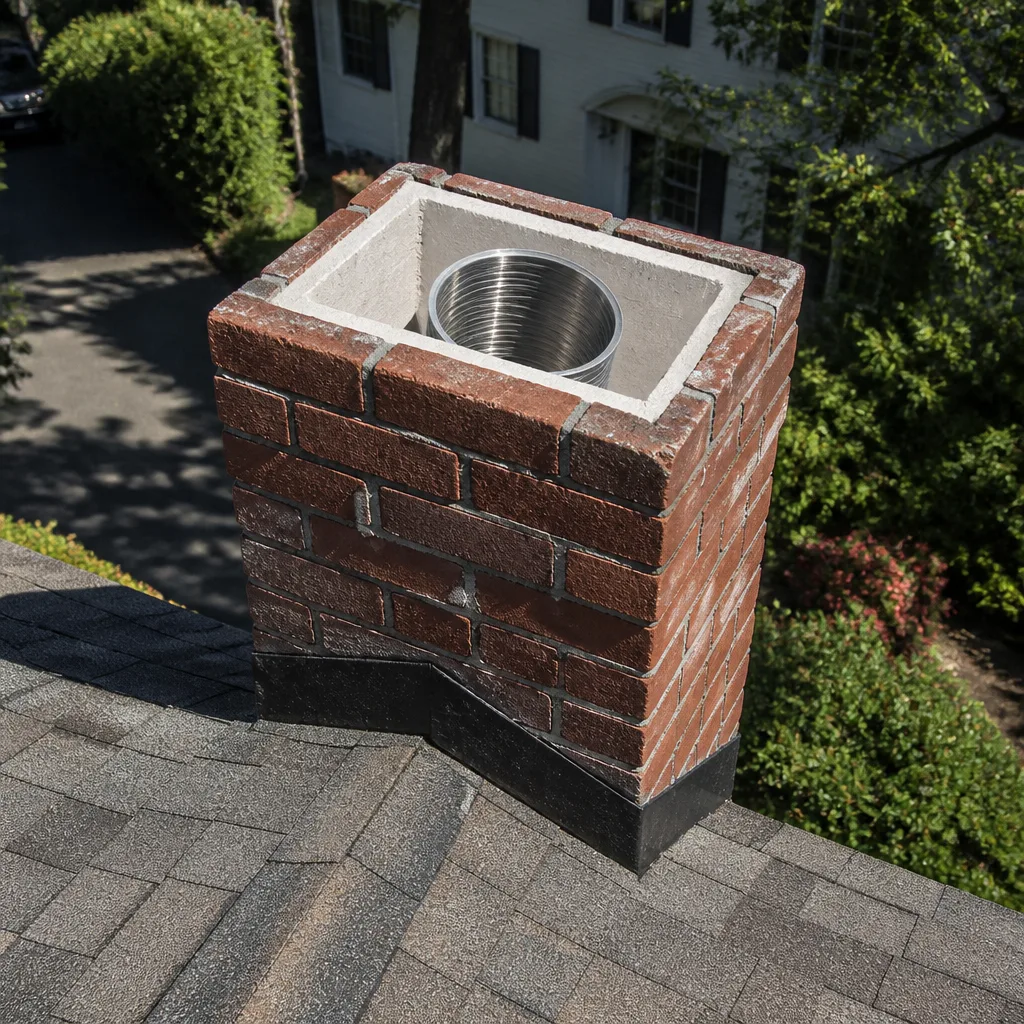
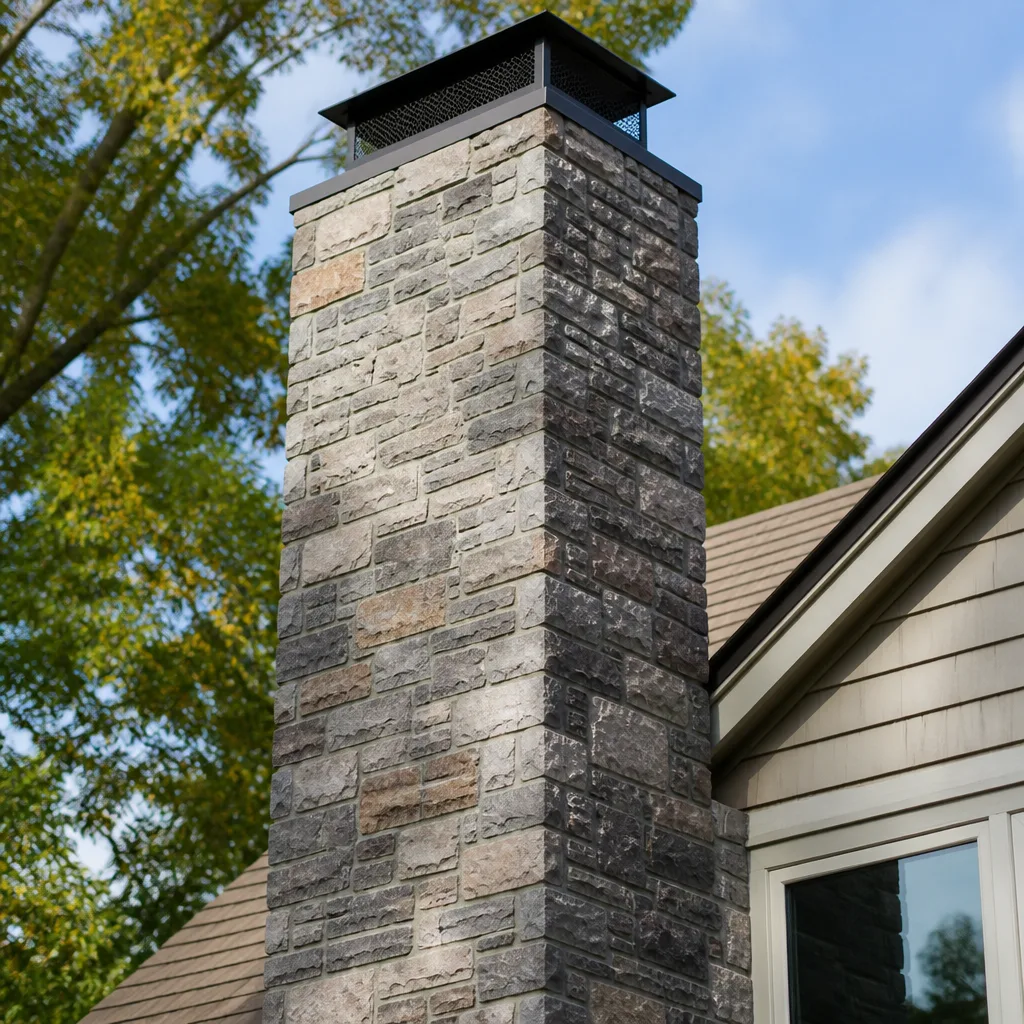
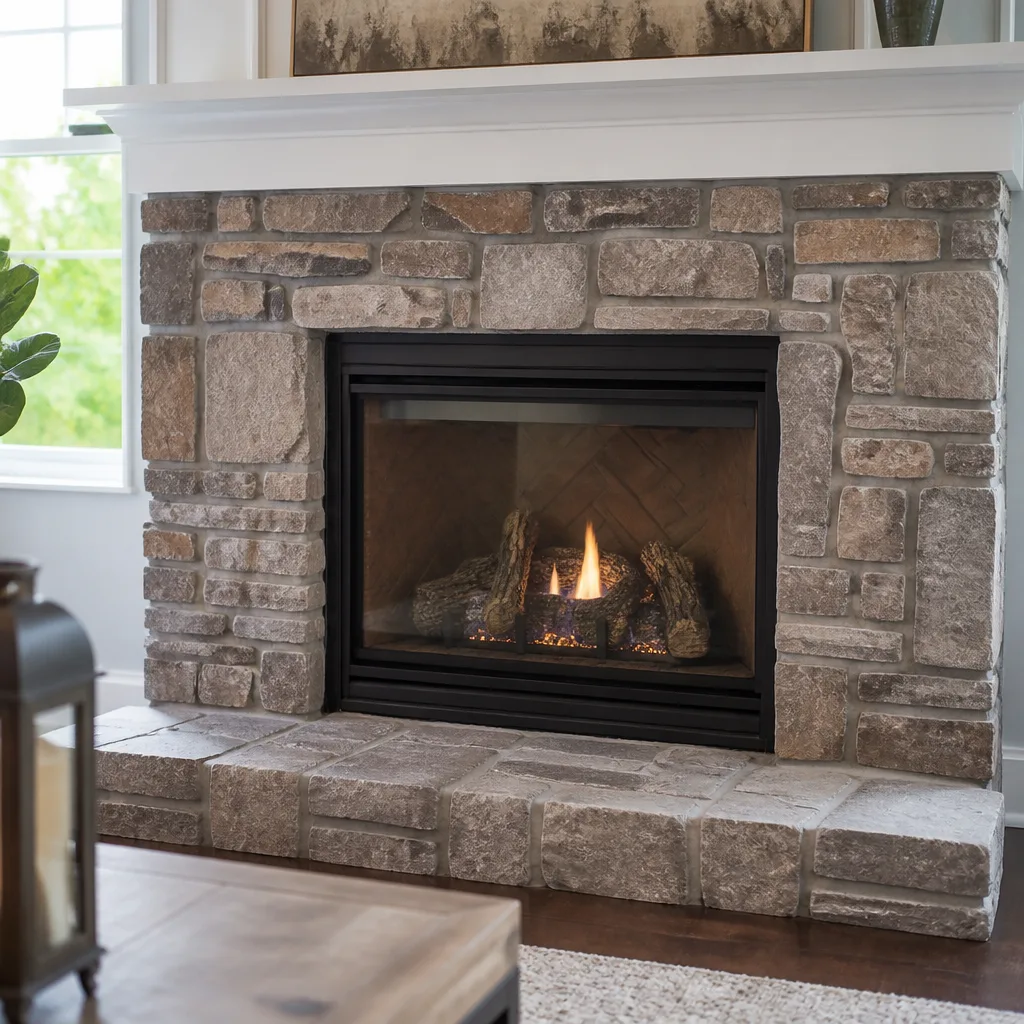
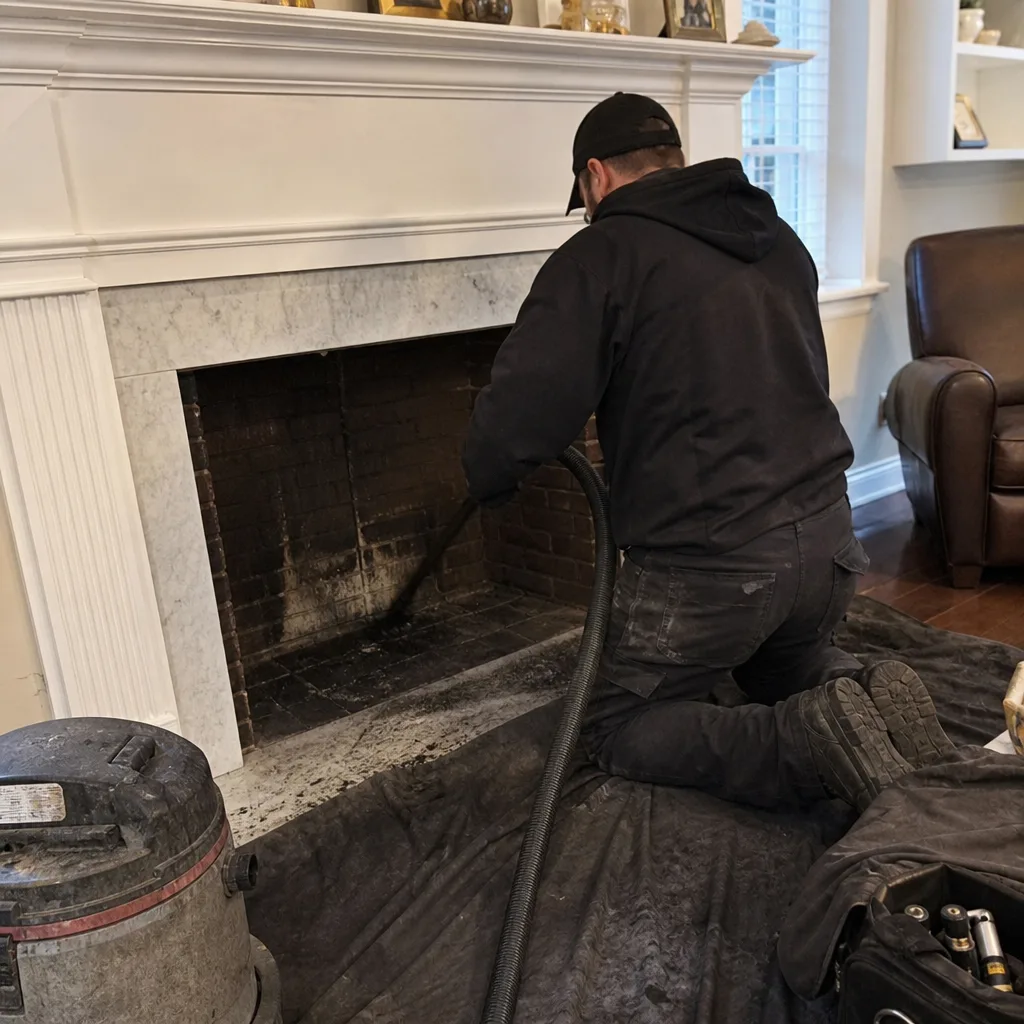 Before
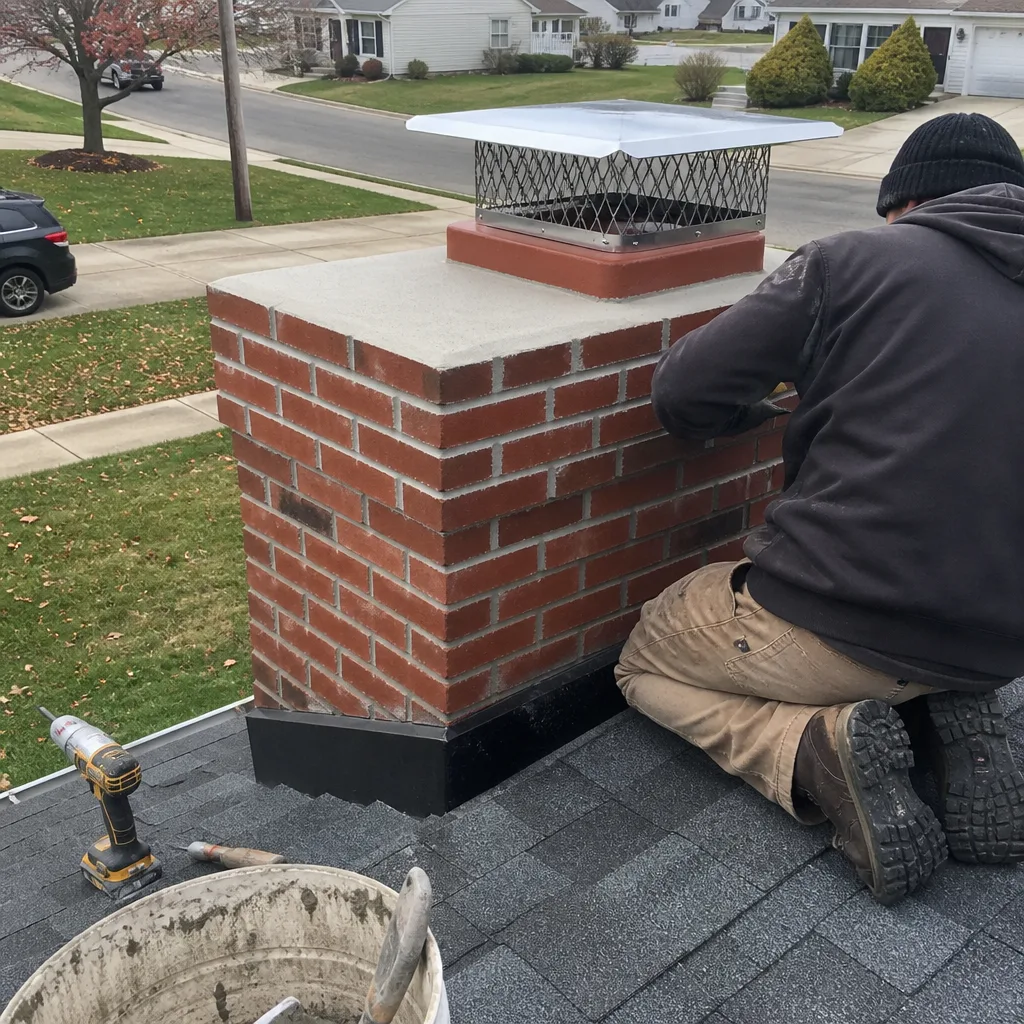 After
After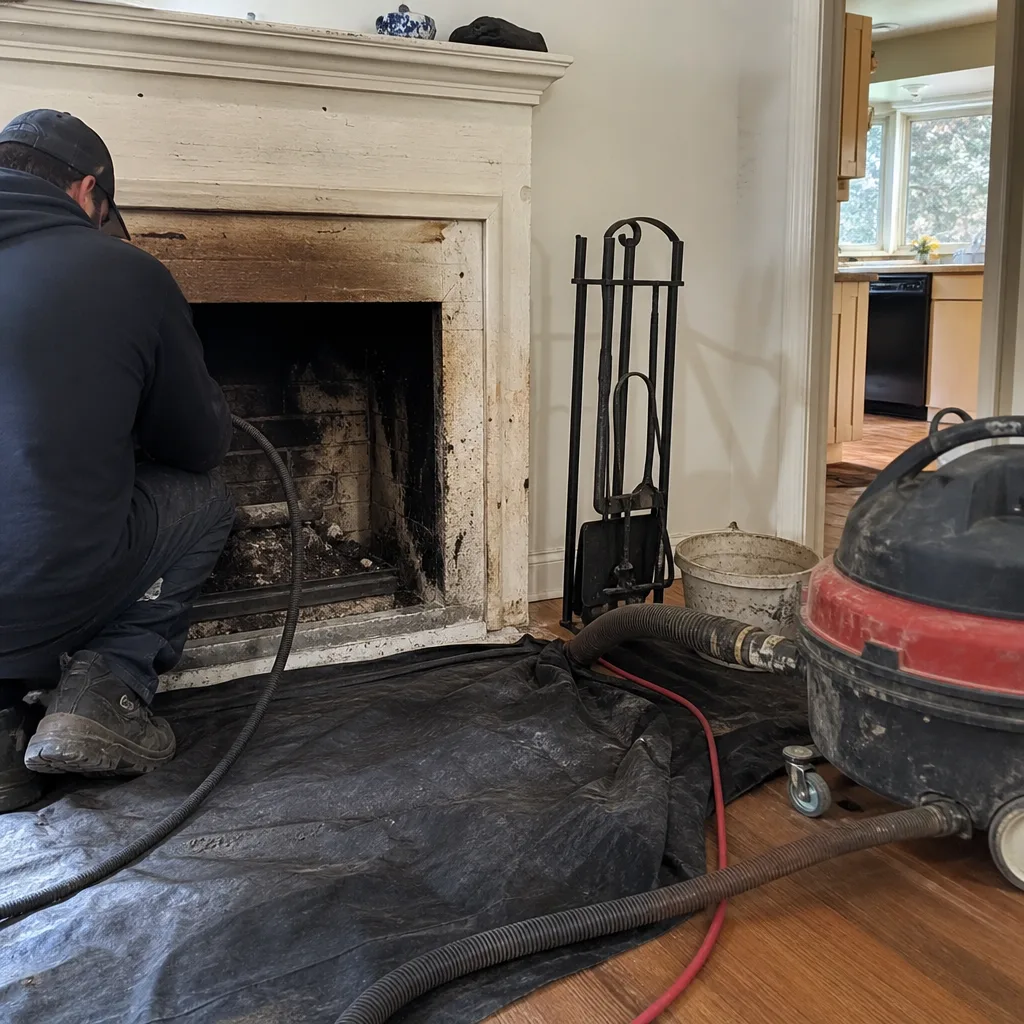 Before
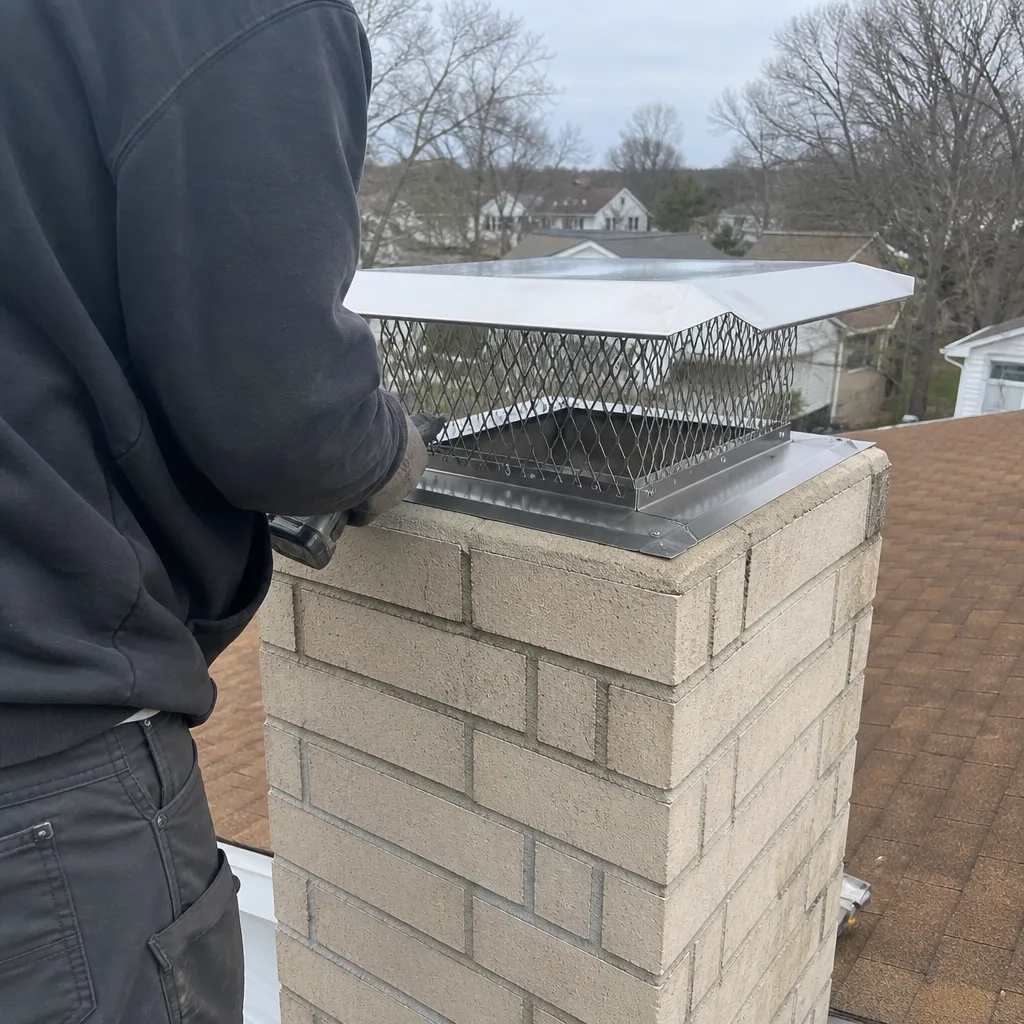 After
After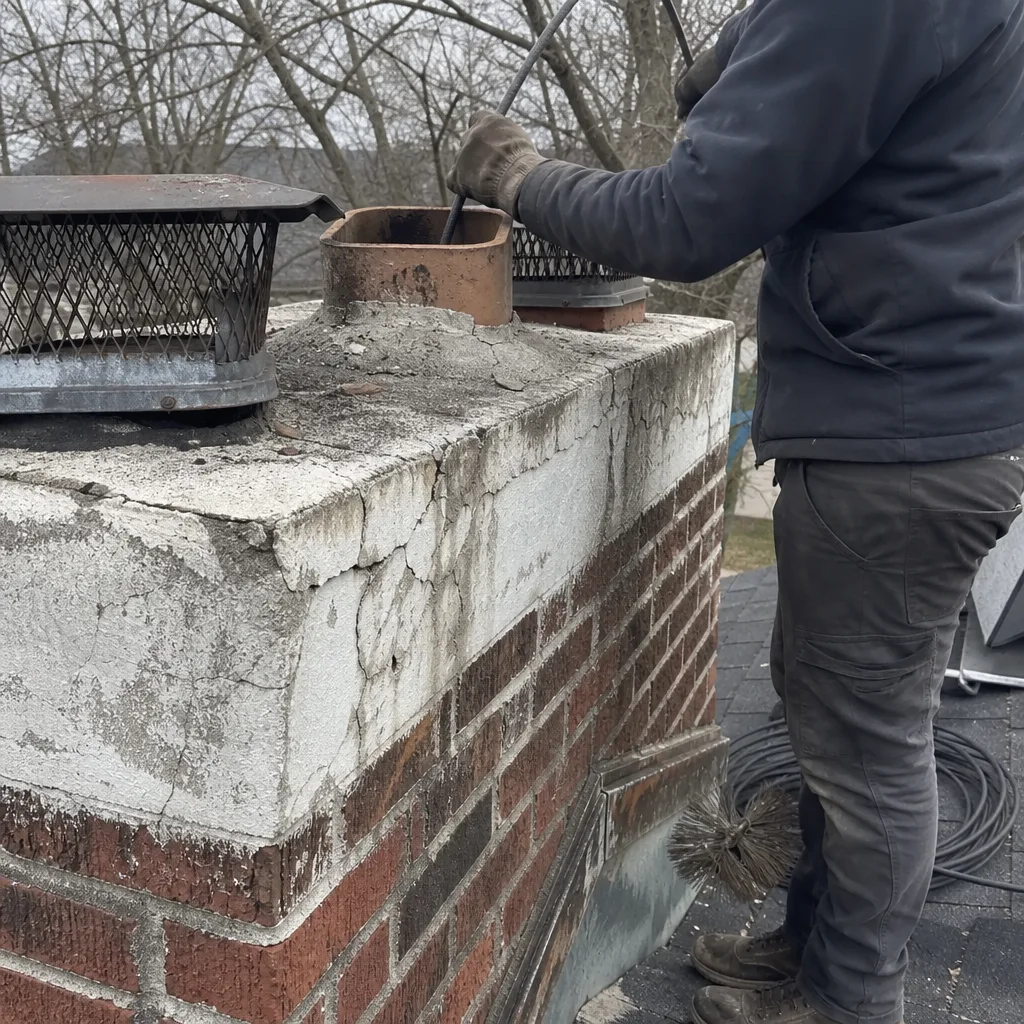 Before
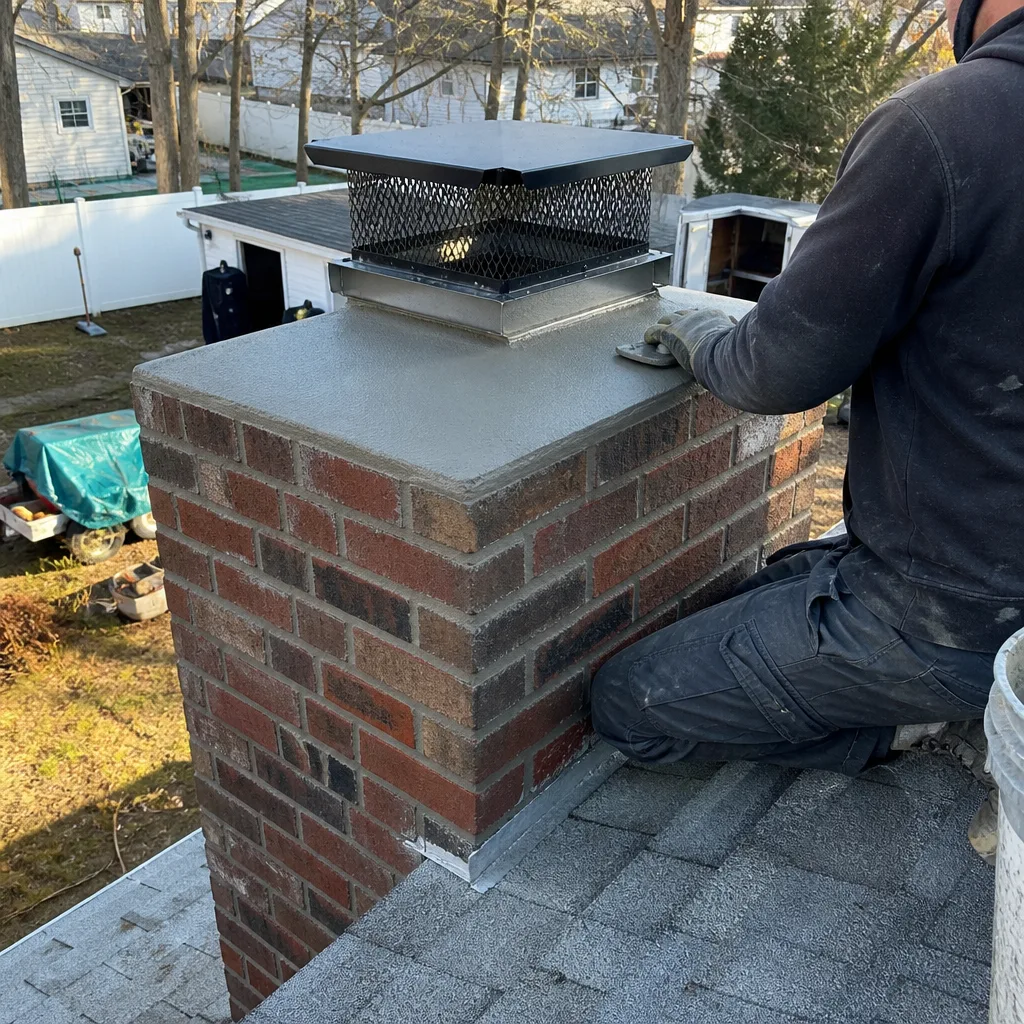 After
AfterHeatShield Crown Repair: The Toms River Owner’s Guide
HeatShield crown repair in Toms River typically runs $380-$650 installed, depending on flue size and how much of the original crown has deteriorated. We stock HeatShield-compatible materials on every truck and can complete most crown repairs in a single visit. The flue doesn’t lie. Neither do we.
Most Toms River homeowners discover their crown is failing after a hard rain, when water starts showing up on the firebox floor or a musty smell settles into the living room. The crown sits at the very top of your chimney, poured concrete or mortar that seals the gap between the flue tile and the brick edge. When it cracks, water runs straight down into the masonry joints, and in Ocean County’s freeze-thaw cycle, those cracks widen every winter. HeatShield’s crown repair system is a specialized refractory compound formulated to bond with existing concrete and shed water properly, but it only works if the underlying structure is sound and the application is done to spec.
Which HeatShield Models This Applies To
HeatShield does not manufacture chimney crowns as a standalone product line. Rather, HeatShield Cerfractory Foam and the HeatShield CrownSeal system are applied as repair materials to existing concrete or mortar crowns on standard masonry chimneys. The key compatibility question is flue tile diameter and crown condition, not a model number stamped on a part.
For Toms River homes built between the 1960s and 1990s, we typically see 8×8 inch or 8×12 inch flue tiles with crown overhangs of 2 to 4 inches. HeatShield CrownSeal is rated for crowns with a minimum thickness of 1.5 inches at the thinnest point. If your crown has eroded below that, or if the steel mesh reinforcement is exposed and rusting, CrownSeal alone will not suffice. In those cases, we pour a new structural crown and apply CrownSeal as the finish layer.
We are an independent service provider, not affiliated with HeatShield. We specify their materials when the job calls for them because the cerfractory blend holds up to 2,200°F and flexes with thermal expansion better than generic refractory cement. For aftermarket alternatives, we also carry Gelco crown coatings and Copperfield repair compounds, matched to the specific failure mode we find.
Signs Your HeatShield Crown Repair Is Failing
- Hairline cracks running from the flue tile outward. These form when the crown was poured without proper expansion joints or when the concrete mix was too wet. In Toms River, water seeps in during January thaws and freezes overnight, widening cracks to 1/8 inch or more by spring.
- Chunks of concrete missing from the crown edge. This is spalling caused by salt-laden moisture wicking up from the masonry below, then freezing. The Barnegat Bay influence means our coastal air carries more chloride than inland NJ, and it accelerates concrete deterioration on south-facing crowns.
- Rust stains bleeding down the brick below the crown. Those stains mean water is getting past the crown and reaching the steel flue liner support or the chimney’s interior wire mesh. Once rust starts, the steel expands and cracks more masonry. A camera inspection will show how far the damage has traveled.
- Water pooling on the smoke shelf or firebox floor after rain. This is the symptom that gets homeowners’ attention. It means the crown has failed completely at one or more points, and water is running the full height of the flue. Left unchecked, it will degrade the damper and rust out the fire grate.
- The crown sounds hollow when tapped with a hammer. A solid crown rings dull and firm. A hollow tone means the concrete has delaminated from the flue tile or the wire mesh underneath. CrownSeal applied over a hollow crown will crack within two seasons because it has no stable substrate.
Replacement Cost & What’s Included
| Service | Typical Range in Toms River |
|---|---|
| HeatShield CrownSeal application (crown intact, surface prep only) | $380-$495 |
| Partial crown rebuild + CrownSeal finish | $550-$780 |
| Full crown removal and pour with CrownSeal | $850-$1,200 |
| Level-2 camera inspection with photo report | $189-$249 (often bundled) |
What drives the range: crown size, accessibility (steep roof pitch or multiple story height), and whether we find hidden flue tile damage once the old crown comes off. We price every job upfront after inspection, not after we start. The number on the estimate is the number on the invoice.
Every HeatShield crown repair we complete carries our 90-Day Done Right Promise in writing. If the seal fails or water returns, we come back. No paperwork to dig up, no argument about whether it was pre-existing. Krafted right, every time. Your home first. Standing behind it.
DIY or Call Us?
There is no safe DIY path for crown repair. Working at chimney height on a pitched roof is inherently dangerous, and the refractory compounds require specific ambient temperature and humidity conditions to cure properly. HeatShield CrownSeal must be applied when the surface and air temperature are between 40°F and 90°F, with no rain forecast for 24 hours. In Toms River, that narrows the workable window significantly in early spring and late fall.
What you can do from the ground: binoculars inspection for visible cracks, checking the firebox after rain for moisture, and noting any new rust stains on the exterior brick. What you should not attempt: climbing the roof, applying sealant from a ladder, or using big-box store waterproofing products that trap moisture inside the masonry. We have replaced too many DIY crown coatings that peeled within a season because the surface was not properly prepared or the wrong product was used.
Call (609) 303-9679 and we will send a technician with a camera, a ladder, and the right materials on the truck. Most crown repairs in Toms River are completed in one visit.
FAQs
In Toms River’s coastal climate, a properly applied HeatShield CrownSeal finish lasts 15 to 20 years on a sound substrate. The freeze-thaw exposure near Barnegat Bay is harder on crowns than inland NJ, so we inspect the seal every 3 to 5 years during routine sweeping. Call (609) 303-9679 to schedule - estimates are free.
Yes, if the crown is structurally sound with at least 1.5 inches of thickness everywhere and no exposed, rusting reinforcement. We grind the surface, apply bonding agent, and trowel CrownSeal to a 1/4-inch finish layer. If the crown is hollow, spalled, or too thin, partial or full rebuild is the only lasting fix. We show you the camera footage and explain which category you’re in before any work starts.
Most HeatShield crown repairs take 3 to 5 hours from setup to cleanup. Full crown removal and pour adds 2 to 3 hours for cure time before the finish layer goes on. Our technicians arrive with materials stocked, so there is no waiting on a parts run.
We carry HeatShield CrownSeal, Cerfractory Foam, and application tools on every service vehicle, along with Gelco and Copperfield alternatives for crowns that need a different approach. For Toms River calls, this means no delay while we source materials. The substrate condition determines which product we use, and we bring the full range so the job finishes the same day.
Ready to stop the leak? Call (609) 303-9679. A live person answers 24 hours a day, 7 days a week. We’ll schedule your Level-2 camera inspection, show you exactly what your crown looks like, and give you a plain-English verdict with upfront pricing. Done right, and we stand behind it.
Written by Russell Haines, Owner, Hearthstone Chimney Co. at Hearthstone Chimney Co., serving Toms River and nearby areas.